Vai al contenuto principale

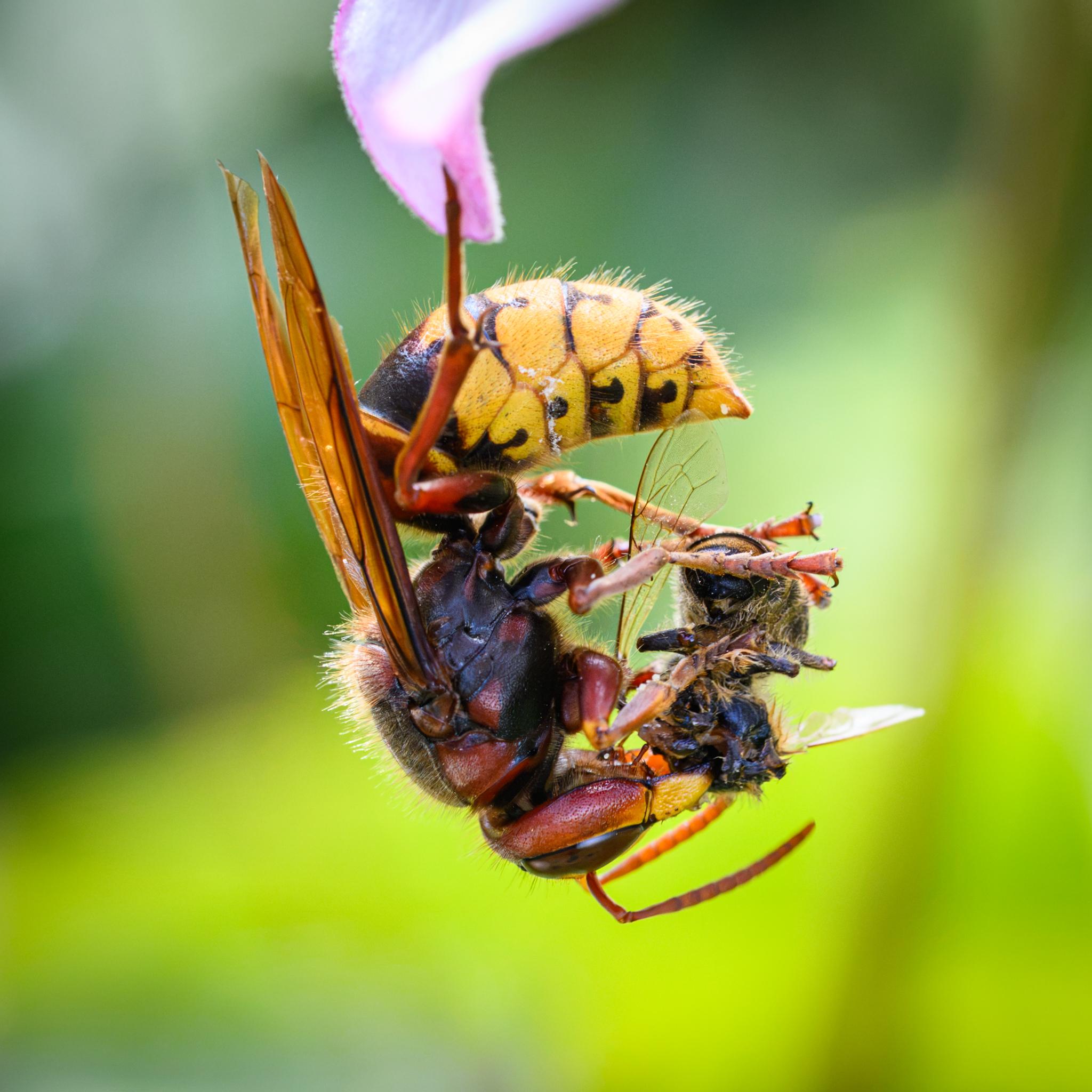
A hornet doing what hornets do 🤷‍♂️

That said, while European hornets (Vespa crabro; 🇩🇪 Hornisse) do occasionally eat honey bees, as I suspect this one is, they don't destroy whole colonies like invasive Asian hornets will, & indeed are sometimes used to protect hives from wax moths.

🏰
📷️️️️️️️️️️️️️️️️️️️️️️️️️️️️️️️️️️️️️️️️️️️️️️️️️️️️️️️️️️️️️️️️️️️️️️️️️️️️️️️️️️️️️️️️️️️️️️️️️️️️️️️️️️️️️️️️️️️️️️️️️️️️️️️️️️️️️️️️️️️️️️️️️️️️️️️️️️️️️️️️️️️️️️
🐞
🔬
🪰
🪲

A large European hornet hanging upside down by one leg from a purple sweetpea flower, seen side on. It is eating what looks like a honey bee, holding it with all but that one leg, although it's hard to be sure. The hornet has dark brown, very elongated compound eyes, set in a red head with yellow mandibles. The thorax is mostly black with some red patches on the sides and top, with many fine light yellow hairs. The abdomen is patterned yellow and black, with some red near the top, with many more vivid yellow hairs. The hornet has red legs with some black at the top and the wings are seen edge-on and are clear orange. The antennae are also orange red.

#photography #macrophotography #bugoftheday #heidelberg #insectsofmastodon #backgardenentomology

28

Caricamento...

3
10

Caricamento...

Commenti (3)

For more on European hornets & their interactions with honey bees, as well as a discussion about their highly-protected status in Germany, see:

https://www.hornissen.de/hornets3.htm

0

@markmccaughrean@mastodon.social The yellow legged giants arrived in our allotment complex about a month ago, and are off course very interested in our hives. Our bee-keeper immediately has protected those with special mesh with exactly the right mesh size. 🤞🤞🤞

0

@markmccaughrean@mastodon.social Also, the hornets no longer get food in their hive at that time as the annual cycle winds down and thus, must hunt for food more aggressively. Soon the queens will search for a place to hibernate and the last workers die.

0