Vai al contenuto principale

#backgardenentomology

Two mysteries, one photographed briefly & badly, the other in exquisite detail.

First the latter – the wing venation & ovipositor on this dead wasp m

Altro...

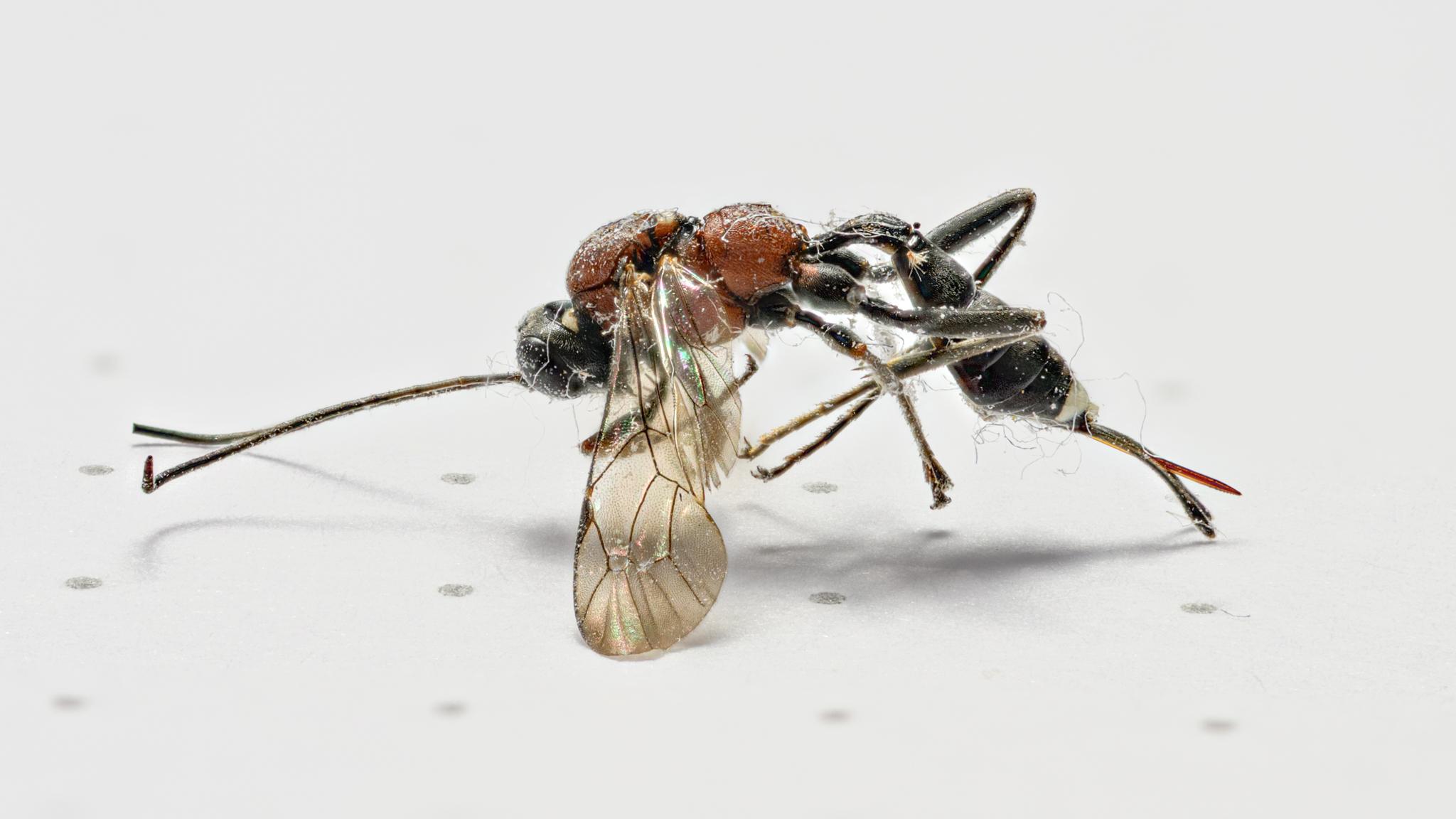
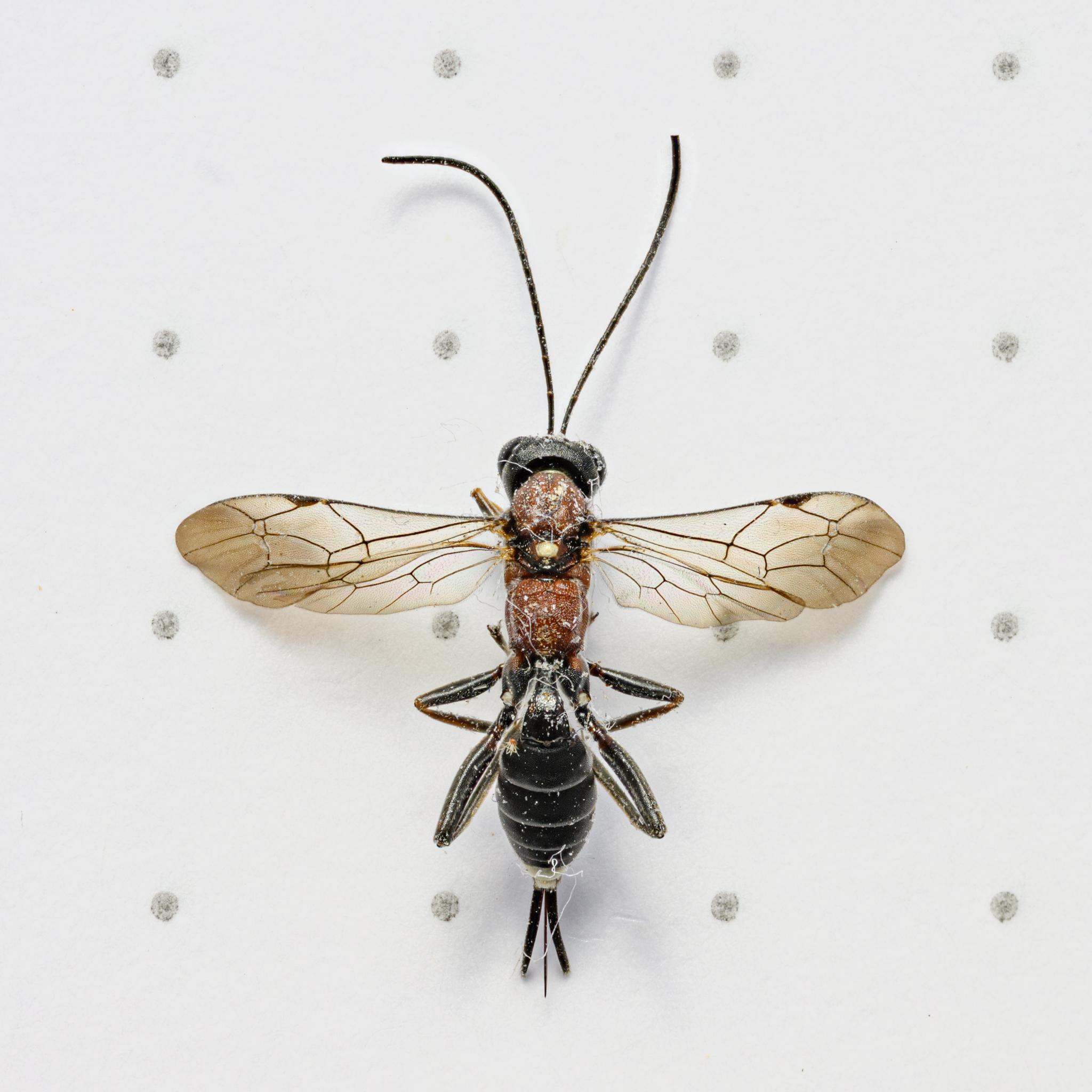
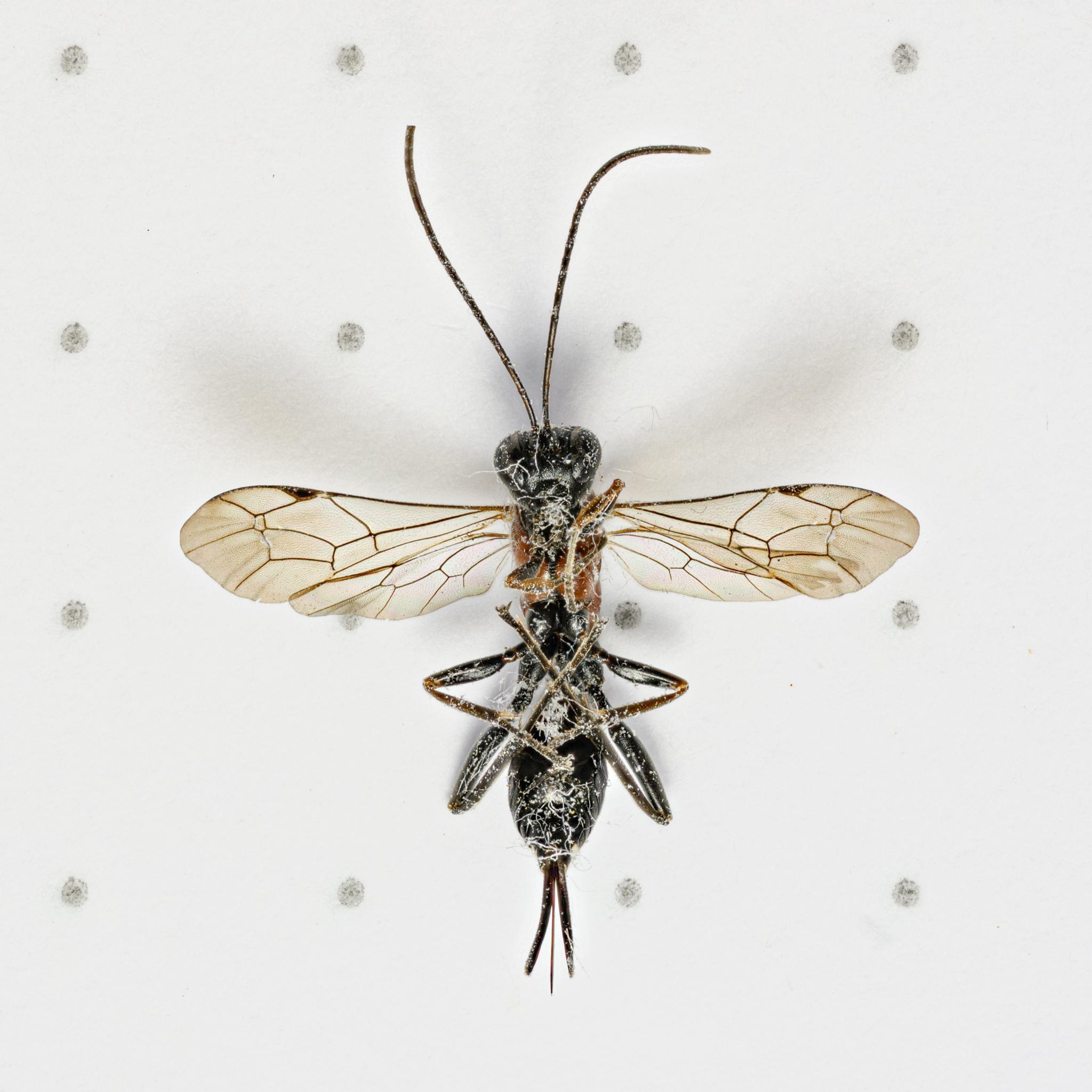
Two mysteries, one photographed briefly & badly, the other in exquisite detail.

First the latter – the wing venation & ovipositor on this dead wasp mark it as a female ichneumonid.

But there are vast numbers of species of them, & I can't even get a genus ID 😱

Hopefully the experts can help 🤞🙇‍♂️

🏰
📷️️️️️️️️️️️️️️️️️️️️️️️️️️️️️️️️️️️️️️️️️️️️️️️️️️️️️️️️️️️️️️️️️️️️️️️️️️️️️️️️️️️️️️️️️️️️️️️️️️️️️️️️️️️️️️️️️️️️️️️️️️️️️️️️️️️️️️️️️️️️️️️️️️️️️️️️️️️️️️️️️️️️️️️️️️️️️️️️
🐞
🔬
🪰
🪲

A dead wasp photographed on a sheet of white paper from above, dorsal side up. There is a grid of black dots on the paper which are separated by 5 millimetres: the wasp body, from head to end of abdomen is about 7.5mm. The wasp has a black head and long black antennae. The thorax is a brown-red colour, with a small yellow-white pentagon in the middle, between the wing roots. The thin waist is not seen from this perspective, and the abdomen is black, with thin grey lines at each tergite boundary, and a small white patch right at the tip. The wasp has a short ovipositor, with the two outer parts black and stocky, and the inner part much thinner and also black from this angle. The wings are clear brown with lots of small hairs, and the classic venation of an ichneumonid – two recurrent veins and an enclosed areolet cell below the marginal, and a small black stigma. The legs are folded up, but are mostly black with hints of dark brown from this angle. There are also some white threads on t The same wasp now seen from the ventral side, showing that the head is completely black, and that the brown-red colouration of the thorax extends to the underside. The legs are folded up, with the front pair seemingly black and dark brown, while the mid legs have black femora and brown tibia. The hind legs seem mostly black from this angle. The ovipositor outer casing remains black, but the inner part shows brown colour. Again, there is a lot of thread-like fluff on the underside. A side-on view with the wasp supported on its wings and antennae at the front, and the outer parts of the ovipositor at the rear – the folded legs are not touching the paper. The brown-red thorax is seen well, also on the sides, while the thin waist (petiole) joining the chunky thorax to the abdomen is also black. The white patch at the base of the abdomen is seen well and doesn't extend fully underneath. The shaper inner part of the ovipositor is clearly red from this angle and with this lighting. There is also a small white patch visible at the base of the head on the dorsal side.

#photography #macrophotography #bugoftheday #heidelberg #insectsofmastodon #backgardenentomology

0

Caricamento...

0
2

Caricamento...

Beware flying murderbots!

Actually, there have been far fewer yellow-legged or Asian hornets (Vespa velutina; 🇩🇪 Asiatische Hornisse) this year than

Altro...

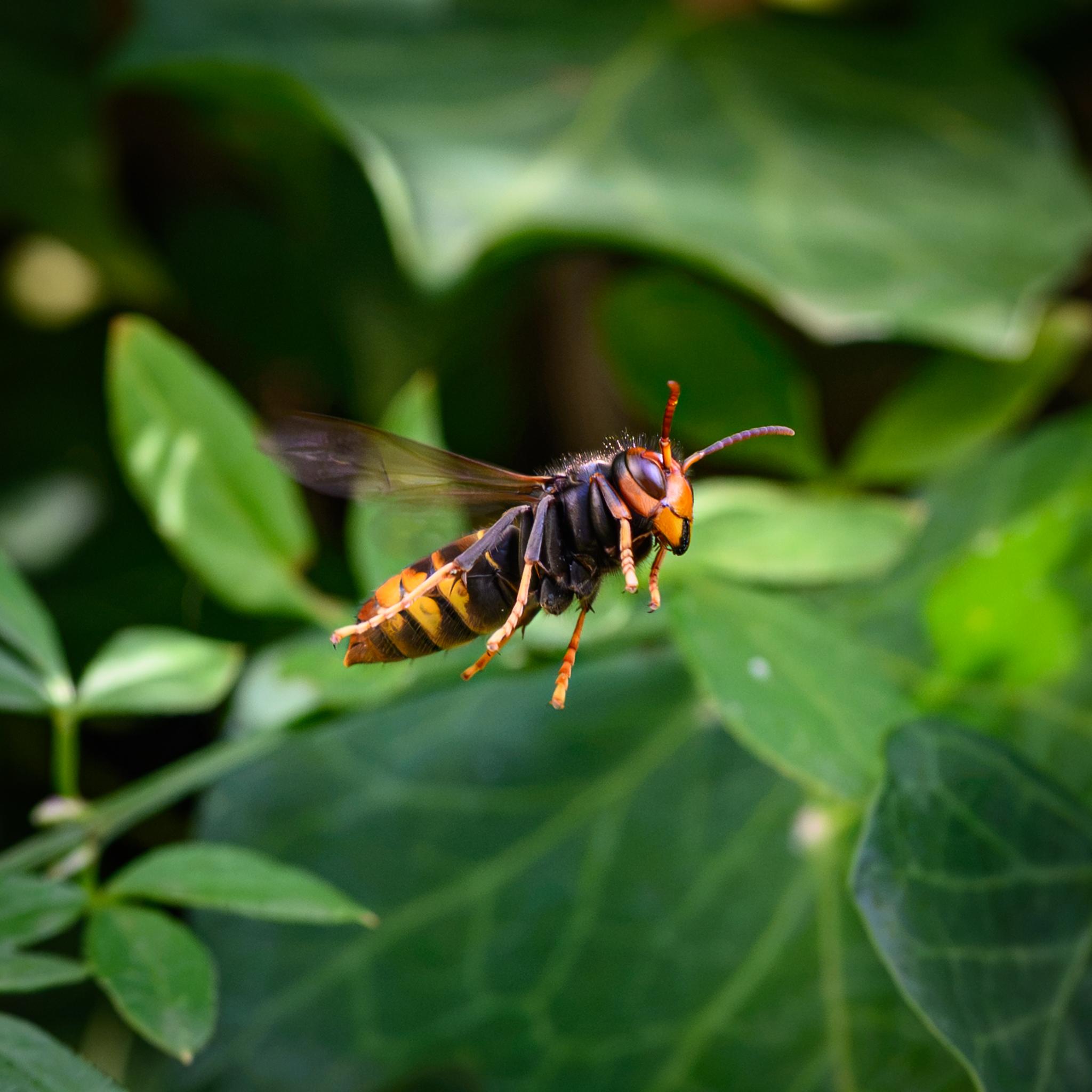
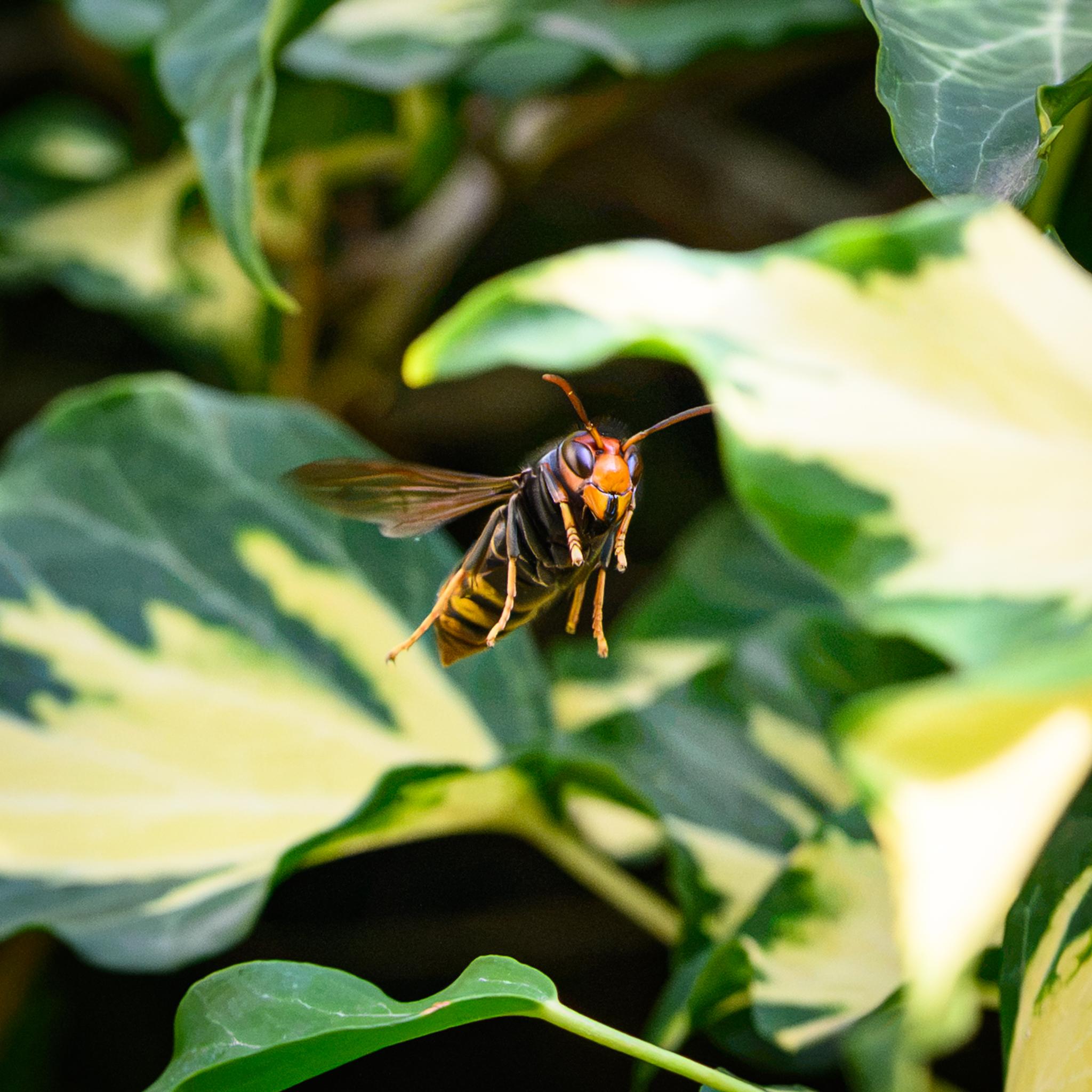
Beware flying murderbots!

Actually, there have been far fewer yellow-legged or Asian hornets (Vespa velutina; 🇩🇪 Asiatische Hornisse) this year than last – this is my first since April, while regular European hornets have been common.

Still, always a little chilling to see these invasive predators.

🏰
📷️️️️️️️️️️️️️️️️️️️️️️️️️️️️️️️️️️️️️️️️️️️️️️️️️️️️️️️️️️️️️️️️️️️️️️️️️️️️️️️️️️️️️️️️️️️️️️️️️️️️️️️️️️️️️️️️️️️️️️️️️️️️️️️️️️️️️️️️️️️️️️️️️️️️️️️️️️️️️️️️️️️️️️️️️️️️️️️️️
🐞
🔬
🪰
🪲

A picture of a hornet in flight seen almost side-on against a background of out-of-focus green ivy. The hornet has a yellow-red head with a black mouth, red compound eyes, and reddish antennae. The thorax is predominantly black, with some fine hairs on top. The abdomen is a mix of black and yellow on the various tergites and sternites, with fine hairs visible on the underside. The legs are dark at the top, but characteristically yellow in the lower sections. The wings are dark amber clear. A more head-on view of the same hornet, showing the yellow-reddish and black face in more details, along with the yellow legs dangling below as it flies.

#photography #macrophotography #bugoftheday #heidelberg #insectsofmastodon #backgardenentomology

0

Caricamento...

0
2

Caricamento...

Since this female blue blowfly (Calliphora vicina; 🇩🇪 Blaue Schmeißfliege) was good enough to pose for me on the ivy for a while, I thought I'd share

Altro...

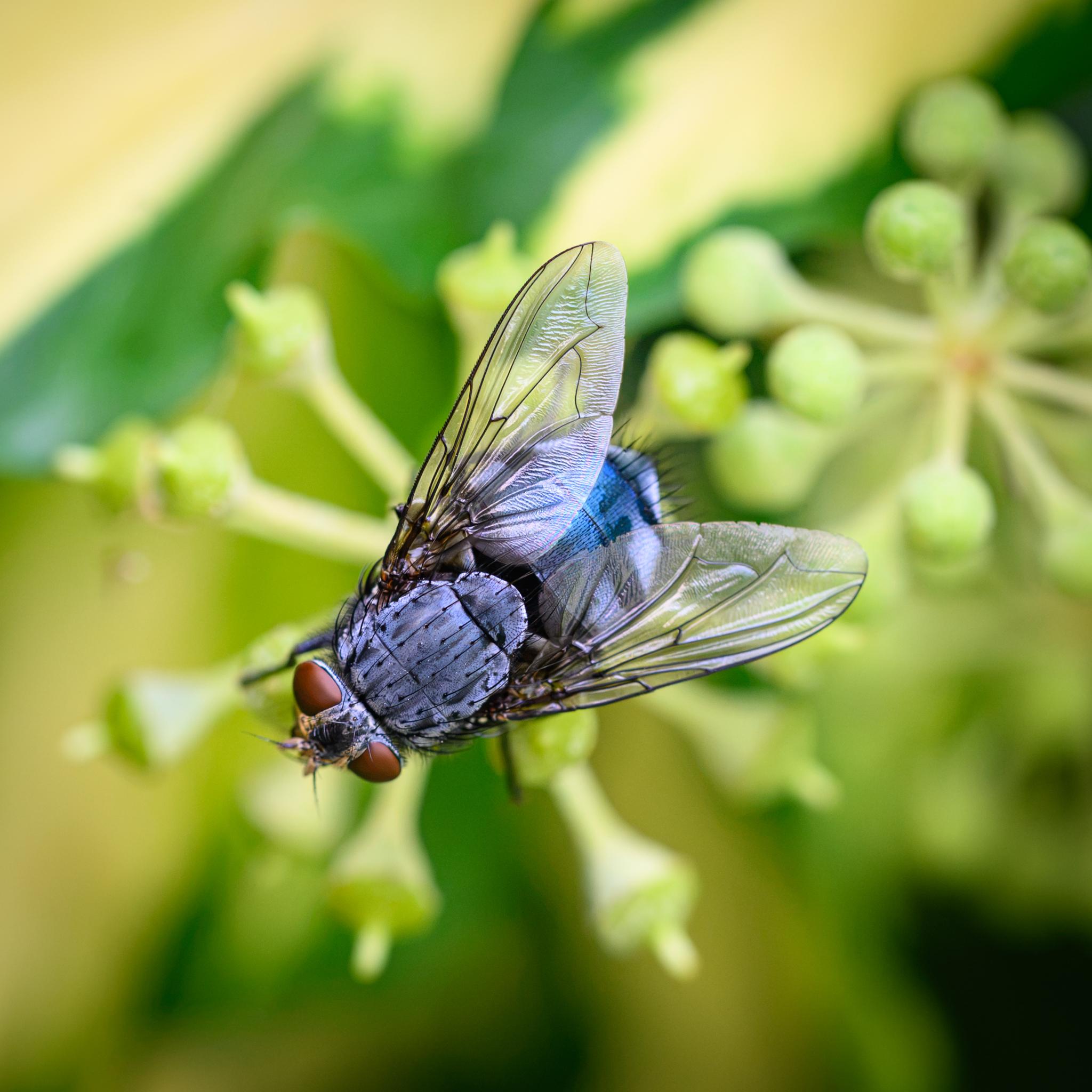
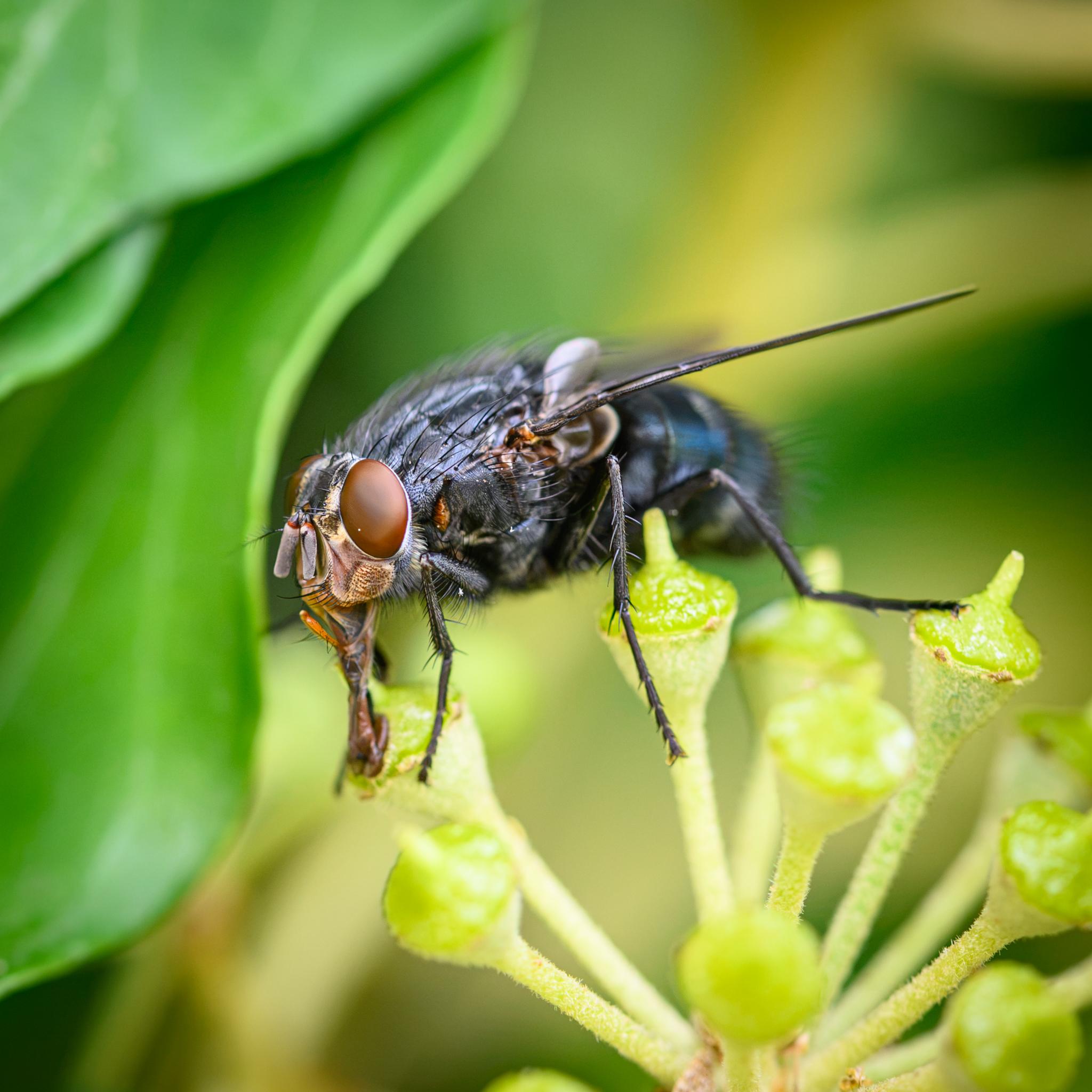
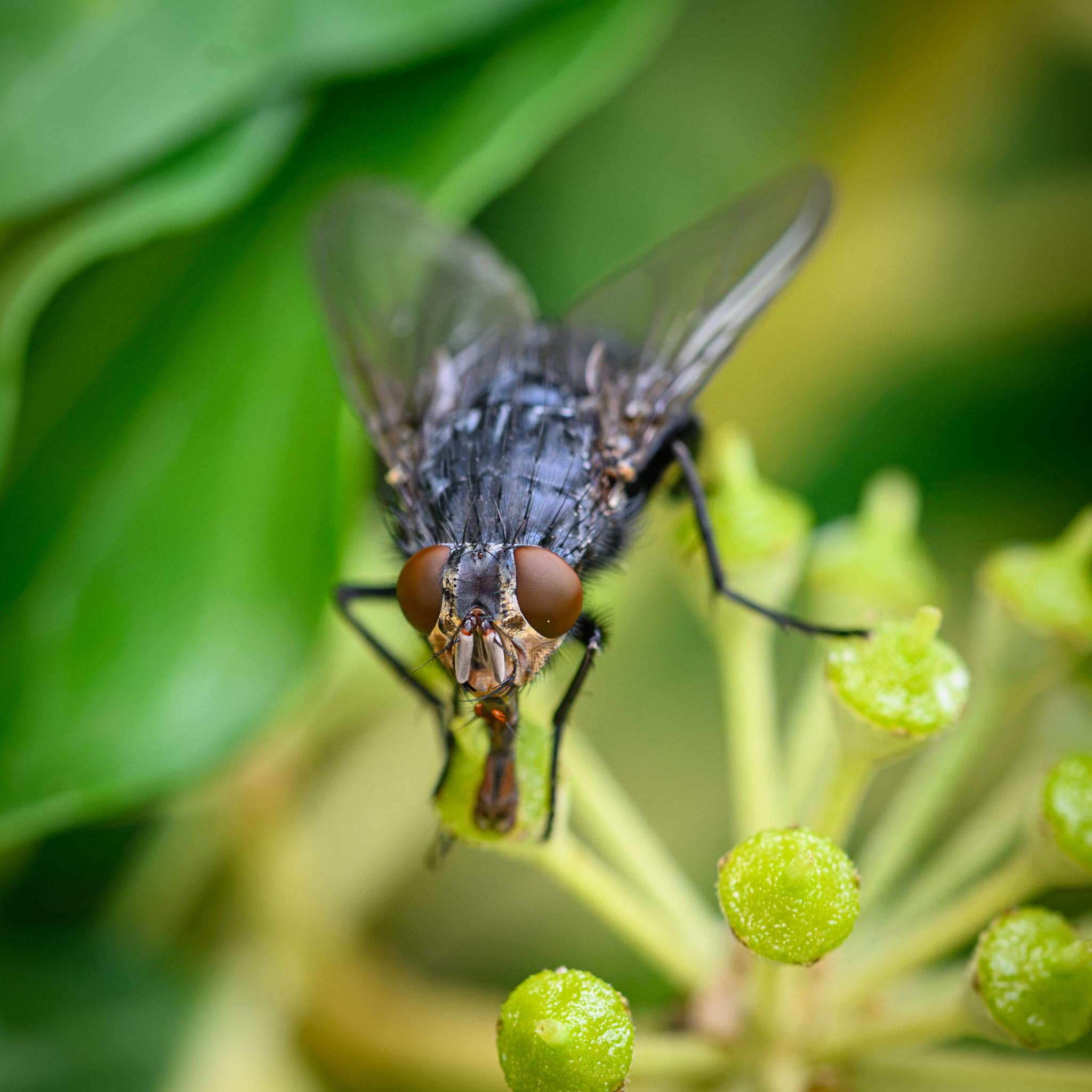
Since this female blue blowfly (Calliphora vicina; 🇩🇪 Blaue Schmeißfliege) was good enough to pose for me on the ivy for a while, I thought I'd share a bunch of pictures to show her off 🤷‍♂️🙂

Four here & another three in the next toot.

🏰
📷️️️️️️️️️️️️️️️️️️️️️️️️️️️️️️️️️️️️️️️️️️️️️️️️️️️️️️️️️️️️️️️️️️️️️️️️️️️️️️️️️️️️️️️️️️️️️️️️️️️️️️️️️️️️️️️️️️️️️️️️️️️️️️️️️️️️️️️️️️️️️️️️️️️️️️️️️️️️️️️️️️️️️️️️️️️️️️️️
🐞
🔬
🪰
🪲

A large blowfly seen from above feeding on a yellow-green ivy flower head. The fly has brick red compound eyes widely set in a grey and black head, marking it as a female. The three small ocelli can be seen in the gap. The thorax is a dusty blue grey with darker longitudinal partial stripes, many fine black hairs, and lots of long black bristles. The abdomen isn't well see from this angle, but is a metallic blue with dark grey patches and many black bristles near the end. The wings are clear, with dark veins, darkening to a light brown right at the roots. The same fly seen side-on, hanging half upside down from the ivy flower. The beige lower parts of the face can be seen, along with the long, wide proboscis and mouthparts feeding from the flower. The mostly grey thorax has some small brown parts, while the shiny metallic blue abdomen is seen more clearly, with many short and long dark bristles. The underside of the abdomen appears light grey from this angle. The legs are grey-black with many black spines and bristles. The same fly seen in half profile, this time right-side up showing the grey upper part of the face between the eyes with a central black stripe, turning beige / light brown lower down, with many short dark hairs. The antennae are grey with a spot of red at the root. The proboscis and mouthparts are protruding downwards, mostly out of focus. One of the maxillary palps (I think) is seen in orange, pointing up just below the head, with black hairs on it. A head-on view of the fly slightly from above, showing the head, eyes, and antennae in more detail. The proboscis and mouth are again extended down to the flower, but mostly out of focus apart from the orange tips of the upwards protruding maxillary palps. The front of the thorax is in focus, but the rest of the fly is out of focus in the background.

#photography #macrophotography #bugoftheday #heidelberg #insectsofmastodon #backgardenentomology

0

Caricamento...

0
2

Caricamento...

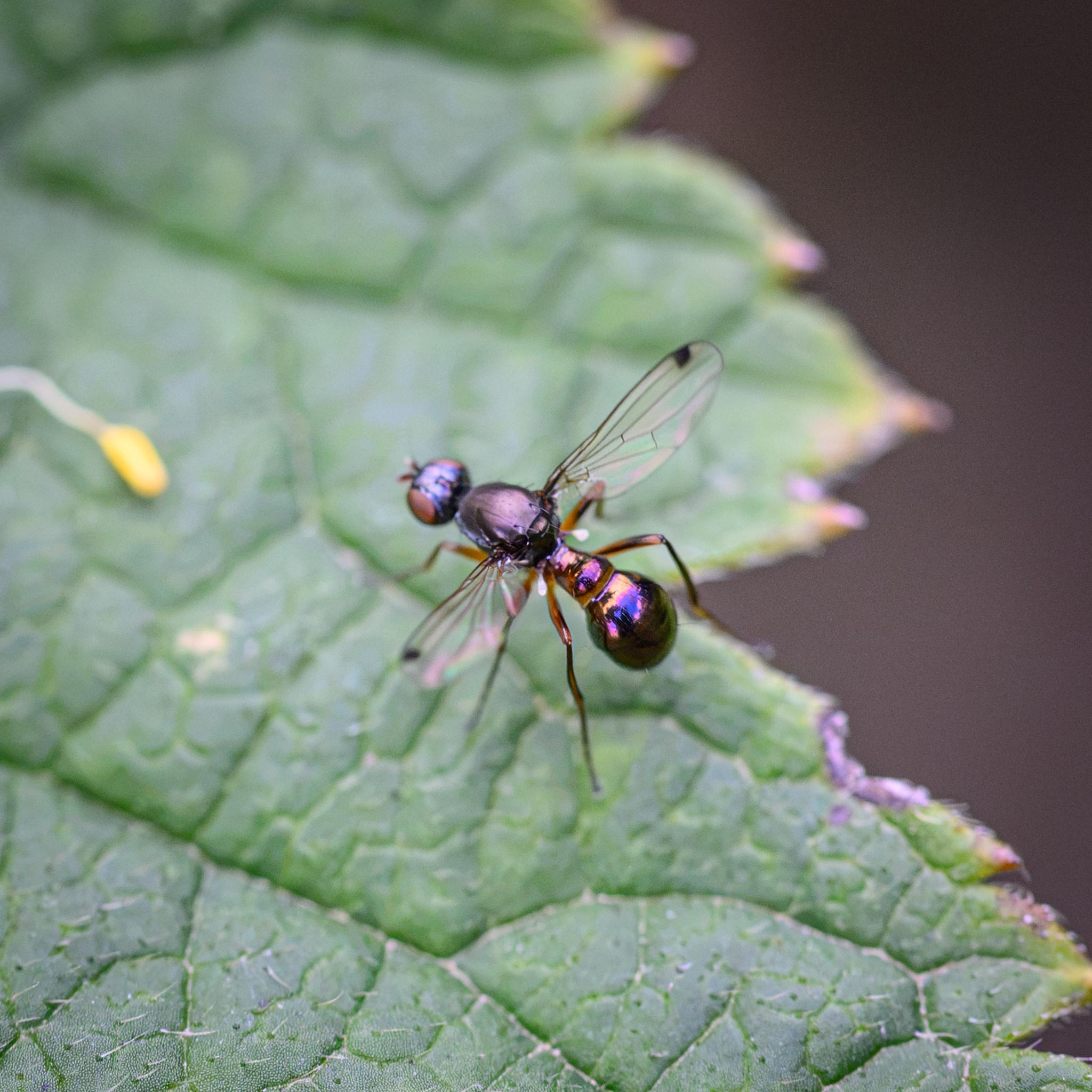
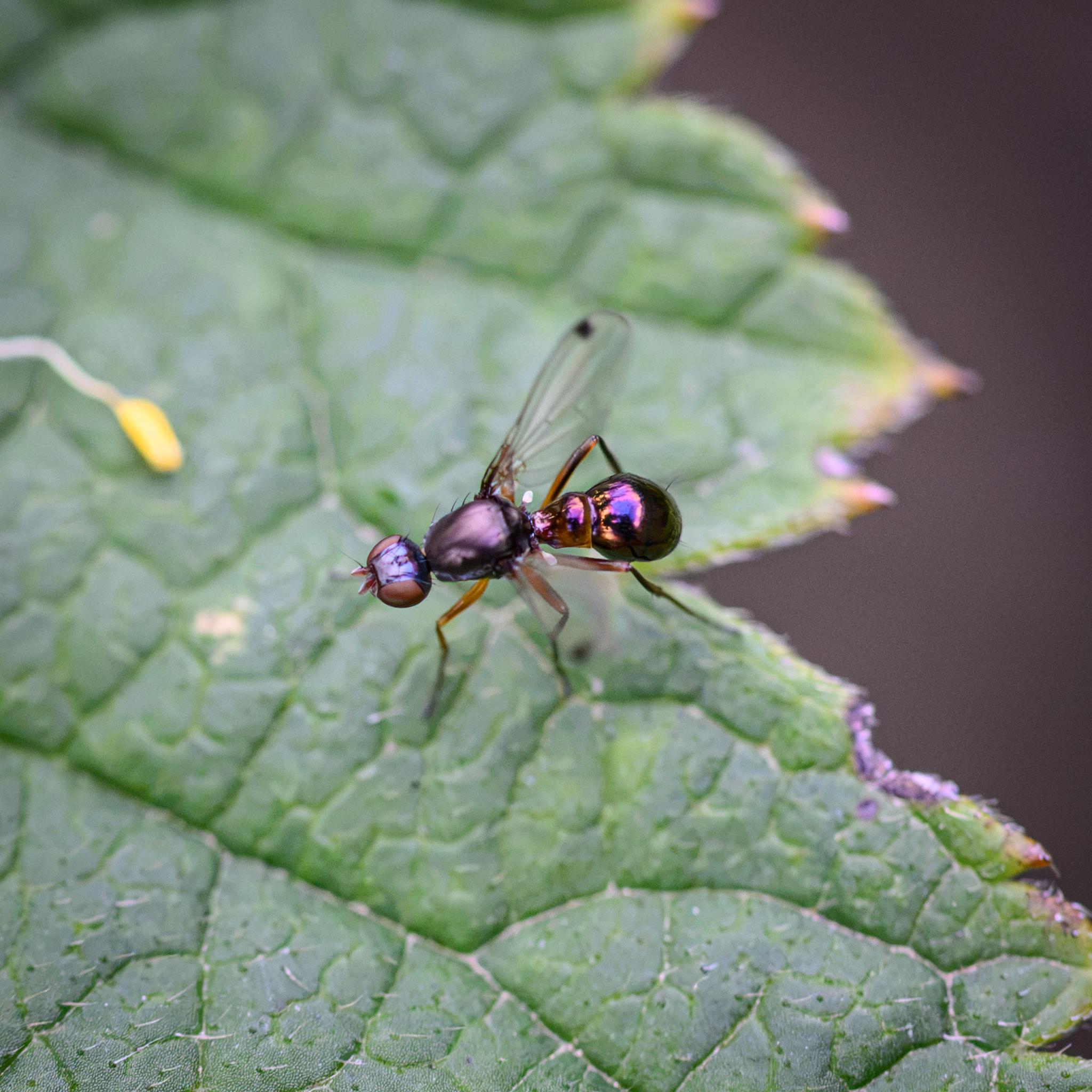
I wish I'd had more time to do this iridescent dung fly justice, but it flew off before I could my tripod set up 🤷‍♂️

The wing spots mark it as genus

Altro...

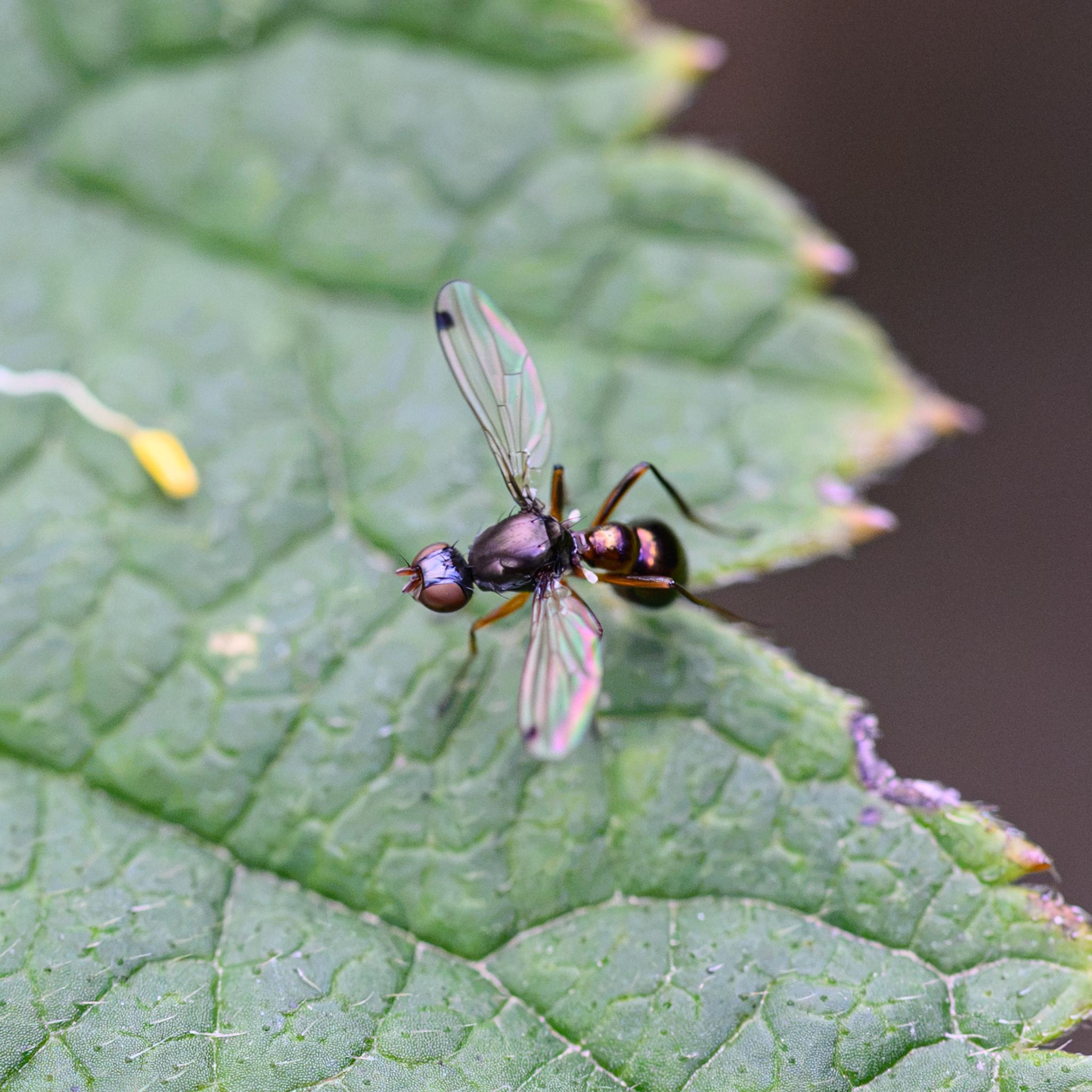
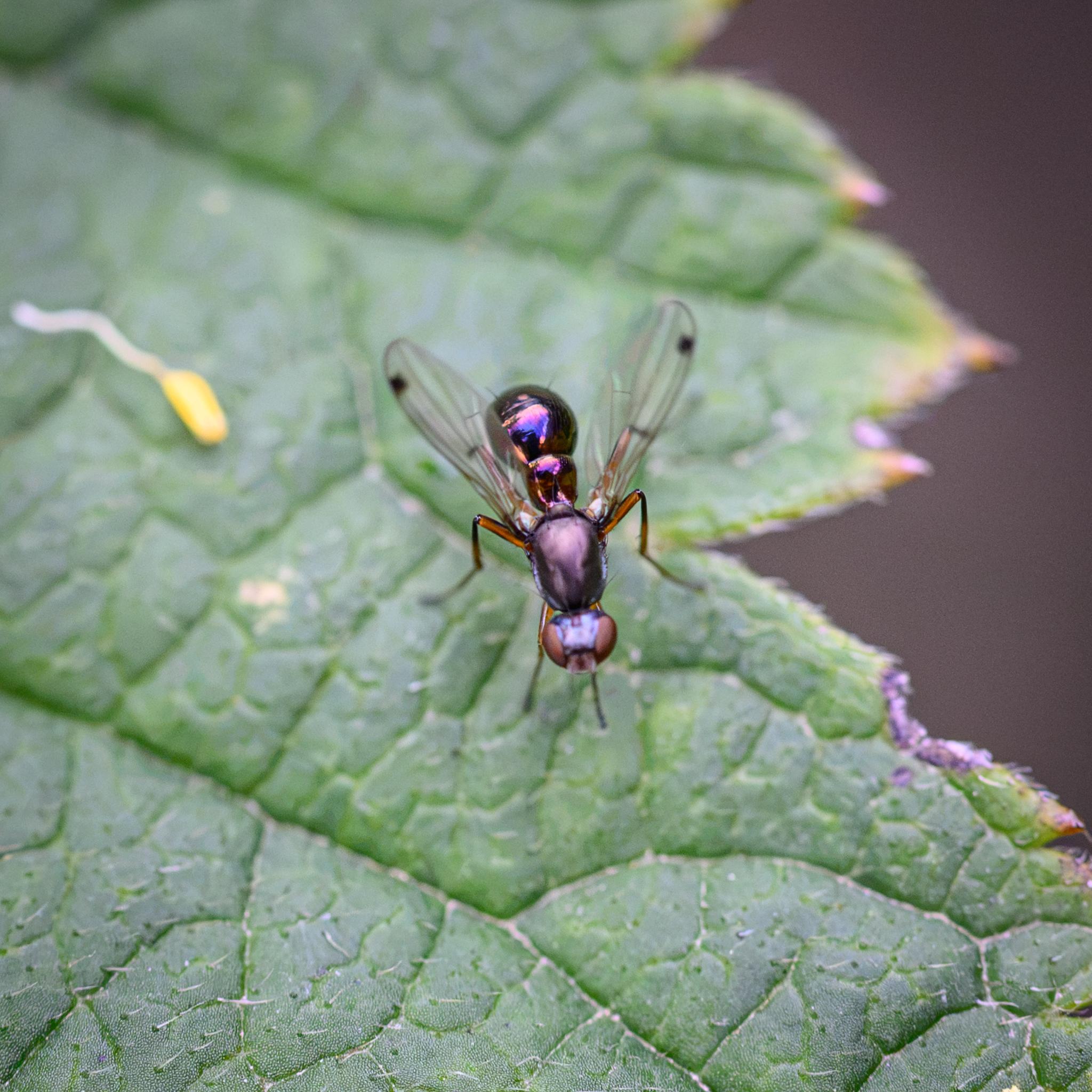
I wish I'd had more time to do this iridescent dung fly justice, but it flew off before I could my tripod set up 🤷‍♂️

The wing spots mark it as genus Sepsis, which often need microscopic inspection to ID definitively.

The yellow & purple colours lean towards S punctum, but S fulgens is also possible.

🏰
📷️️️️️️️️️️️️️️️️️️️️️️️️️️️️️️️️️️️️️️️️️️️️️️️️️️️️️️️️️️️️️️️️️️️️️️️️️️️️️️️️️️️️️️️️️️️️️️️️️️️️️️️️️️️️️️️️️️️️️️️️️️️️️️️️️️️️️️️️️️️️️️️️️️️️️️️️️️️️️️️️️️️️️️️️️️️️️️️
🐞
🔬
🪰
🪲

A small fly seen side on and from above on a green leaf. The fly has clear wings with a black spot on the outer leading edge of each, and the fly has its wings spread wide, as it was wiggling them. There is some iridescence in the wings. The head of the fly is almost spherical, with large brick red compound eyes flush with the sphere, and with a very shiny black region reflecting daylight above between. It has small brown antennae. The thorax is a smooth, semi-reflective purple bronze, with some large black bristles and some much smaller hairs between. The abdomen is less well seen from this angle, but shows intense yellow and purple metallic highlights on a dark base. The legs are amber, with darker parts. The same fly seen from in front and above, showing many of the same features. The head and abdomen are somewhat out of focus, but the striking metallic abdomen with its yellows and purples is better seen, as are a pair of black bristles near the rear of the abdomen. Another view above and slightly behind, showing the thorax and abdomen in more detail. The latter has a semi-metallic dark bronze colour with a slight purple hint, while the abdomen is highly reflective with yellow and purple on the first, smaller tergites, then more yellow and darker purple on the larger rear tergites. Finally, a view from the side and above again, as in the first picture, but with the wings more folded back, also showing more intense colour in the abdomen, and a pair of small white halteres at the base of the wings. Some bristles are also seen in the dark shiny region between the eyes.

#photography #macrophotography #bugoftheday #heidelberg #insectsofmastodon #backgardenentomology

0

Caricamento...

0
2

Caricamento...

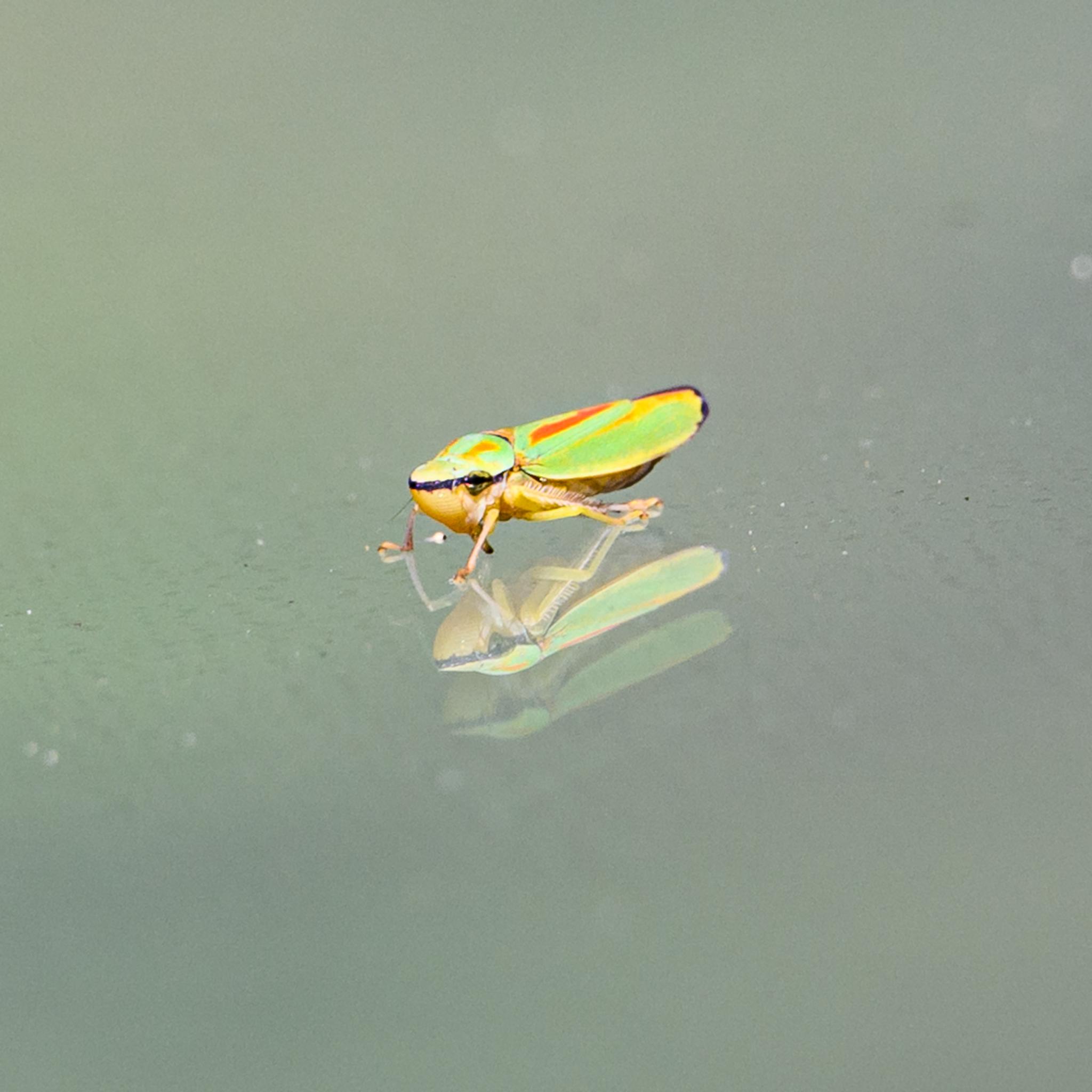
Bloody Yanks, coming over here, sucking our sap ... 🙄

This is a rhododendron leafhopper (Graphocephala fennahi; 🇩🇪 Rhododendron-Zikade).

Native to t

Altro...

Bloody Yanks, coming over here, sucking our sap ... 🙄

This is a rhododendron leafhopper (Graphocephala fennahi; 🇩🇪 Rhododendron-Zikade).

Native to the eastern US, it arrived on plants in the UK in the 30s & Europe in the 70s.

Ironically, it lives in fear of the harlequin ladybird, another invader.

🏰
📷️️️️️️️️️️️️️️️️️️️️️️️️️️️️️️️️️️️️️️️️️️️️️️️️️️️️️️️️️️️️️️️️️️️️️️️️️️️️️️️️️️️️️️️️️️️️️️️️️️️️️️️️️️️️️️️️️️️️️️️️️️️️️️️️️️️️️️️️️️️️️️️️️️️️️️️️️️️️️️️️️️️️️️️️️️️️️️
🐞
🔬
🪰
🪲

A small leafhopper seen in half-profile, standing on the windscreen of my car, reflected several times in the multi-layer glass. The lower half of the leafhopper is yellow, including the legs, the latter with spines. Separated by a horizontal black stripe at the level of the eyes, the top half of the head and the wings are a lurid mix of green, orange, and red stripes, with black at the tip.

#photography #macrophotography #bugoftheday #heidelberg #insectsofmastodon #backgardenentomology

22

Caricamento...

4
6

Caricamento...

A few evening smash & grabs, meaning fairly poor pictures taken quickly and/or from a distance 🤷‍♂️

First is a female yellow-haired sun fly (Myathrop

Altro...

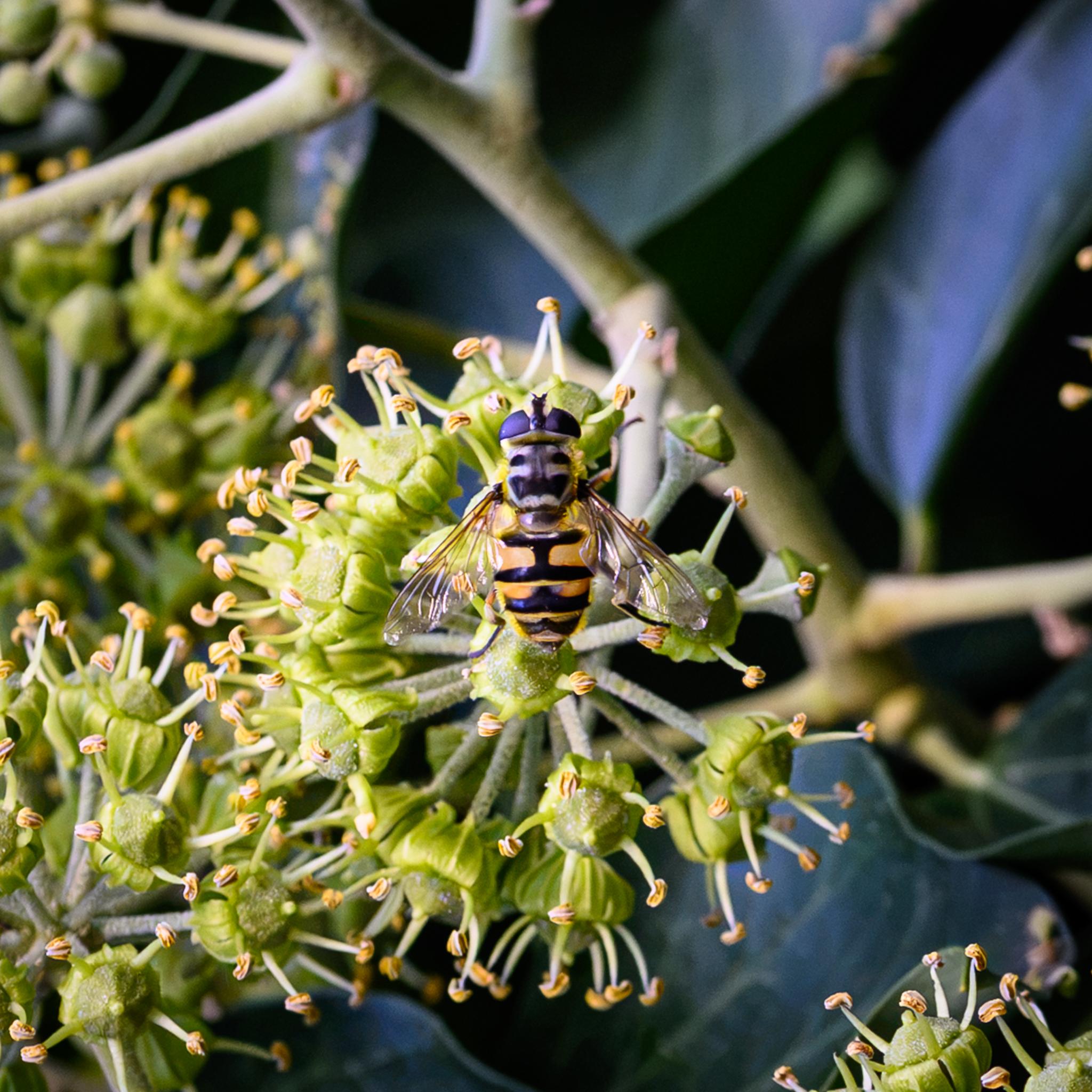
A few evening smash & grabs, meaning fairly poor pictures taken quickly and/or from a distance 🤷‍♂️

First is a female yellow-haired sun fly (Myathropa florea). The distinctive thorax markings give it its 🇩🇪 name, Totenkopfschwebfliege, although I also like the English alternative, Batman hoverfly 🦇🙂

🏰
📷️️️️️️️️️️️️️️️️️️️️️️️️️️️️️️️️️️️️️️️️️️️️️️️️️️️️️️️️️️️️️️️️️️️️️️️️️️️️️️️️️️️️️️️️️️️️️️️️️️️️️️️️️️️️️️️️️️️️️️️️️️️️️️️️️️️️️️️️️️️️️️️️️️️️️️️️️️️️️️️️️️️️️️️️️️️️️
🐞
🔬
🪰
🪲

A large hoverfly seen from behind on an ivy flower. The fly has large dark brown compound eyes and a black and yellow banded abdomen. The wings are clear with touches of amber near the roots. The thorax is distinctive, showing a base of white and two black lateral bands. The lower band has the classic Batman logo shape and combined the white and black resembles a deaths head (sort of). The same fly seen more from behind, showing more details of the black and yellow banded abdomen, but also again the Batman logo shape black band on the thorax.

#photography #macrophotography #bugoftheday #heidelberg #insectsofmastodon #backgardenentomology

0

Caricamento...

0
2

Caricamento...

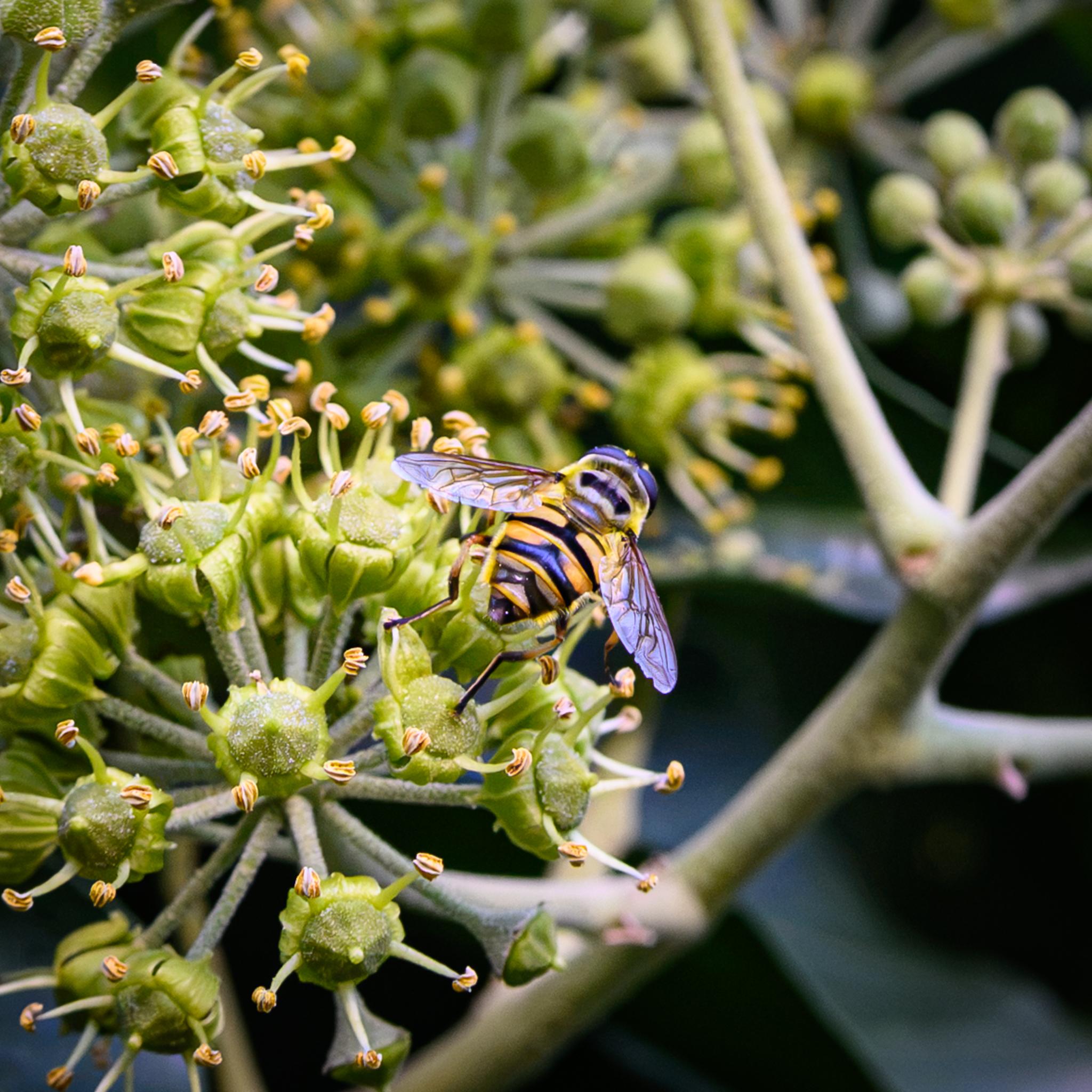
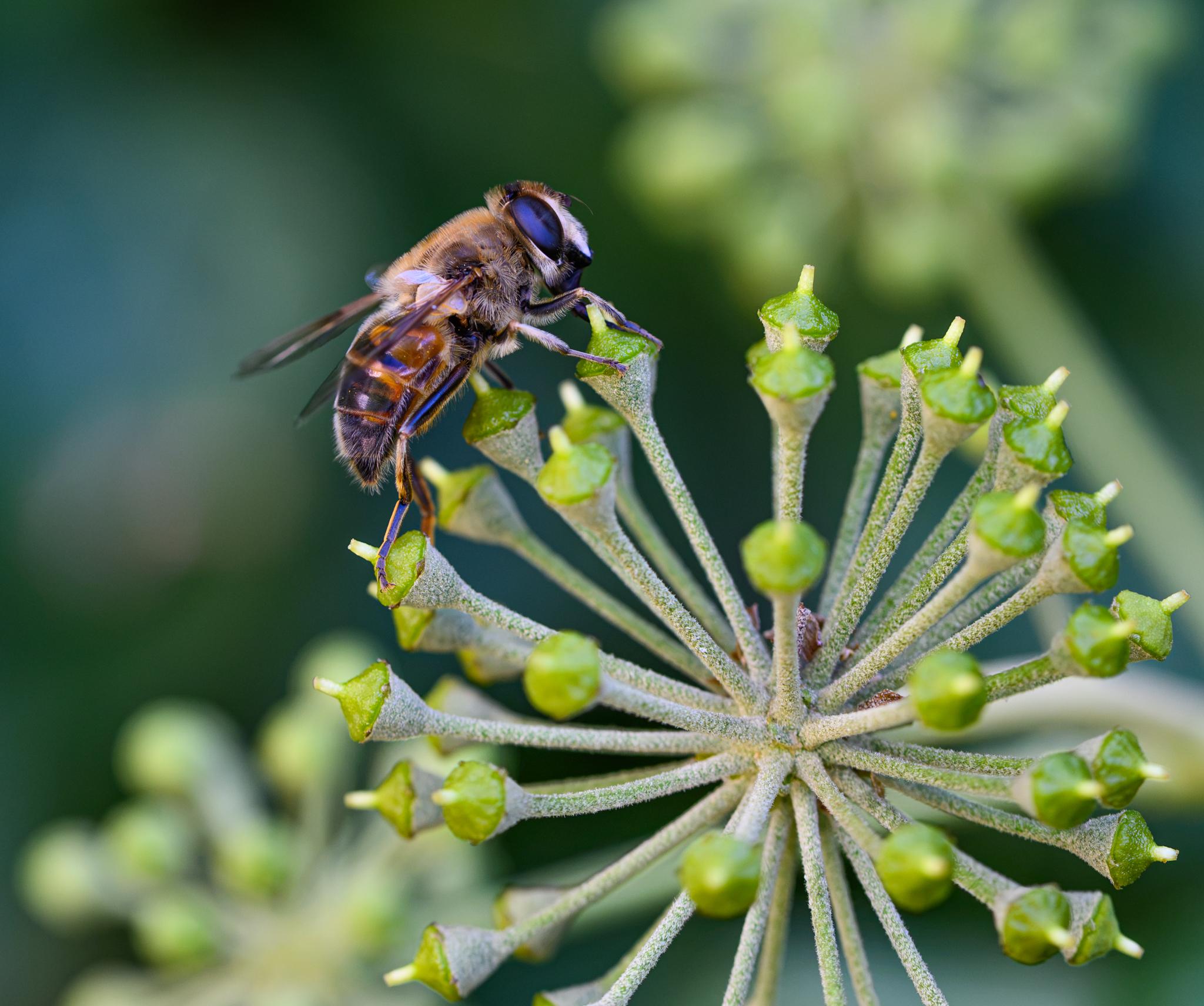
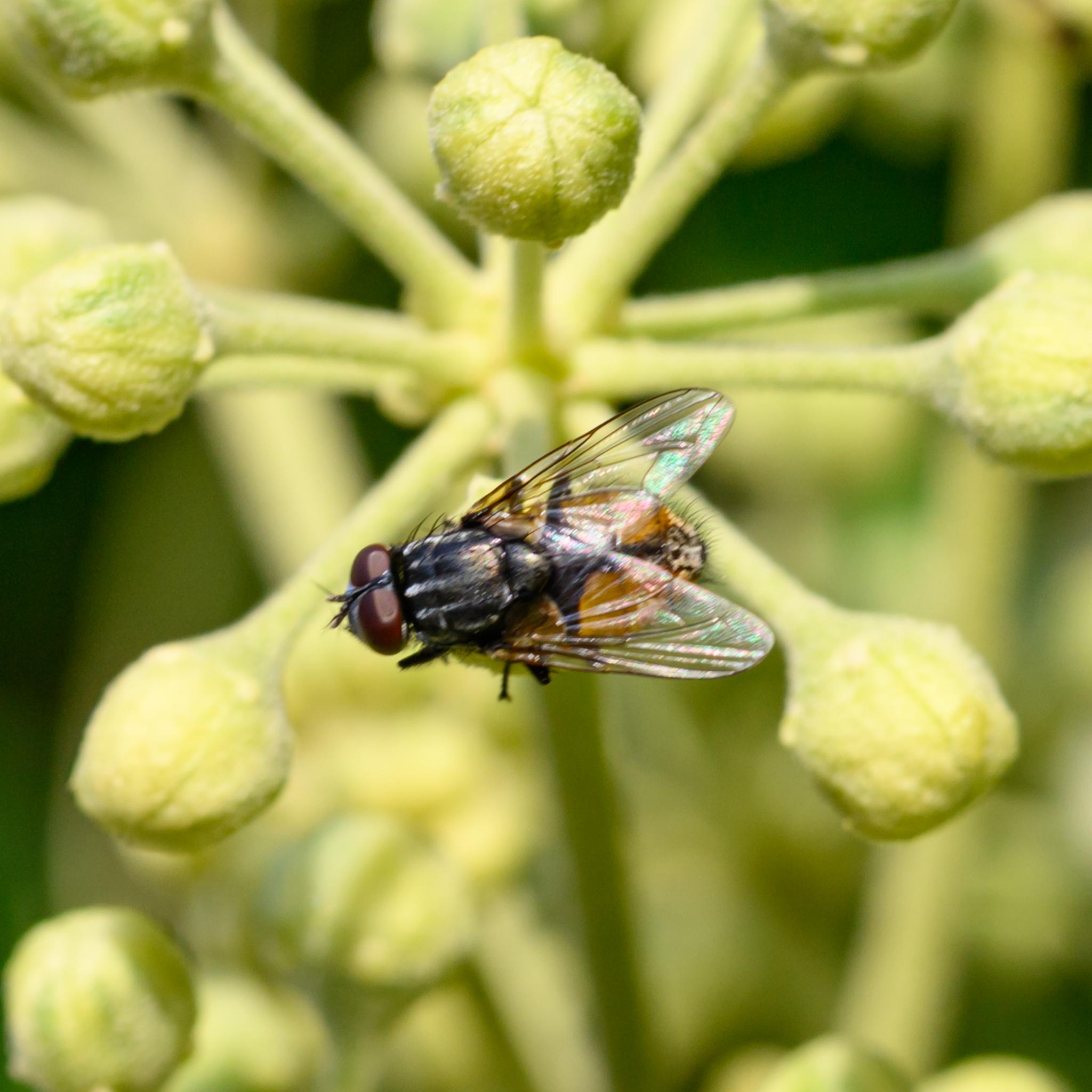
Then several flies feeding on the ivy:

A common drone fly (Eristalis tenax; 🇩🇪 Mistbiene [not as pretty as it sounds]), which are frequently seen in

Altro...

Then several flies feeding on the ivy:

A common drone fly (Eristalis tenax; 🇩🇪 Mistbiene [not as pretty as it sounds]), which are frequently seen in my garden, & a male face fly (Musca autumnalis; 🇩🇪 Herbstfliege), quickly & poorly grabbed with the wrong camera settings before it flew off 🙈

🏰
📷️️️️️️️️️️️️️️️️️️️️️️️️️️️️️️️️️️️️️️️️️️️️️️️️️️️️️️️️️️️️️️️️️️️️️️️️️️️️️️️️️️️️️️️️️️️️️️️️️️️️️️️️️️️️️️️️️️️️️️️️️️️️️️️️️️️️️️️️️️️️️️️️️️️️️️️️️️️️️️️️️️️️️️️️️️️️️
🐞
🔬
🪰
🪲

A large drone fly seen side-on on an green ivy flower. The fly has a white face, black compound eyes, and hairs all over its head. The thorax is likewise very golden hairy over a dark bronze. The abdomen is black and gold, tapering towards the end, with many fine white hairs. The legs are dark, albeit with golden hairs on the hind femora and tibia – this is a marker for E tenax relative to most of the other Eristalis species. A shaky picture of a small fly seen from above on closed yellow-green ivy flowers. The fly has red compound eyes close together, marking it as male. The thorax is black with longitudinal grey stripes and black bristles. The wings are clear with hints of amber towards the base. The abdomen is black and yellow, with a black stripe running towards the tip which is black and white with relatively small black bristles.

#photography #macrophotography #bugoftheday #heidelberg #insectsofmastodon #backgardenentomology

0

Caricamento...

0
2

Caricamento...

Something old, something new ...

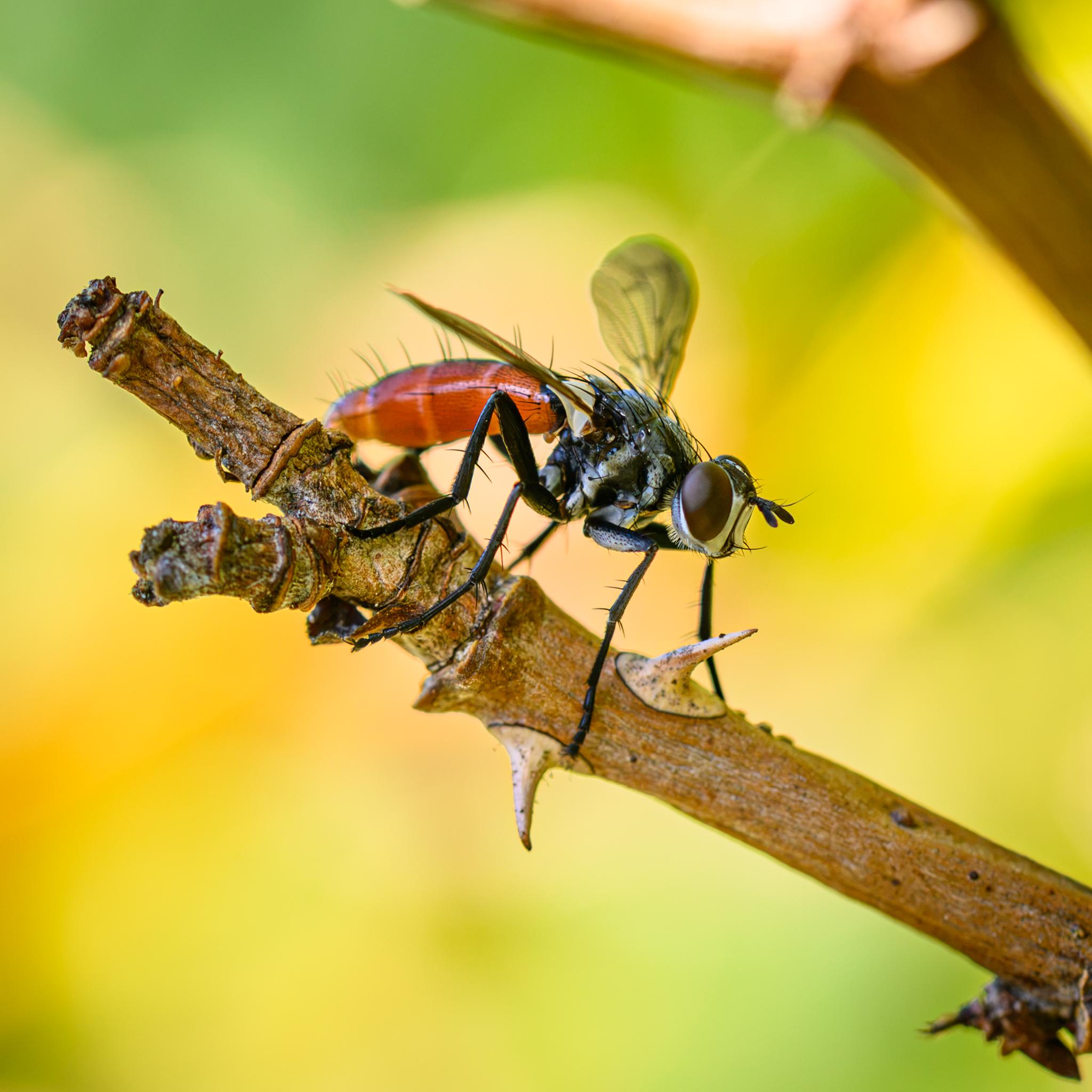
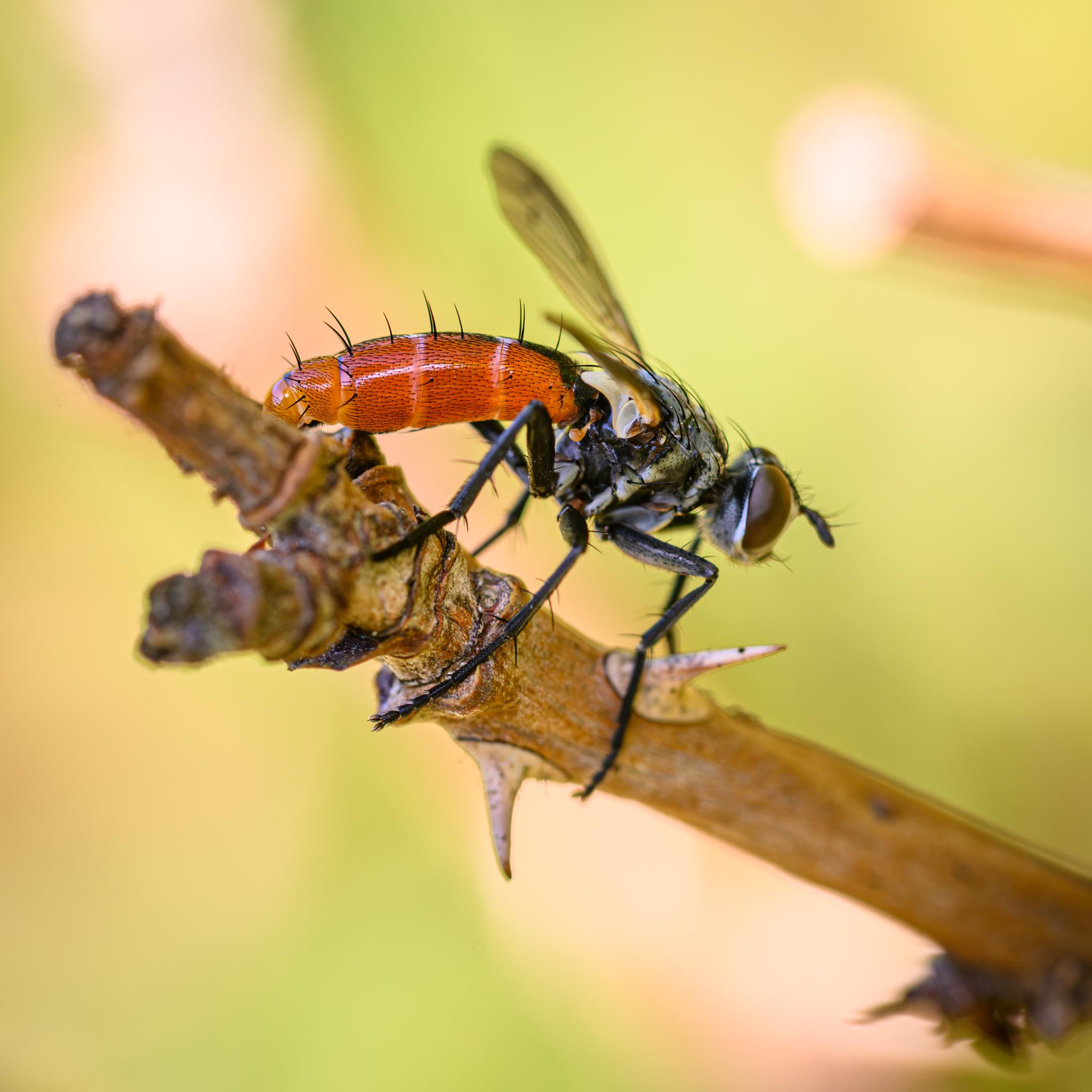
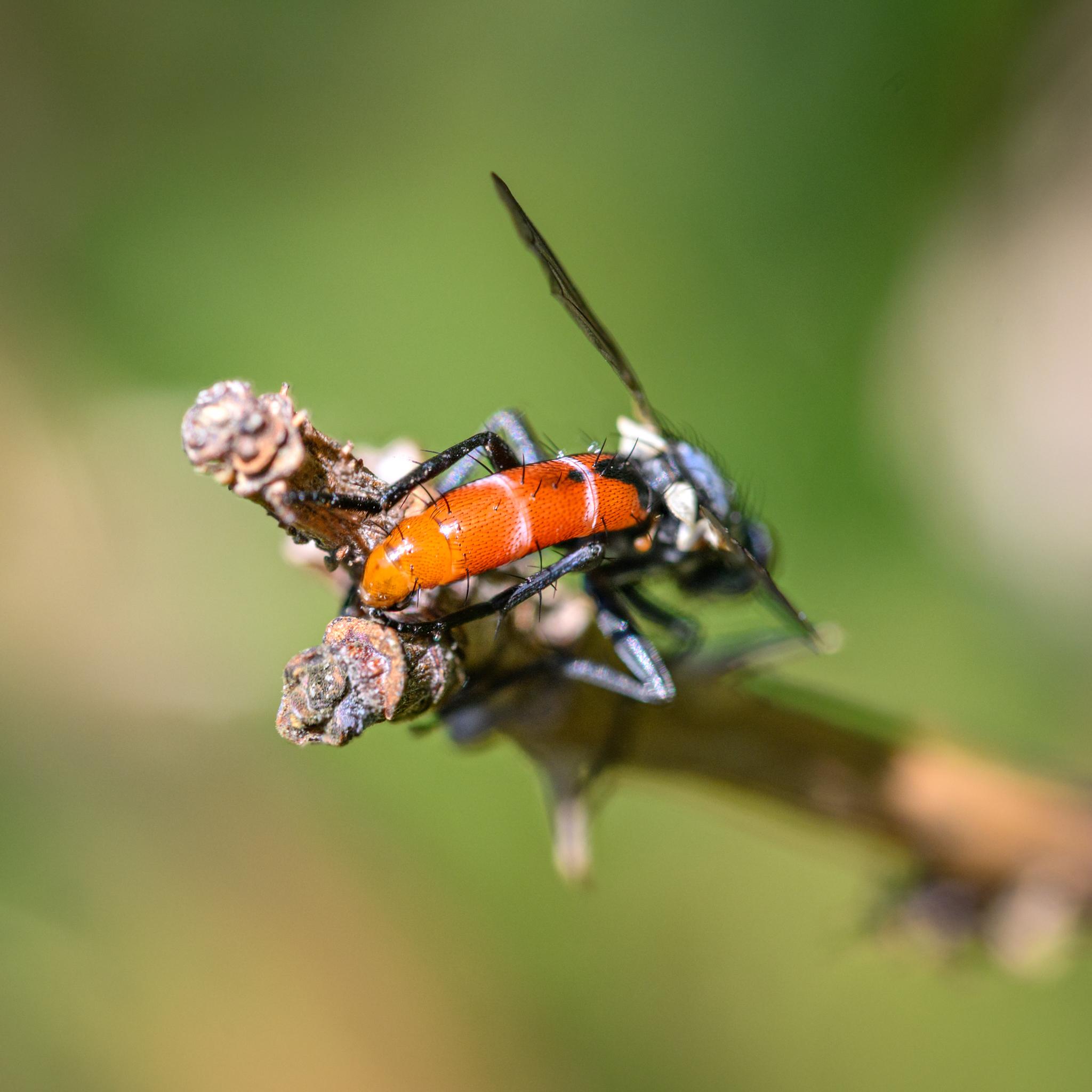
First, one of the more elusive Cylindromyia flies for me, albeit fairly common in this area.

This is a female Cylin

Altro...

Something old, something new ...

First, one of the more elusive Cylindromyia flies for me, albeit fairly common in this area.

This is a female Cylindromyia bicolor (🇩🇪 Zweifarbige Raupenfliege), calmly posing in the rose bush.

Easily ID'd, as it lacks the black abdomen tip most other species have.

🏰
📷️️️️️️️️️️️️️️️️️️️️️️️️️️️️️️️️️️️️️️️️️️️️️️️️️️️️️️️️️️️️️️️️️️️️️️️️️️️️️️️️️️️️️️️️️️️️️️️️️️️️️️️️️️️️️️️️️️️️️️️️️️️️️️️️️️️️️️️️️️️️️️️️️️️️️️️️️️️️️️️️️️️️️️️️️️️️
🐞
🔬
🪰
🪲

A large tachnid fly on a rose bush stem with several thorns. It is is the shade, seen in half profile against a sunlit yellow and green background that is out of focus. The fly has a white face with a black central section, red compound eyes, and some white hairs below. The antennae are black. The thorax is a patchwork of grey and black with many long black bristles on top. The legs are mostly black and bristly, with grey undersides on the femora. The abdomen is orange with a black band at the top, and has many short black hairs and long black bristles. It is mostly out of focus in this shot. The wings are also out of focus, but are clear grey. A side-on picture of the same fly in the same setting, but now with the orange abdomen in focus, showing the many short black hairs and the black bristles along the top of the tergites, as well as on the sides towards the end. The black band at the top of the abdomen is seen to extend along the top of the second tergite and slightly into the third. Hints of grey-white bands are seen at the ends of the second and third tergites, on the dorsal side. A view from behind and above, now in sunlight, showing the orange cylindrical abdomen with its many fine black hairs and much thicker, longer black bristles. The grey-white bands on the dorsal sides of T2 and T3 are seen, as is the longitudinal black stripe that extends the the edge of T2, with a brief extension into T3. The tip of the abdomen remains orange, identifying this as Cylindromyia bicolor.

#photography #macrophotography #bugoftheday #heidelberg #insectsofmastodon #backgardenentomology

24

Caricamento...

0
9

Caricamento...

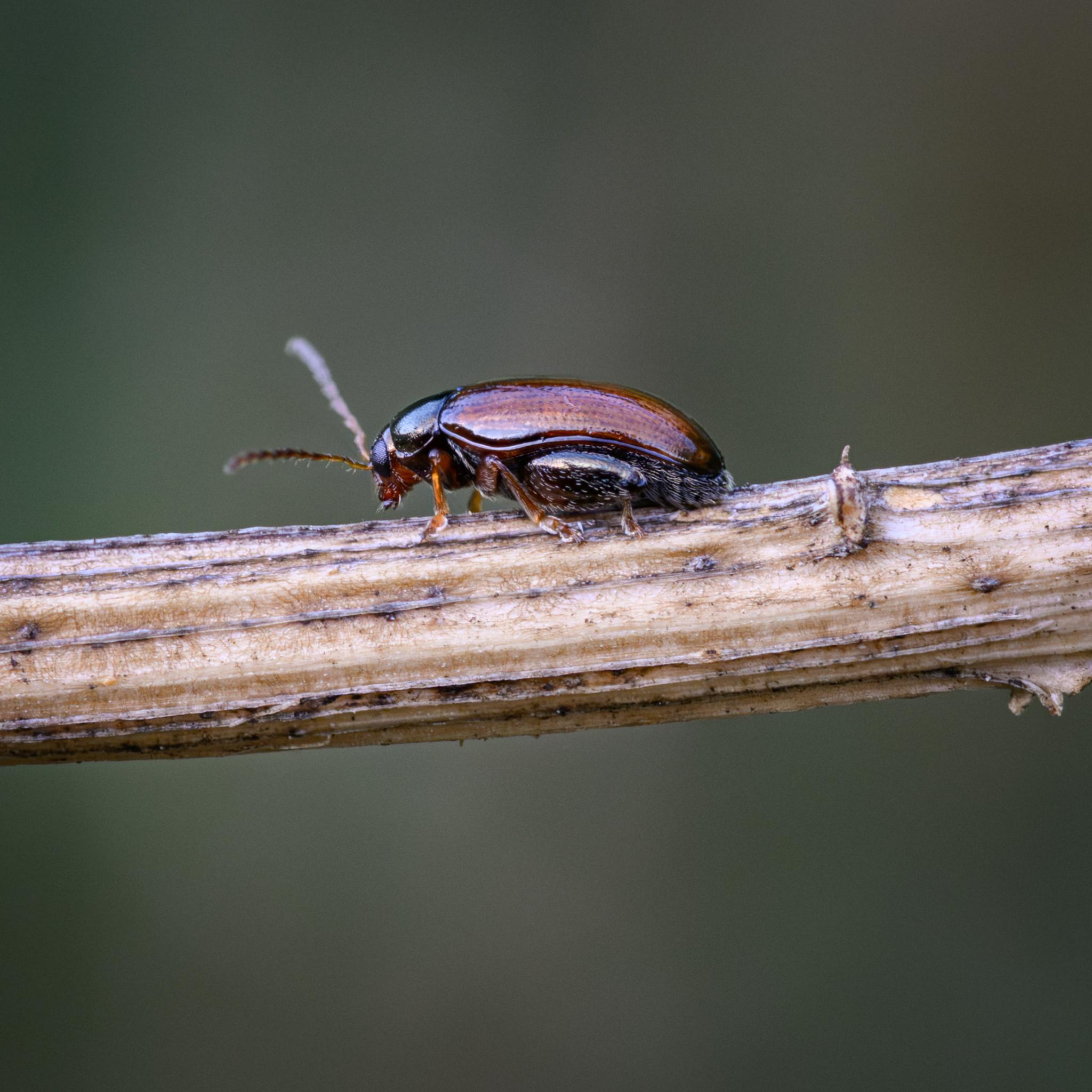
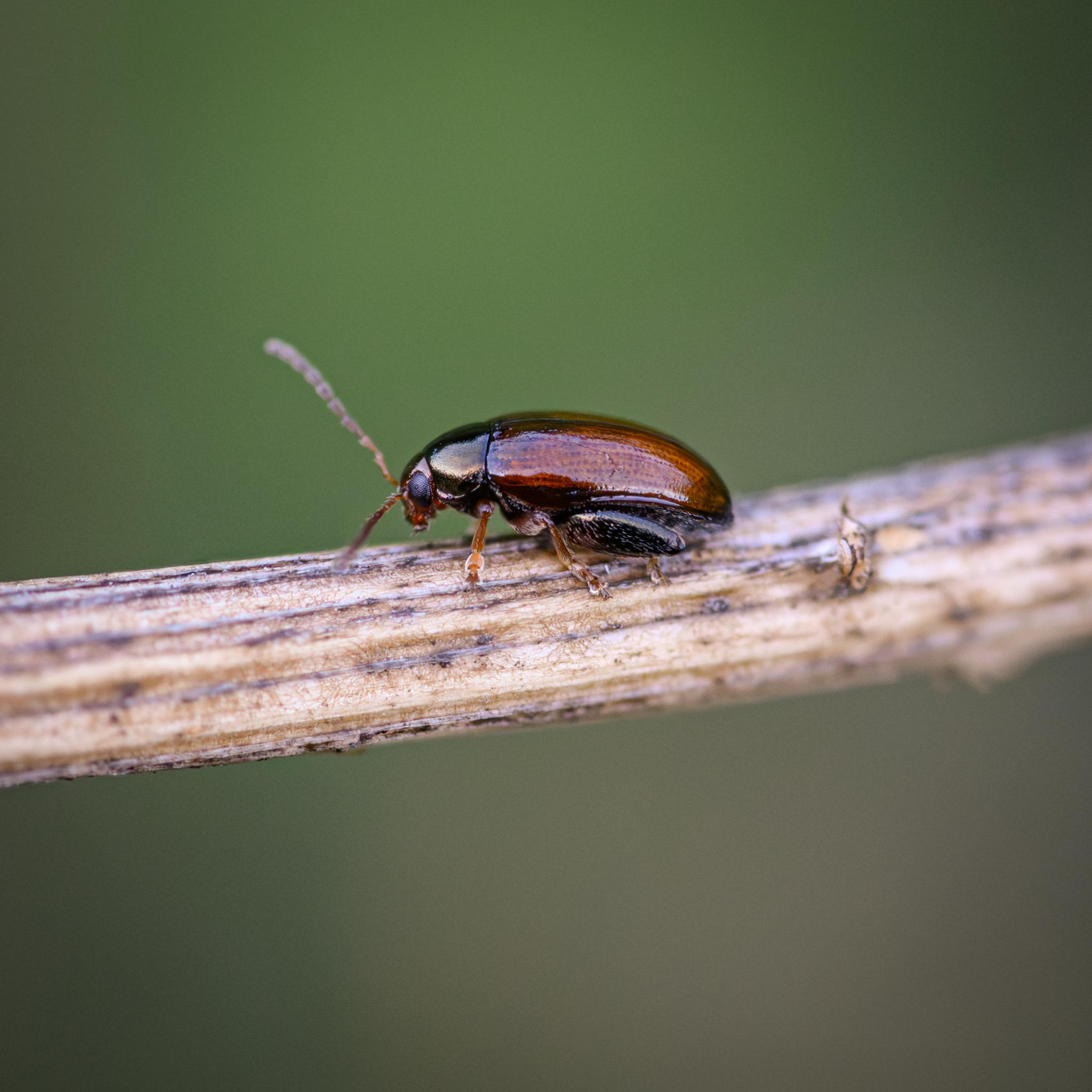
An evening curiosity.

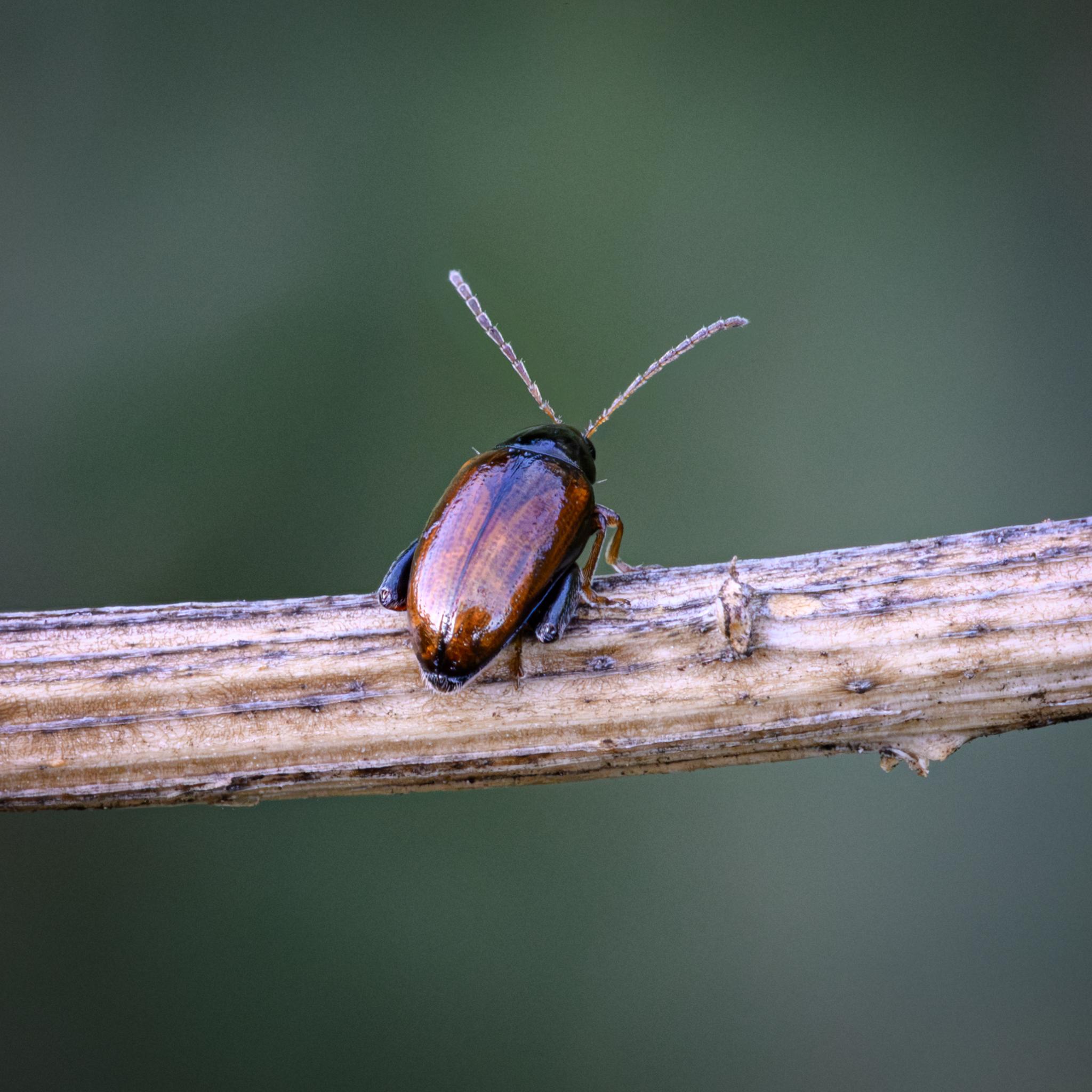
This is a flea beetle in genus Psylliodes & as it was on dried brassica, best guess is P chrysocephala, the cabbage-stem flea

Altro...

An evening curiosity.

This is a flea beetle in genus Psylliodes & as it was on dried brassica, best guess is P chrysocephala, the cabbage-stem flea beetle (🇩🇪 Großer Rapserdfloh).

They're usually dark green, but can come in brown too (var anglica), albeit mostly in the UK & very rarely in DE in iNat.

🏰
📷️️️️️️️️️️️️️️️️️️️️️️️️️️️️️️️️️️️️️️️️️️️️️️️️️️️️️️️️️️️️️️️️️️️️️️️️️️️️️️️️️️️️️️️️️️️️️️️️️️️️️️️️️️️️️️️️️️️️️️️️️️️️️️️️️️️️️️️️️️️️️️️️️️️️️️️️️️️️️️️️️️️️️️️️️️️
🐞
🔬
🪰
🪲

A small beetle seen side on on a horizontal, light brown, dead plant stem. The beetle is shiny all over, with a lighter brown shade on the eyltra, darker on the pronutum, then a red-brown head with black compound eyes. The pronutum is very finely and lightly dimpled, while the elytra have stronger dimples under the shiny surface. The front and mid-legs are mid-brown with fine white hairs, while the hind legs have large femora which are darker brown, and also have fine white hairs. The antennae are out of focus. The same beetle, again seen from the side, but slightly turned away from the camera at the head end. The same general features are seen, along with some details in one of the antennae, which have many V-shaped segments and some fine white hairs. The underside and end of the abdomen is seen, also covered in many fine white hairs. The sinuous curve of the lower edge of the elytra is clear, coming down from the pronutum, then rising up again over the chunky femora, before descending to the tip of the abdomen. A view from a slightly elevated perspective, albeit still side on. The difference between the dark brown-green pronutum and the paler brown elytra is well see. Finally, a view from behind and above, showing how the elytra taper to the hairy end of the abdomen, which sticks out slightly beyond the wing covers. The pale brown colour of the wings under the elytra is clearly seen, apart from the region near the back of the pronutum, where there is a darker V-shape. The dark, heavy femora are seen well from behind, as are the thick multi-segmented antennae.

#photography #macrophotography #bugoftheday #heidelberg #insectsofmastodon #backgardenentomology

0

Caricamento...

0
2

Caricamento...

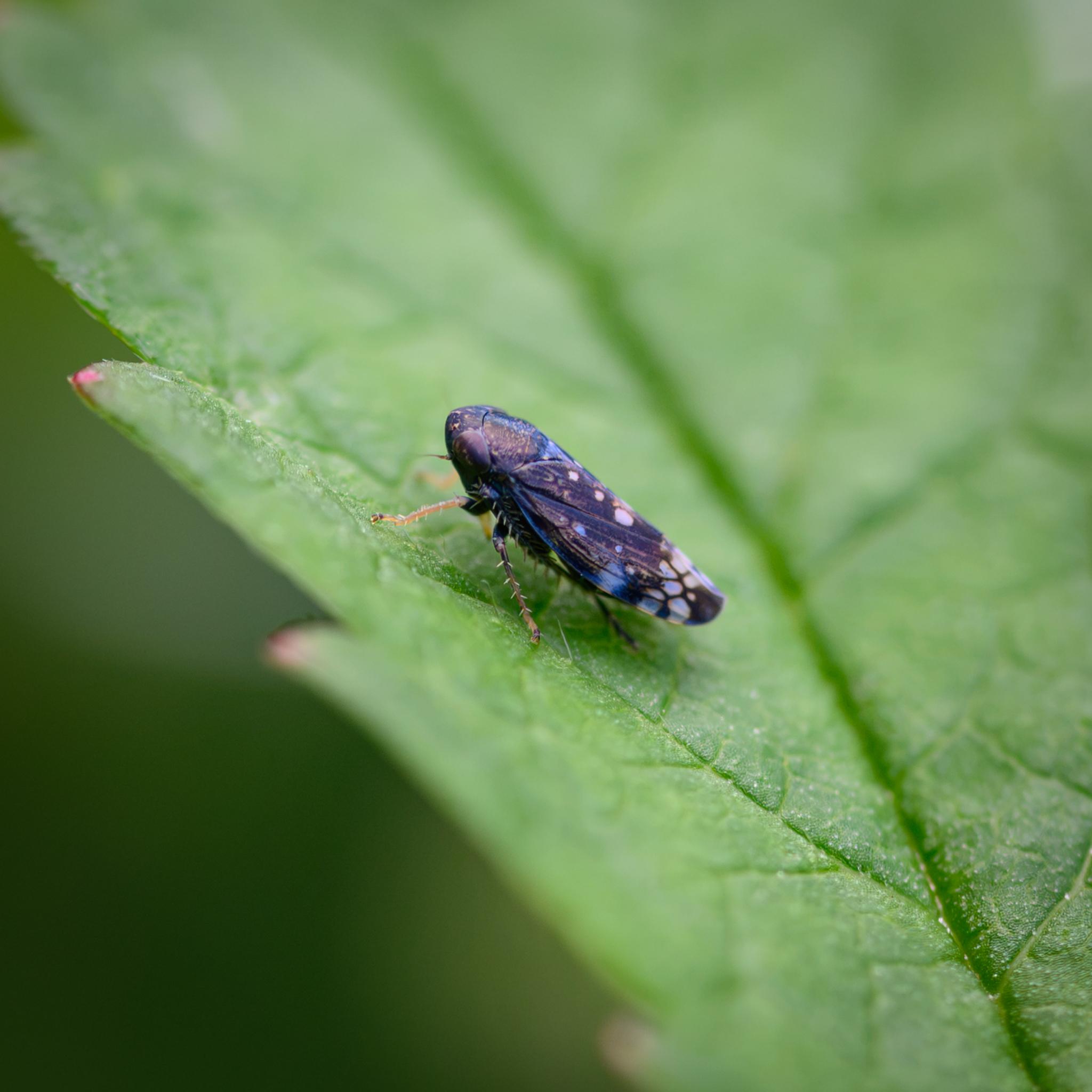
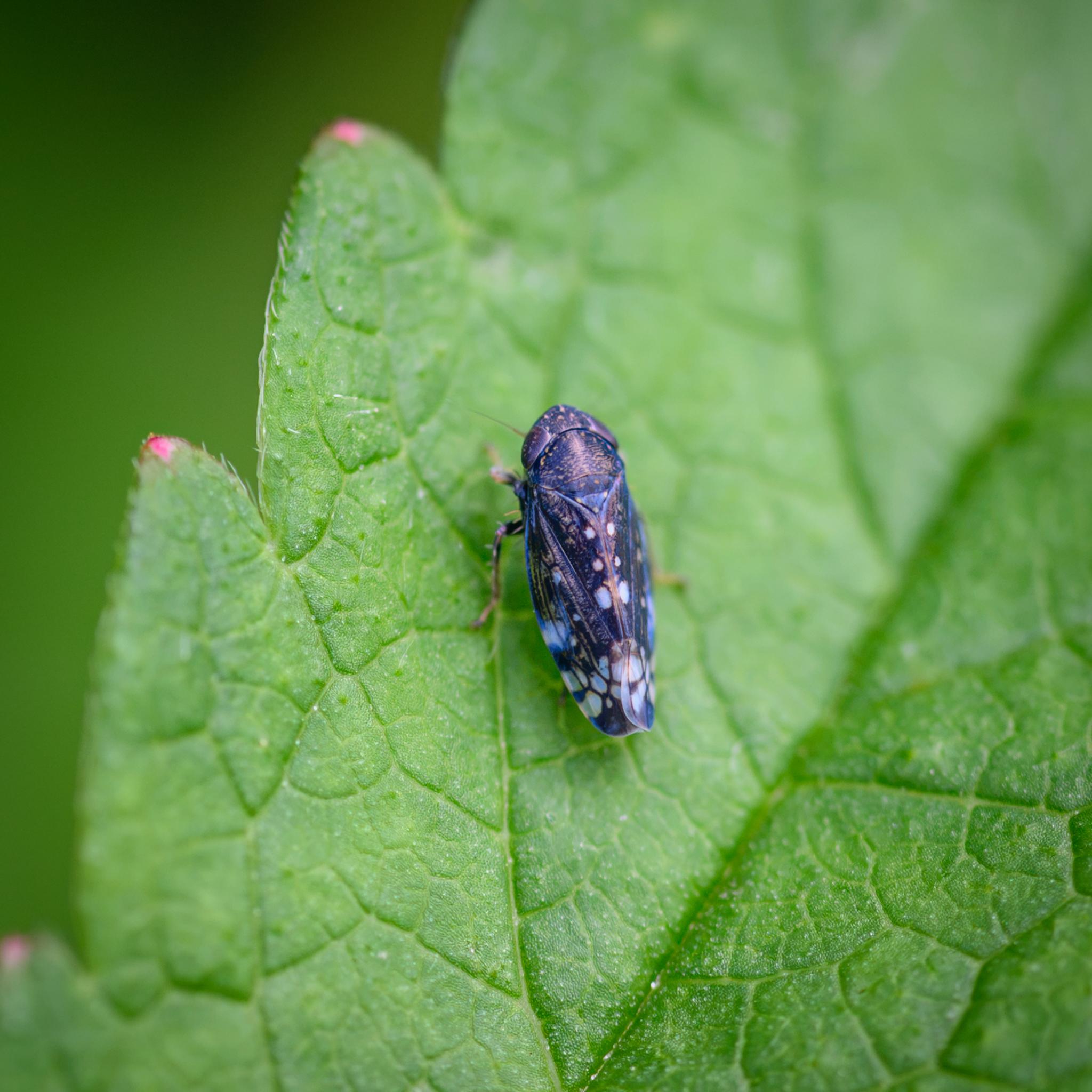
Spotted this tiny ~2mm leafhopper this afternoon with a pretty colour scheme.

Likely subgenus Neoaliturus, but a species ID would need a genital exam

Altro...

Spotted this tiny ~2mm leafhopper this afternoon with a pretty colour scheme.

Likely subgenus Neoaliturus, but a species ID would need a genital examination 🍆

The most "common" in DE (26 observations on iNat) is N fenestratus (🇩🇪 Trauerzirpe), but N guttulatus or v rare N albilacustris are possible.

🏰
📷️️️️️️️️️️️️️️️️️️️️️️️️️️️️️️️️️️️️️️️️️️️️️️️️️️️️️️️️️️️️️️️️️️️️️️️️️️️️️️️️️️️️️️️️️️️️️️️️️️️️️️️️️️️️️️️️️️️️️️️️️️️️️️️️️️️️️️️️️️️️️️️️️️️️️️️️️️️️️️️️️️️️️️️️️️
🐞
🔬
🪰
🪲

A very small leafhopper seen side on on a green leaf. The overall colour of the head, pronutum, and wings is black, but with many small and larger spots in light yellow, white, and light blue, especially towards the end of the wings. The legs are black at the top, more amber below, with many white spines. The eyes are a deep crimson red. The same leafhopper seen from above, showing the transverse yellow "wrinkles" on the pronutum, three yellow dots on the scutellum, and then a symmetric pattern of three pairs of blue-white spots down the ridge of the wings, with a window pattern of larger blue-white patches framed in black further along the wings. There are patches of blue on the wings too.

#photography #macrophotography #bugoftheday #heidelberg #insectsofmastodon #backgardenentomology

0

Caricamento...

0
2

Caricamento...

Spider fans – I need your help!

This tiny one is a juvenile orb weaver, but despite the apparently distinctive pattern of spots and patches, I can't

Altro...

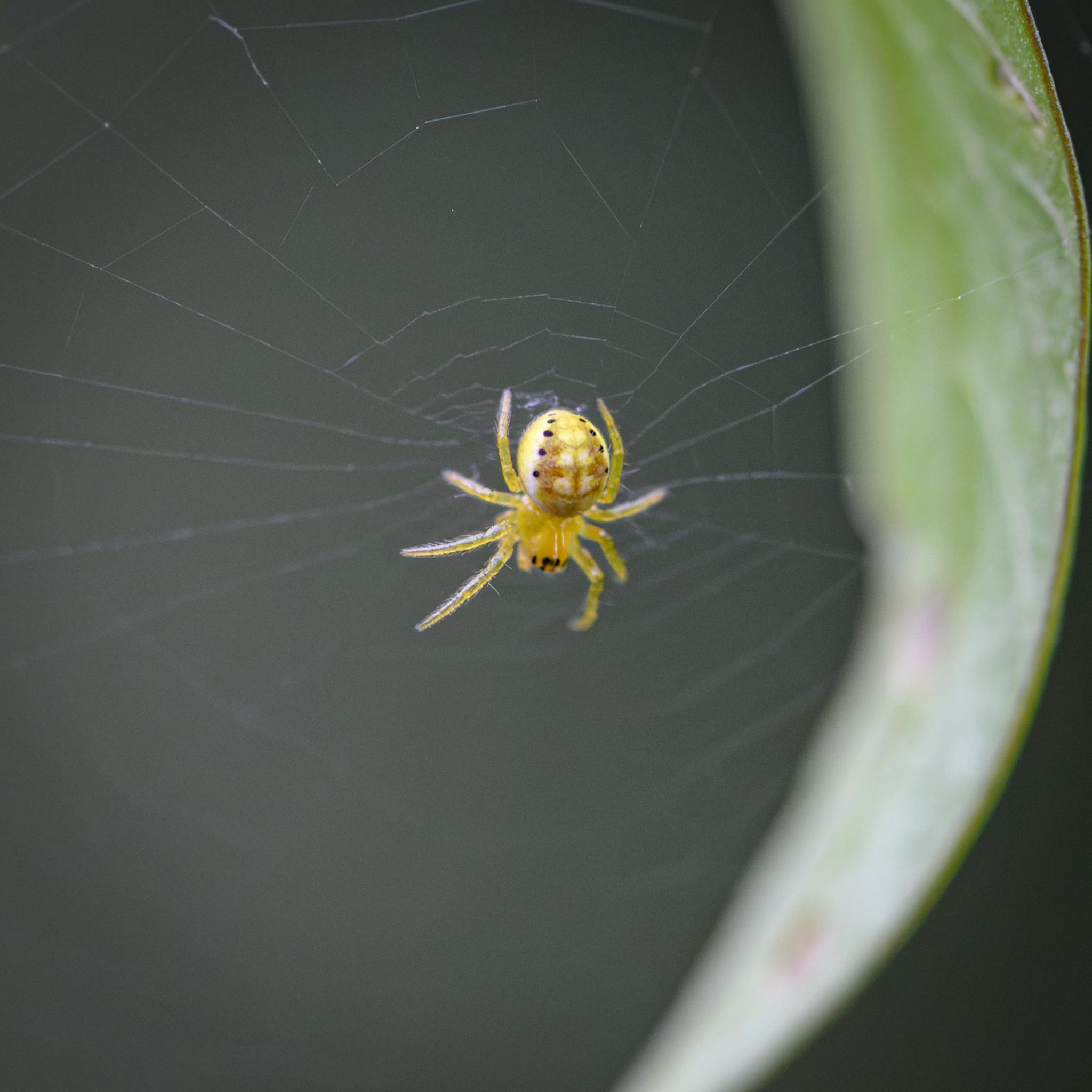
Spider fans – I need your help!

This tiny one is a juvenile orb weaver, but despite the apparently distinctive pattern of spots and patches, I can't make a good genus-level ID, let alone species 😱

Some common features with each of Araniella, Enoplognatha, & Macrophya, but nothing definitive.

🏰
📷️️️️️️️️️️️️️️️️️️️️️️️️️️️️️️️️️️️️️️️️️️️️️️️️️️️️️️️️️️️️️️️️️️️️️️️️️️️️️️️️️️️️️️️️️️️️️️️️️️️️️️️️️️️️️️️️️️️️️️️️️️️️️️️️️️️️️️️️️️️️️️️️️️️️️️️️️️️️️️️️️️️️️️️️️
🐞
🔬
🕷️
🪲

A small spider seen from above and to one side, sitting in the middle of its web. The spider is mostly yellow green, including the prosoma and legs, while the back of the opisthosoma is textured brown with pairs of yellow-green patches between, all bordered by five distinct black spots on each side.

#photography #macrophotography #bugoftheday #heidelberg #backgardenentomology #arachnidsofmastodon

0

Caricamento...

0
2

Caricamento...

Made a quick garden visit between (welcome) showers 🌧️

Expectations were low, but I was rewarded with a brief glimpse of this pretty little fly, prob

Altro...

Made a quick garden visit between (welcome) showers 🌧️

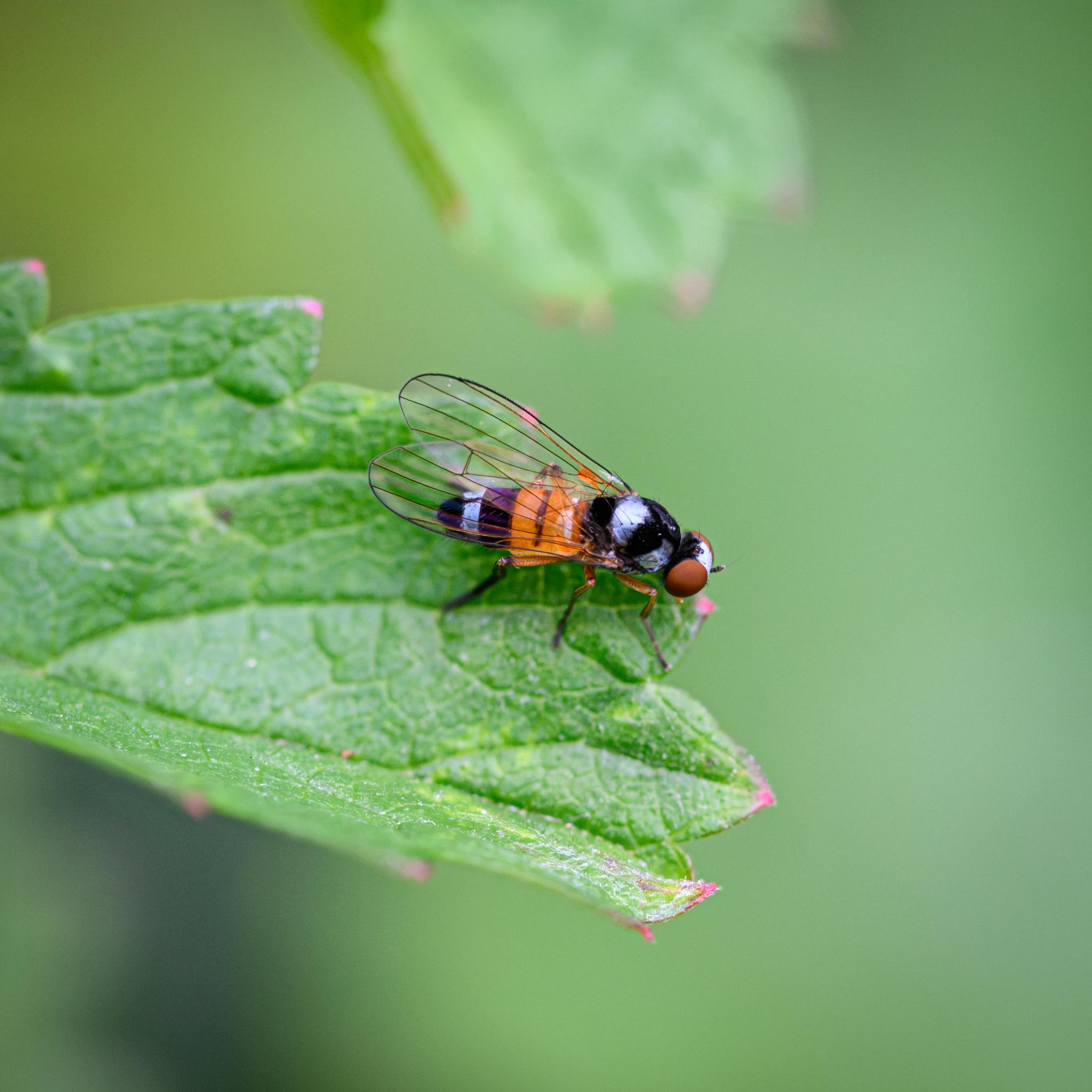
Expectations were low, but I was rewarded with a brief glimpse of this pretty little fly, probably Calloymia amoena.

Fairly rare – only 15 prior observations in DE on iNaturalist, & none around here on either iNat or GBIF. More common in NL though.

🏰
📷️️️️️️️️️️️️️️️️️️️️️️️️️️️️️️️️️️️️️️️️️️️️️️️️️️️️️️️️️️️️️️️️️️️️️️️️️️️️️️️️️️️️️️️️️️️️️️️️️️️️️️️️️️️️️️️️️️️️️️️️️️️️️️️️️️️️️️️️️️️️️️️️️️️️️️️️️️️️️️️️️️️️️️️️
🐞
🔬
🪰
🪲

A small fly seen side-on and from above on a green leaf with crimson tips. The fly has large red compound eyes separated by a white face, changing to black further back. The thorax is a patchwork of black and grey-white, with some large black bristles. The abdomen starts with two wide orange bands separated by a thin black on. Then two wide black bands separated by a medium-sized grey-white one – there is a black longitudinal cut through the latter band. There are smaller black bristles on the rear part of the abdomen. The wings are clear with a very simple strong black venation. The legs are orange at the top, with lots of small black hairs, turning darker lower down.

#photography #macrophotography #bugoftheday #heidelberg #insectsofmastodon #backgardenentomology

31

Caricamento...

0
12

Caricamento...

One of my favourite WTF😱 insects seen earlier today.

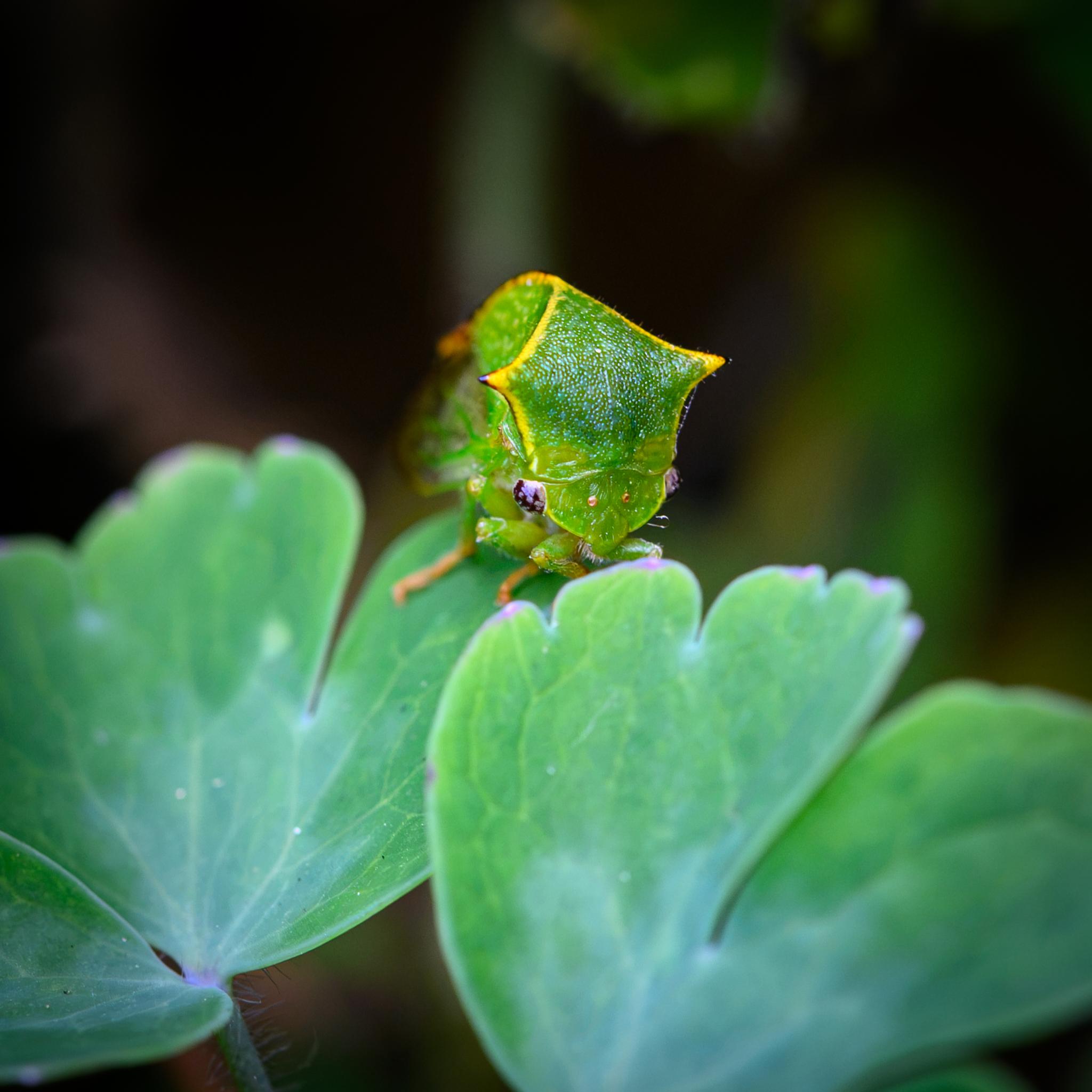
It's a buffalo treehopper (Stictocephala bisonia; 🇩🇪 Büffelzikade).

And although bison are nat

Altro...

One of my favourite WTF😱 insects seen earlier today.

It's a buffalo treehopper (Stictocephala bisonia; 🇩🇪 Büffelzikade).

And although bison are native in Europe as well as North America, this namesake isn't – it's an invasive species which first arrived from over the pond around a century ago.

🏰
📷️️️️️️️️️️️️️️️️️️️️️️️️️️️️️️️️️️️️️️️️️️️️️️️️️️️️️️️️️️️️️️️️️️️️️️️️️️️️️️️️️️️️️️️️️️️️️️️️️️️️️️️️️️️️️️️️️️️️️️️️️️️️️️️️️️️️️️️️️️️️️️️️️️️️️️️️️️️️️️️️️️️️️️️
🐞
🔬
🪰
🪲

A small insect seen on some green leaves. The view is more or less head on, showing the peculiar large flat face which tapes back into a triangle over the top, and into two horns, one on each side. The insect is mostly green in this view with dimpling on its face, while the edges of the face and the horns are yellow with red and black tips. The insect has black and grey compound eyes on either side of its head and two smaller red ocelli between them. The back can't be seen well, but tapers into clear wings. The insect has green legs which turn orange at the end.

#photography #macrophotography #bugoftheday #heidelberg #insectsofmastodon #backgardenentomology

50

Caricamento...

2
16

Caricamento...

Look, ma – it's my shadow!

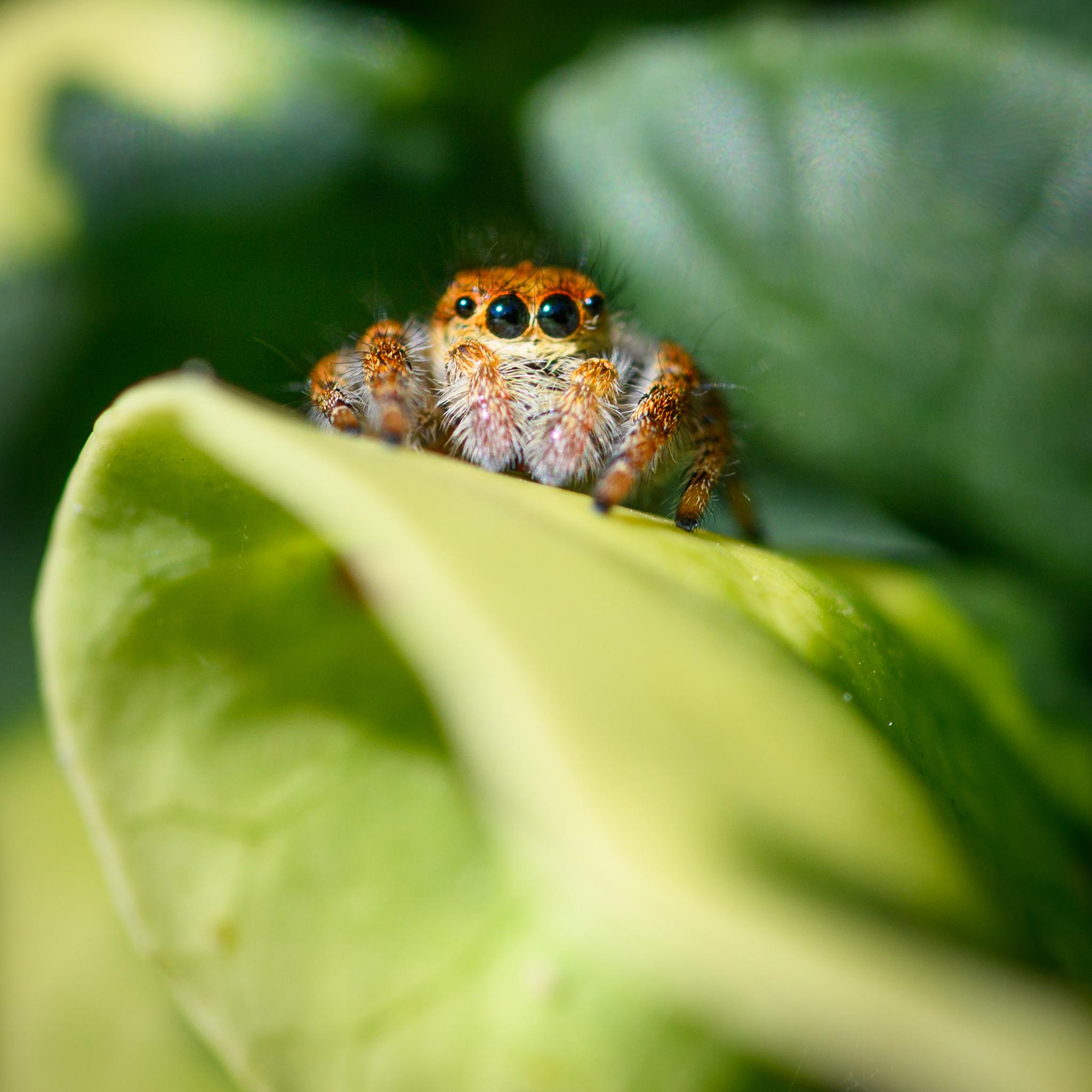
This jumping spider was patrolling the ivy where many insects are flying today.

ObsIdentify is 100% sure that it's Evarch

Altro...

Look, ma – it's my shadow!

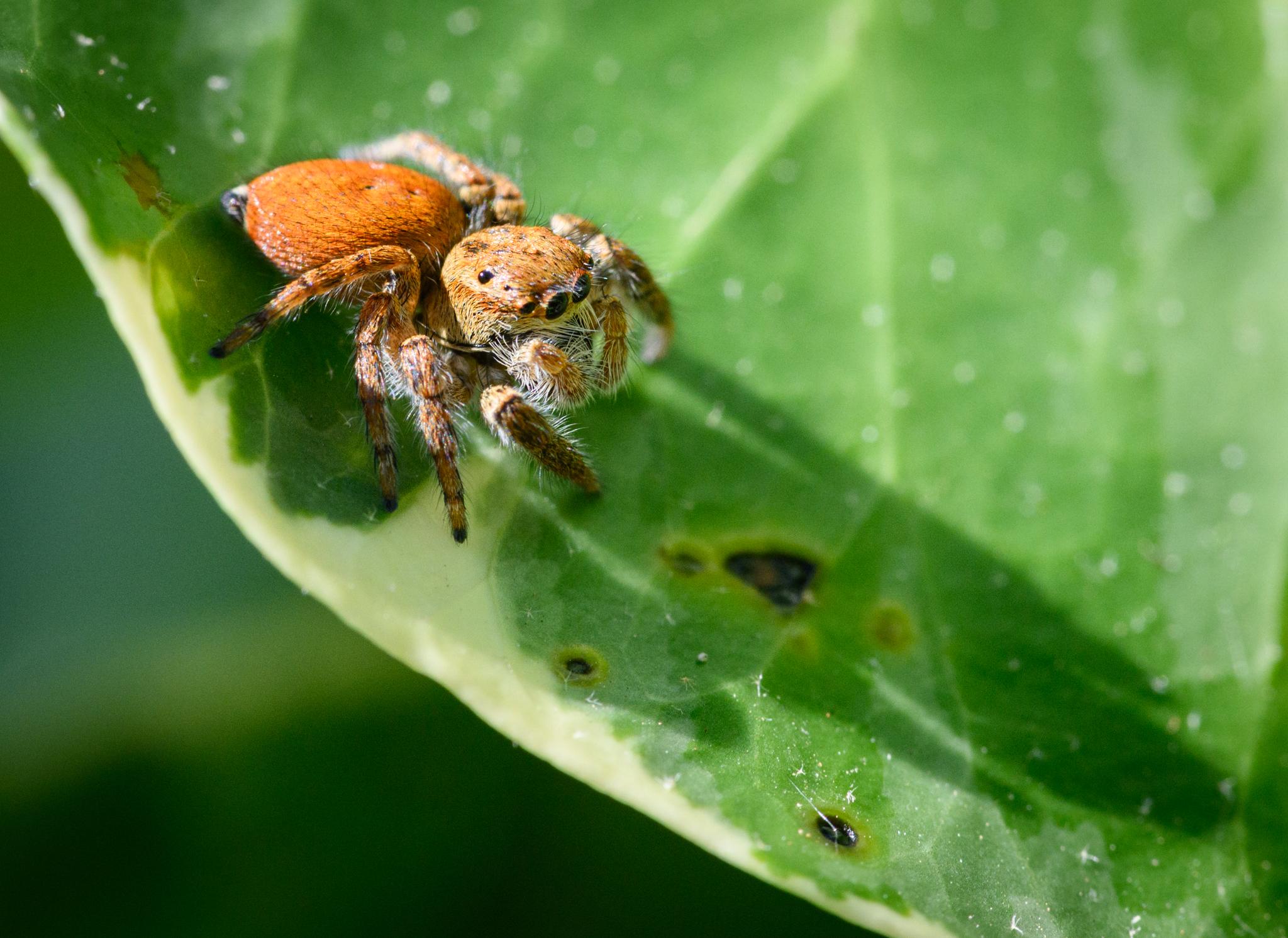
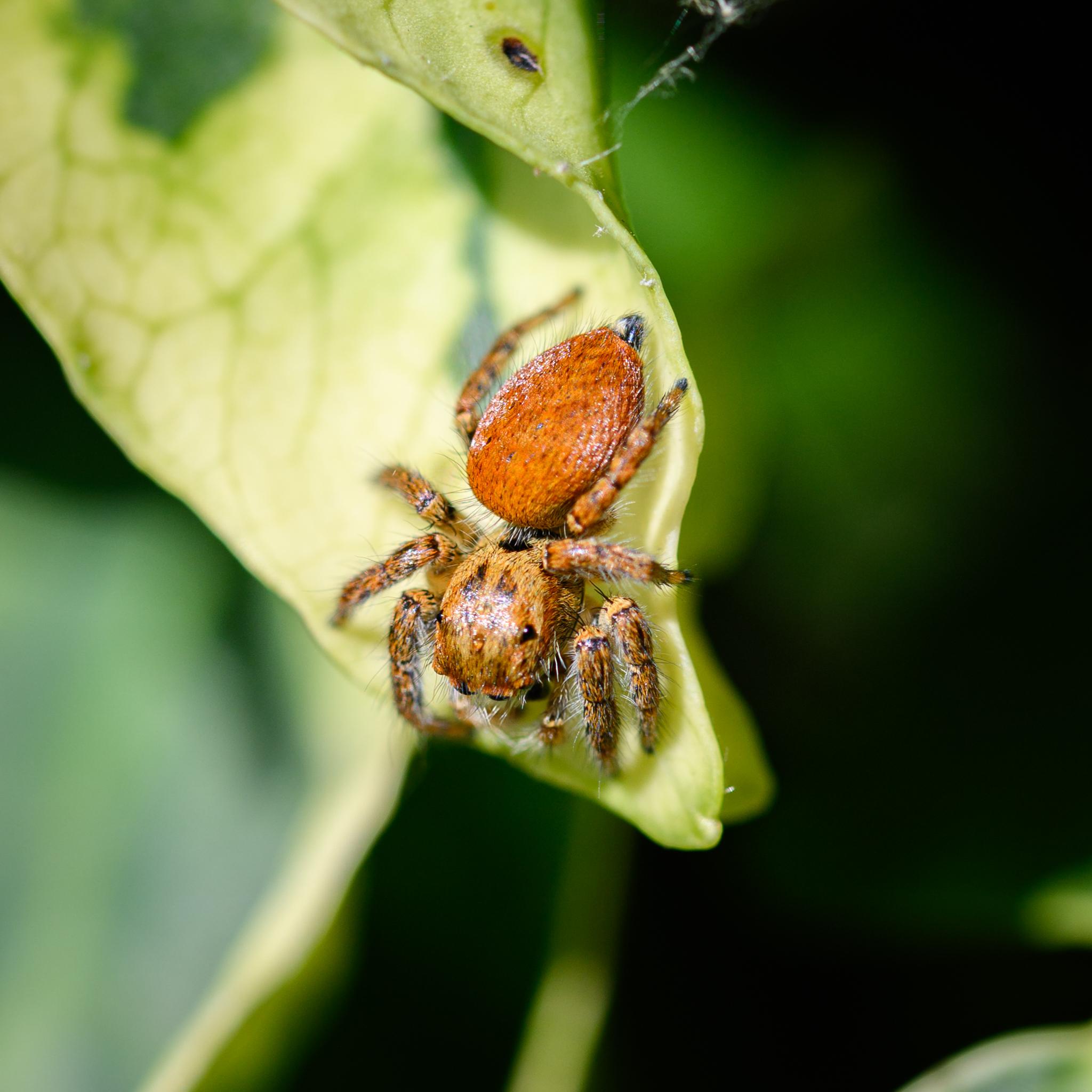
This jumping spider was patrolling the ivy where many insects are flying today.

ObsIdentify is 100% sure that it's Evarcha falcata, but I'm siding with iNaturalist's 98.4% confidence that it's Carrhotus xanthogramma (🇩🇪 Wipfelspringer) – females come in many colour forms.

🏰
📷️️️️️️️️️️️️️️️️️️️️️️️️️️️️️️️️️️️️️️️️️️️️️️️️️️️️️️️️️️️️️️️️️️️️️️️️️️️️️️️️️️️️️️️️️️️️️️️️️️️️️️️️️️️️️️️️️️️️️️️️️️️️️️️️️️️️️️️️️️️️️️️️️️️️️️️️️️️️️️️️️️️️️️️️
🐞
🔬
🕷️
🪲

A jumping spider seen in half profile slightly from above, on a green ivy leaf, casting its shadow from left to right. The spiders is hairy and reddish-brown overall, slightly lighter on the prosoma, and with many long white hairs below the main four eyes, on the face, and on the palps and forelegs. The sides of the prosoma are slightly lighter brown and there are fine black hairs sticking vertically up on the dorsal side. The opisthosoma is darker red-brown overall, with very fine black hairs above, and a black tip to the abdomen. There is minimal patterning visible at this angle. The legs are reddish-brown, with vague bands of black and white at points, and are also hairy. The same spider seen from above, showing the contrast in colour between the prosoma (different shades of brown with some darker patterning now visible) and the opisthosoma (a more uniform red-brown with small dark markings at the base of the long, fine, black hairs, but only slight banding patterns otherwise). Overall, the legs more resemble the prosoma in colouration. The same spider seen from in front, with the classic jumping spider curious stare from its two central large eyes and the smaller side pair. Those are slightly out-of-focus, while the palps covered in white hairs are better seen. The many dark hairs poking up from the top of the prosoma, giving the spider its punk look, are also partly visible, but out of focus.

#photography #macrophotography #bugoftheday #heidelberg #backgardenentomology #arachnidsofmastodon
40

Caricamento...

4
12

Caricamento...

When the larger arthropods refuse to come out & play, attention turns to the tinier garden creatures 🕵️‍♂️

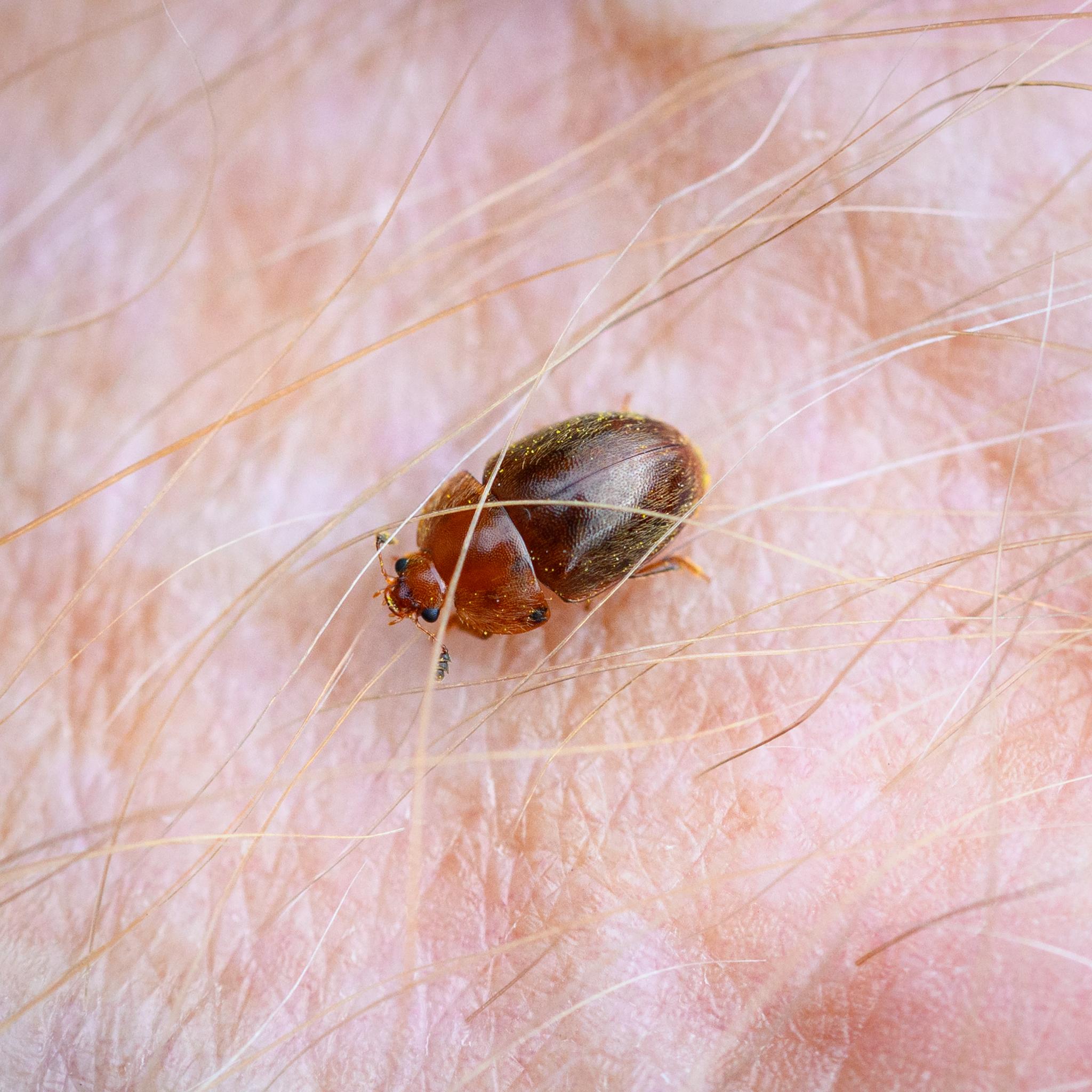
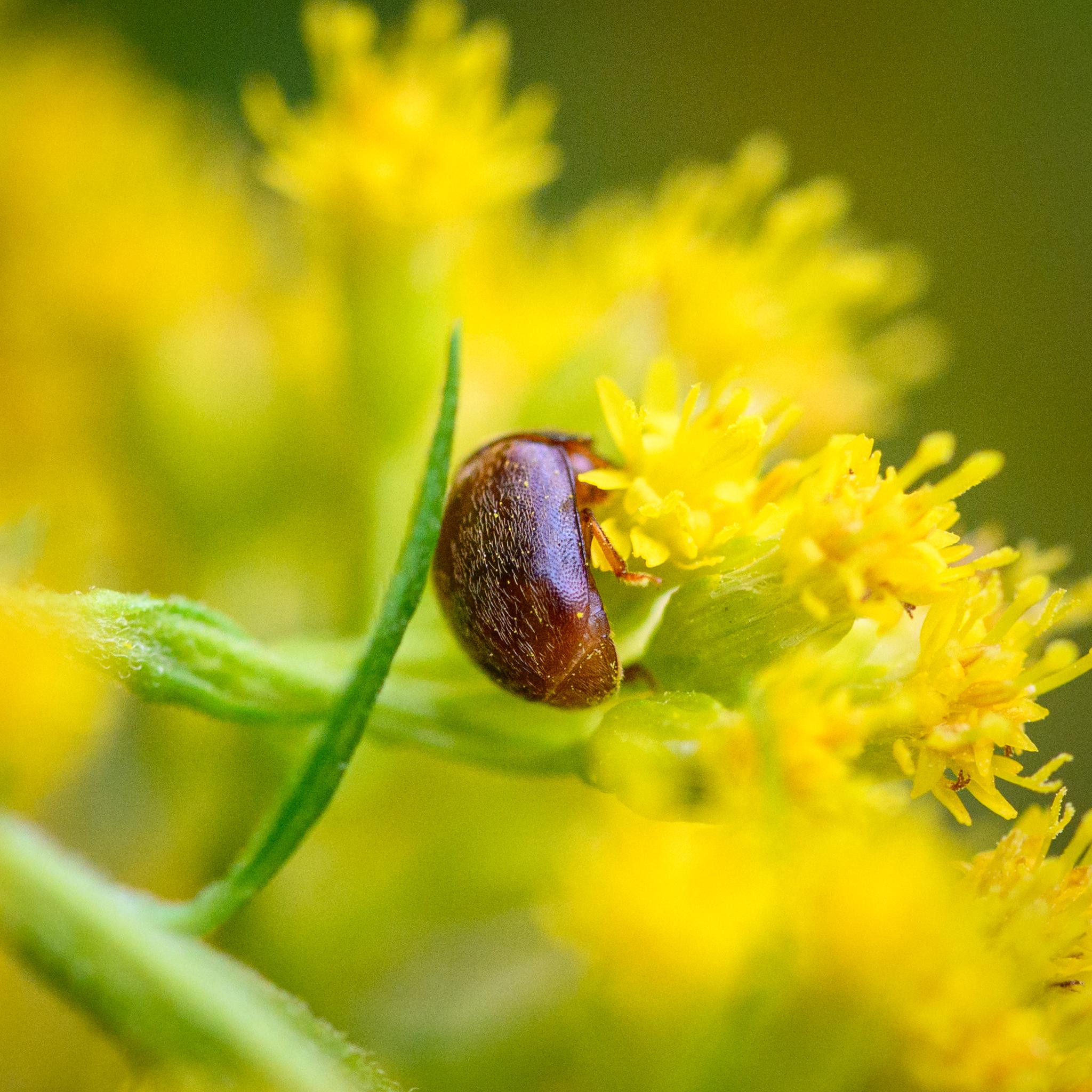
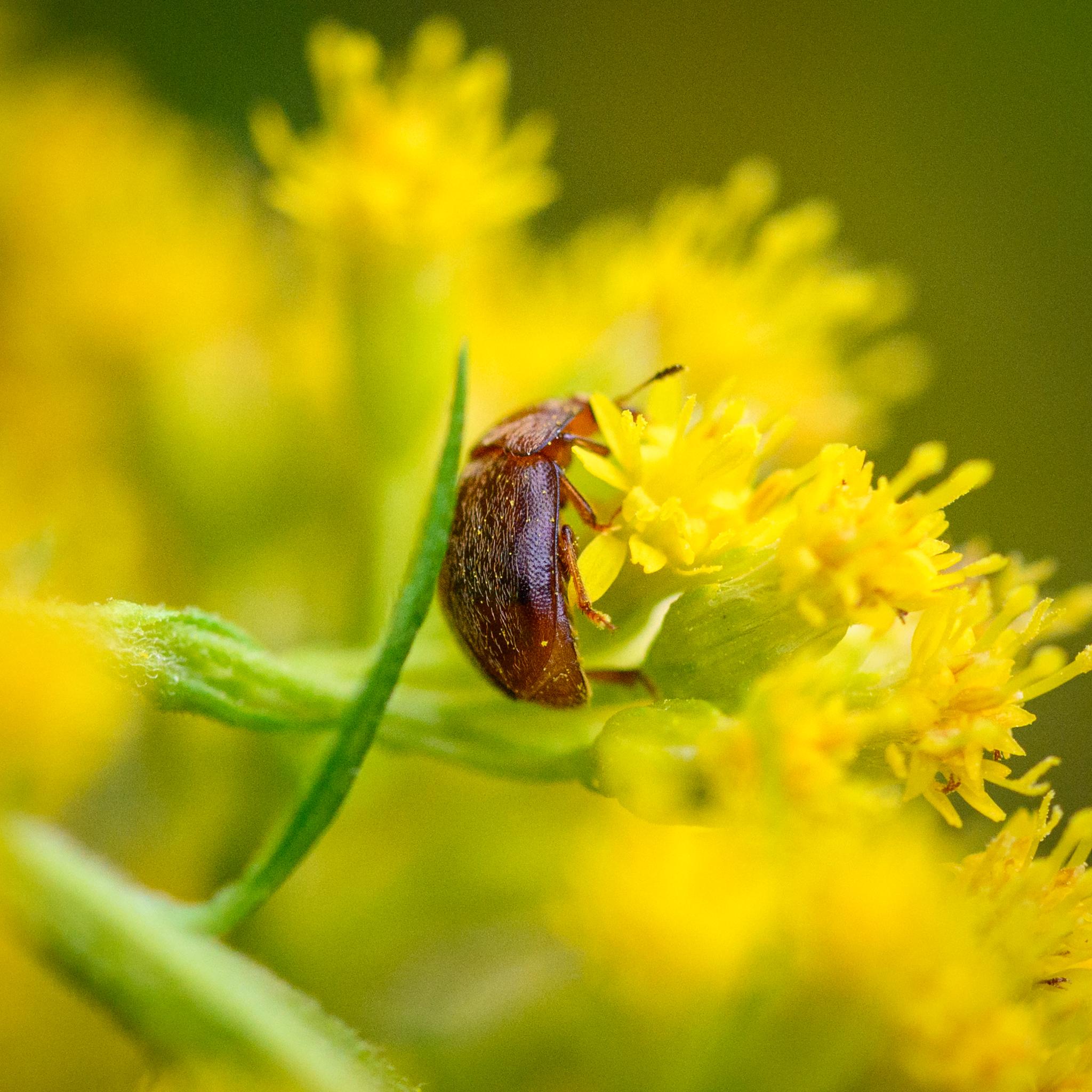
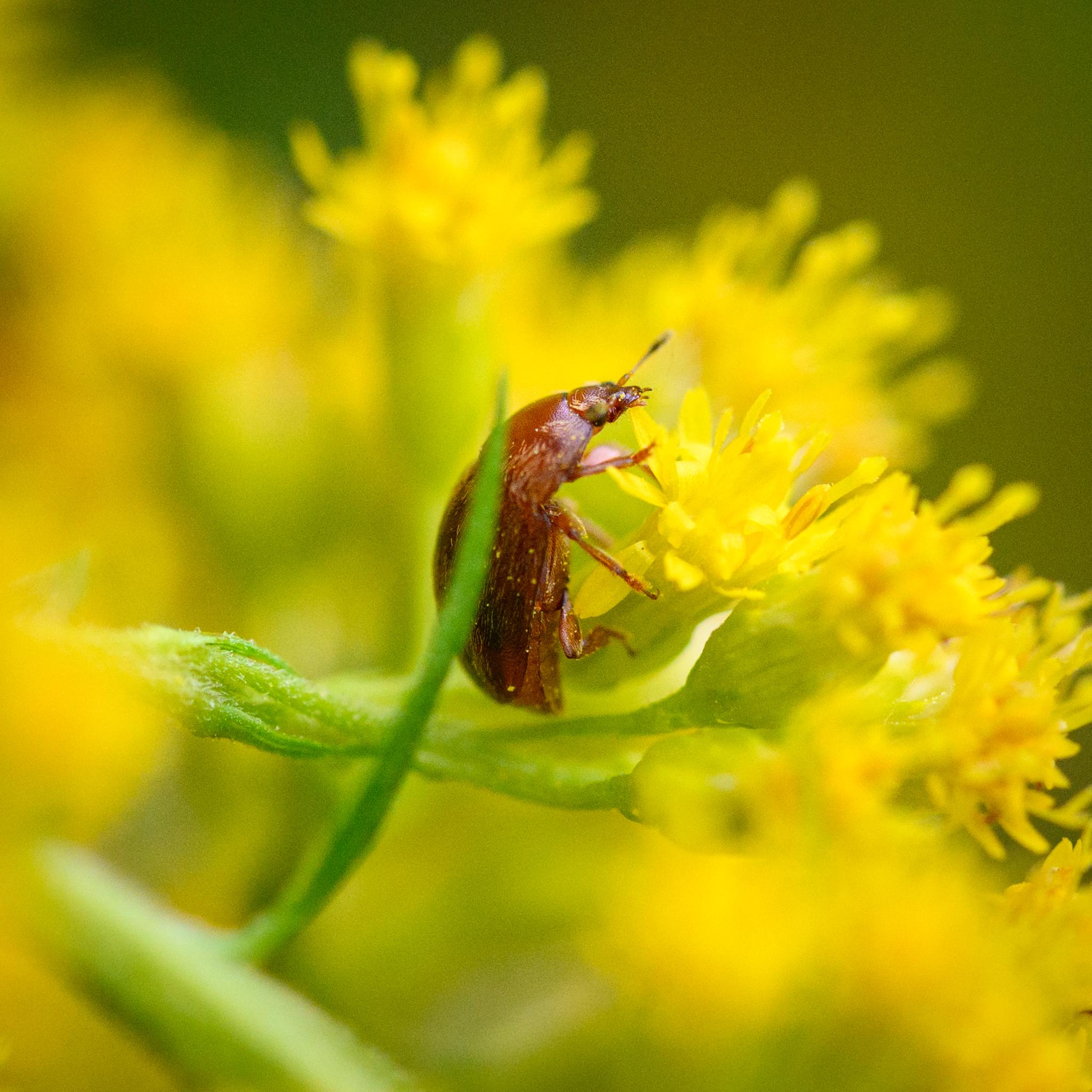
This small sap or pollen beetle is in genu

Altro...

When the larger arthropods refuse to come out & play, attention turns to the tinier garden creatures 🕵️‍♂️

This small sap or pollen beetle is in genus Cychramus, most likely C luteus, the Brauner Glanzkäfer in 🇩🇪

True to its name, it was making the most of the goldenrod before I picked it up.

🏰
📷️️️️️️️️️️️️️️️️️️️️️️️️️️️️️️️️️️️️️️️️️️️️️️️️️️️️️️️️️️️️️️️️️️️️️️️️️️️️️️️️️️️️️️️️️️️️️️️️️️️️️️️️️️️️️️️️️️️️️️️️️️️️️️️️️️️️️️️️️️️️️️️️️️️️️️️️️️️️️️️️️️️️️️️
🐞
🔬
🪰
🪲

A small beetle seen from above, making its way through the light coloured hairs on the back of my freckled hand. The beetle is a lighter amber brown up front, on the head and thorax, with black compound eyes and antennae that end in small black "petals". The surface of the head and thorax is dimpled, with fine light hairs on the sides of the latter. The abdomen is darker brown, again with light hairs along the slide of a dimpled body. There is quite a lot of yellow pollen on the beetle. The same beetle on some yellow goldenrod flowers. It is mostly seen from behind and the side, showing the darker chestnut brown abdomen with the fine dimples and light hairs. The legs are also brown. A more side-on picture of the beetle on the flowers again, also showing the thorax in a bit more detail. And finally a fully side-on view, showing the head, thorax, and abdomen in profile, the main thick part of the abdomen visible under the wing cases.

#photography #macrophotography #bugoftheday #heidelberg #insectsofmastodon #backgardenentomology

14

Caricamento...

1
7

Caricamento...

Down from 30ºC yesterday to 20ºC today, but still mostly sunny – hardly "cold" as such.

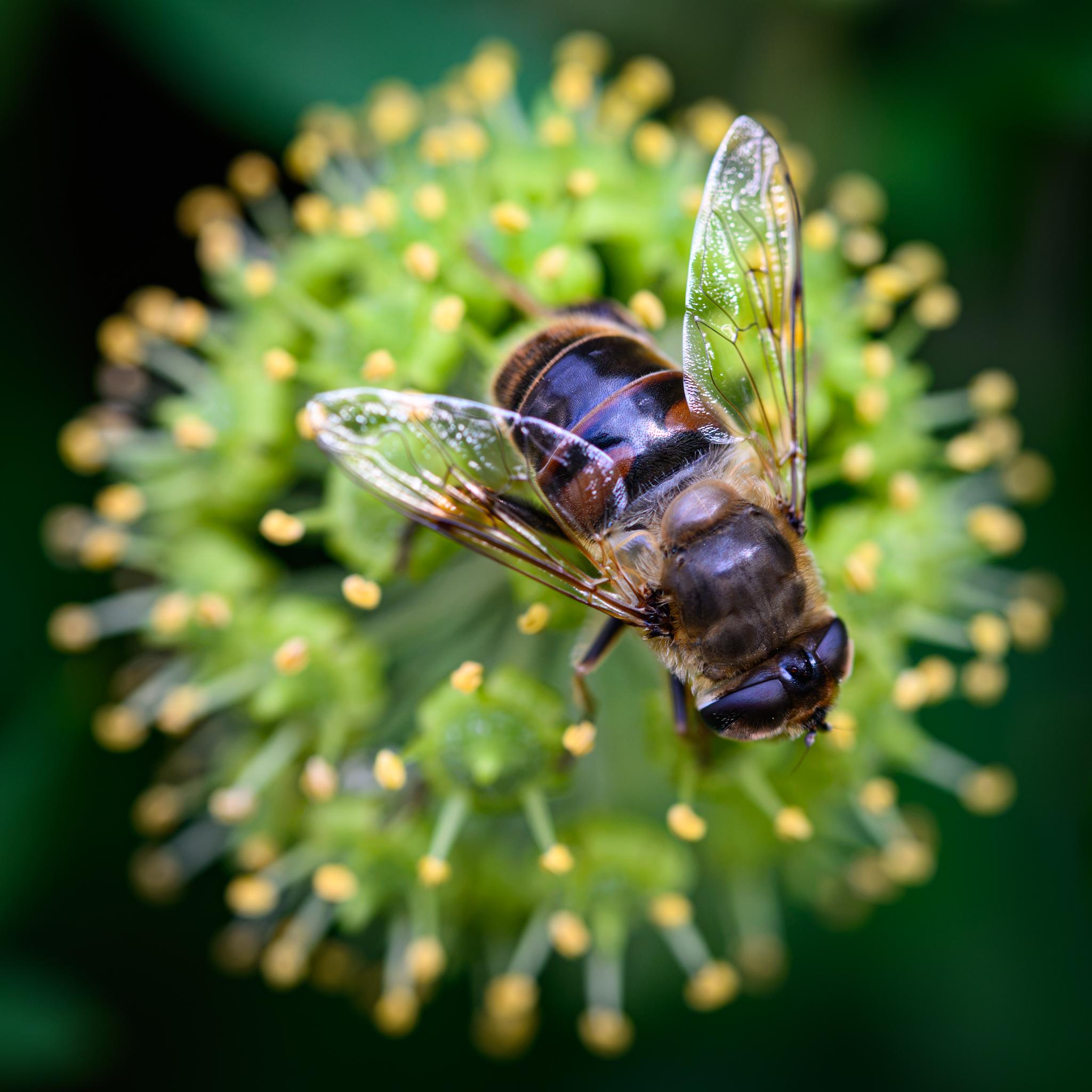
And yet, the garden was almost devoid of visible insect activ

Altro...

Down from 30ºC yesterday to 20ºC today, but still mostly sunny – hardly "cold" as such.

And yet, the garden was almost devoid of visible insect activity – most peculiar.

This female common drone fly (Eristalis tenax) was out there though, feeding on the ivy, so not a complete bust 🤷‍♂️

🏰
📷️️️️️️️️️️️️️️️️️️️️️️️️️️️️️️️️️️️️️️️️️️️️️️️️️️️️️️️️️️️️️️️️️️️️️️️️️️️️️️️️️️️️️️️️️️️️️️️️️️️️️️️️️️️️️️️️️️️️️️️️️️️️️️️️️️️️️️️️️️️️️️️️️️️️️️️️️️️️️️️️️️️️️️
🐞
🔬
🪰
🪲

A large fly seen from above on out out-of-focus ivy flower, the latter mostly green and circular, with many small yellow stamens. The fly has well-separated large dark brown compound eyes, a hairy and dusted dark bronze thorax with lighter scutellum, and a mostly black abdomen, with two dark orange patches on the sides of the first tergite. The wings are clear with dark veins and a hint of brown cloudiness.

#photography #macrophotography #bugoftheday #heidelberg #insectsofmastodon #backgardenentomology

33

Caricamento...

1
12

Caricamento...

A hornet doing what hornets do 🤷‍♂️

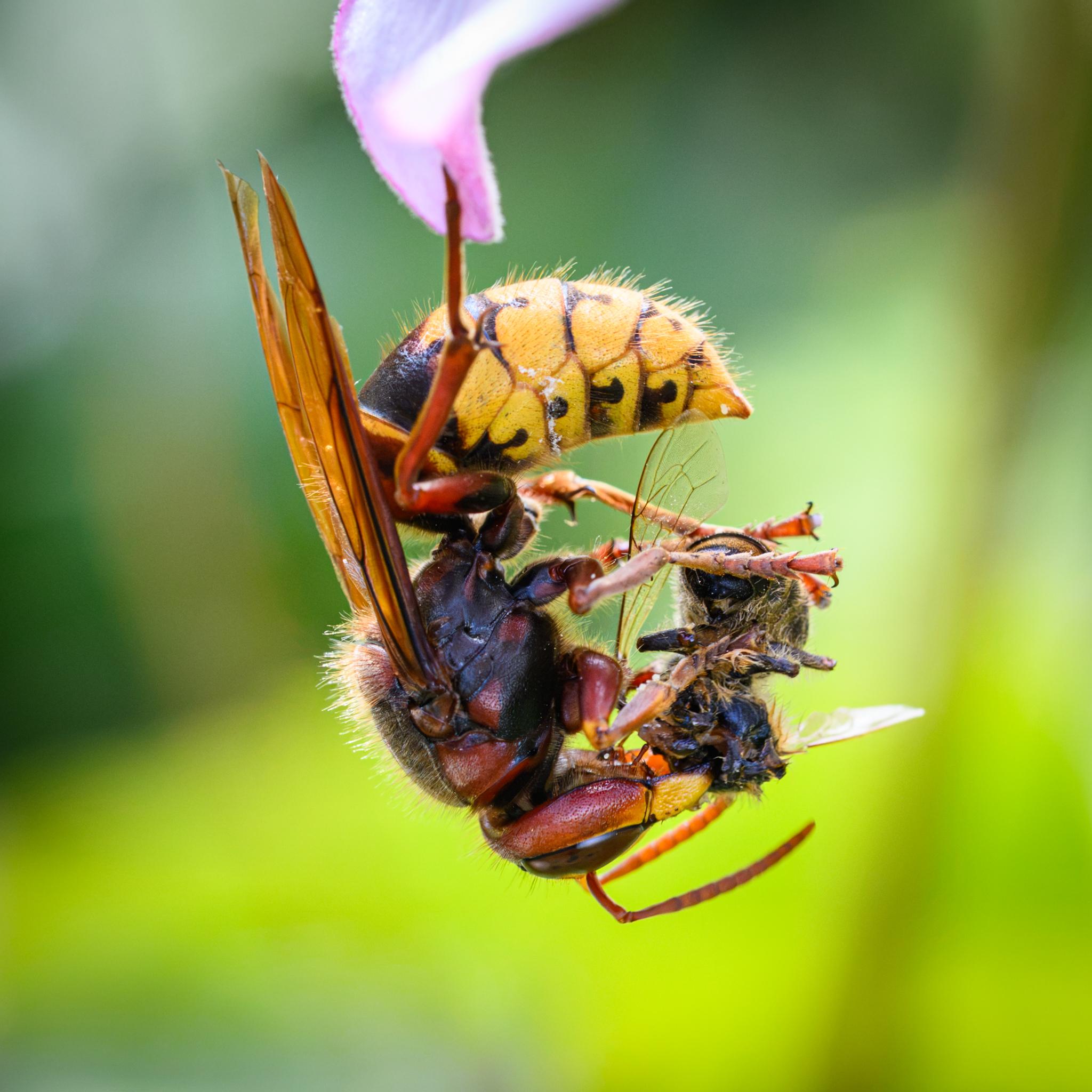
That said, while European hornets (Vespa crabro; 🇩🇪 Hornisse) do occasionally eat honey bees, as I suspect this o

Altro...

A hornet doing what hornets do 🤷‍♂️

That said, while European hornets (Vespa crabro; 🇩🇪 Hornisse) do occasionally eat honey bees, as I suspect this one is, they don't destroy whole colonies like invasive Asian hornets will, & indeed are sometimes used to protect hives from wax moths.

🏰
📷️️️️️️️️️️️️️️️️️️️️️️️️️️️️️️️️️️️️️️️️️️️️️️️️️️️️️️️️️️️️️️️️️️️️️️️️️️️️️️️️️️️️️️️️️️️️️️️️️️️️️️️️️️️️️️️️️️️️️️️️️️️️️️️️️️️️️️️️️️️️️️️️️️️️️️️️️️️️️️️️️️️️️️
🐞
🔬
🪰
🪲

A large European hornet hanging upside down by one leg from a purple sweetpea flower, seen side on. It is eating what looks like a honey bee, holding it with all but that one leg, although it's hard to be sure. The hornet has dark brown, very elongated compound eyes, set in a red head with yellow mandibles. The thorax is mostly black with some red patches on the sides and top, with many fine light yellow hairs. The abdomen is patterned yellow and black, with some red near the top, with many more vivid yellow hairs. The hornet has red legs with some black at the top and the wings are seen edge-on and are clear orange. The antennae are also orange red.

#photography #macrophotography #bugoftheday #heidelberg #insectsofmastodon #backgardenentomology

28

Caricamento...

3
10

Caricamento...

Thanks to the lurgee, I didn't have the energy yesterday to post these, but better late than never 🤷‍♂️

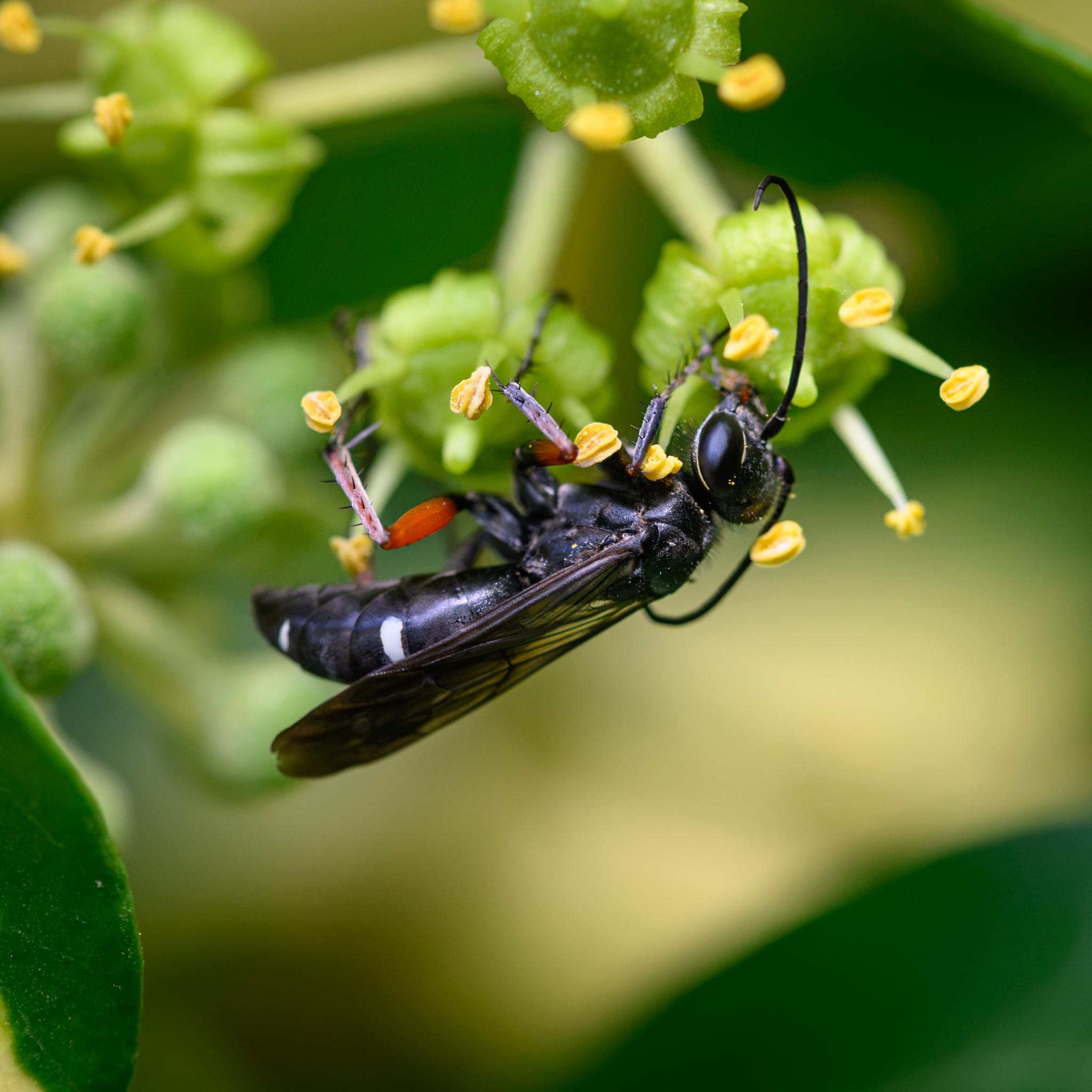
First, something new: a spider-hunting wasp i

Altro...

Thanks to the lurgee, I didn't have the energy yesterday to post these, but better late than never 🤷‍♂️

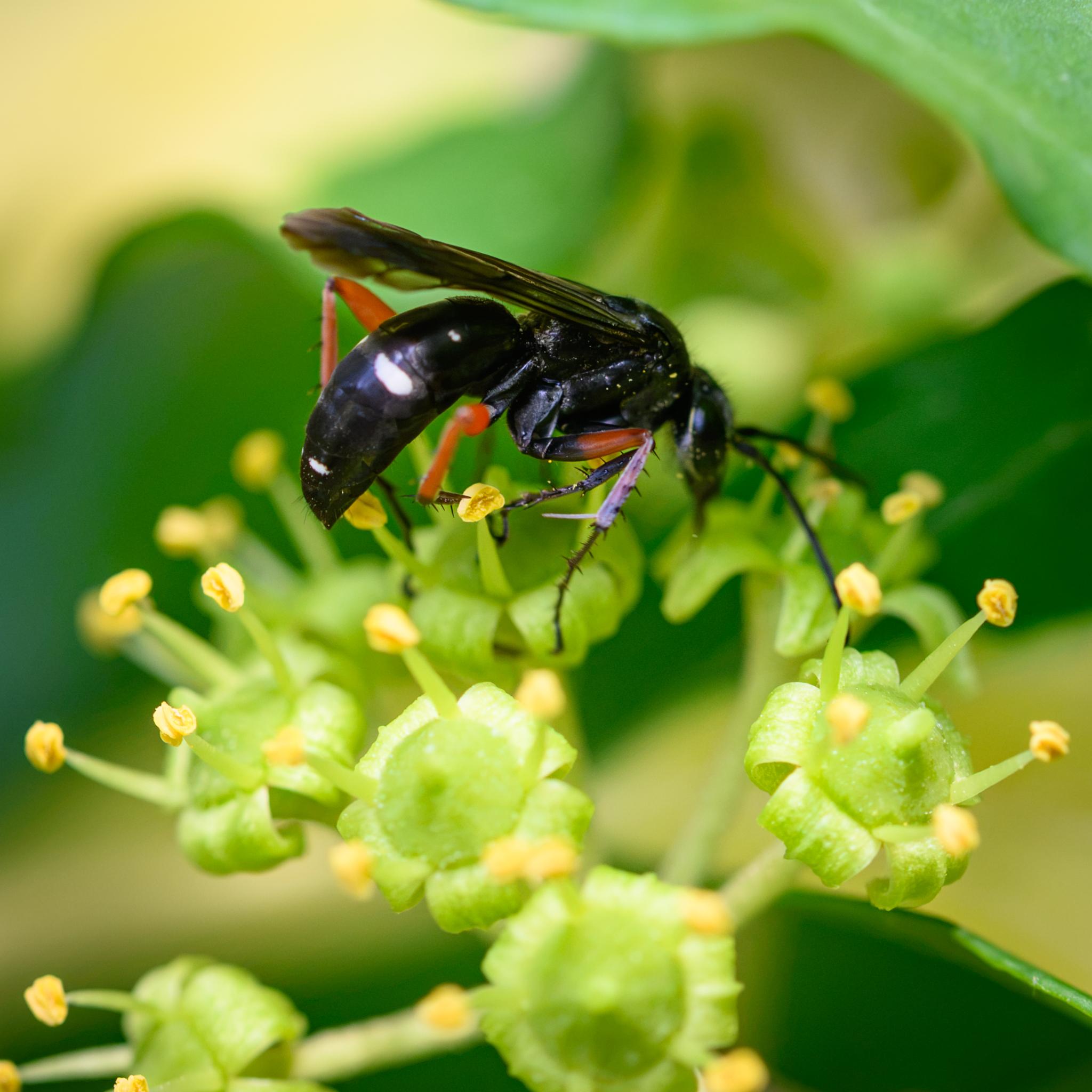
First, something new: a spider-hunting wasp in genus Episyron.

From the white abdomen patches & leg colouration, the most likely species here in SW Germany is E rufipes, the red-legged spider wasp.

🏰
📷️️️️️️️️️️️️️️️️️️️️️️️️️️️️️️️️️️️️️️️️️️️️️️️️️️️️️️️️️️️️️️️️️️️️️️️️️️️️️️️️️️️️️️️️️️️️️️️️️️️️️️️️️️️️️️️️️️️️️️️️️️️️️️️️️️️️️️️️️️️️️️️️️️️️️️️️️️️️️️️️️️️️
🐞
🔬
🪰
🪲

A wasp seen hanging upside down from some ivy flowers. The wasp is mostly black, with a pair of broken white patches on the long, slim abdomen, and fine white lines around the edge of the black compound eyes. The forelegs are black, while the middle and hindlegs are black at the top, turning red mahogany, then black lower down again. The legs are covered in black spines. The antennae and wings are also black. A slightly out-of-focus shot showing the curved abdomen and its white patches more clearly, as seen from behind and the side.

#photography #macrophotography #bugoftheday #heidelberg #insectsofmastodon #backgardenentomology

18

Caricamento...

1
4

Caricamento...

After a busy week around many people at ESA's ESOC, I'm now paying the price – have come down with the lurgee, coughing & aching. Yuk 🤒

Still, manage

Altro...

After a busy week around many people at ESA's ESOC, I'm now paying the price – have come down with the lurgee, coughing & aching. Yuk 🤒

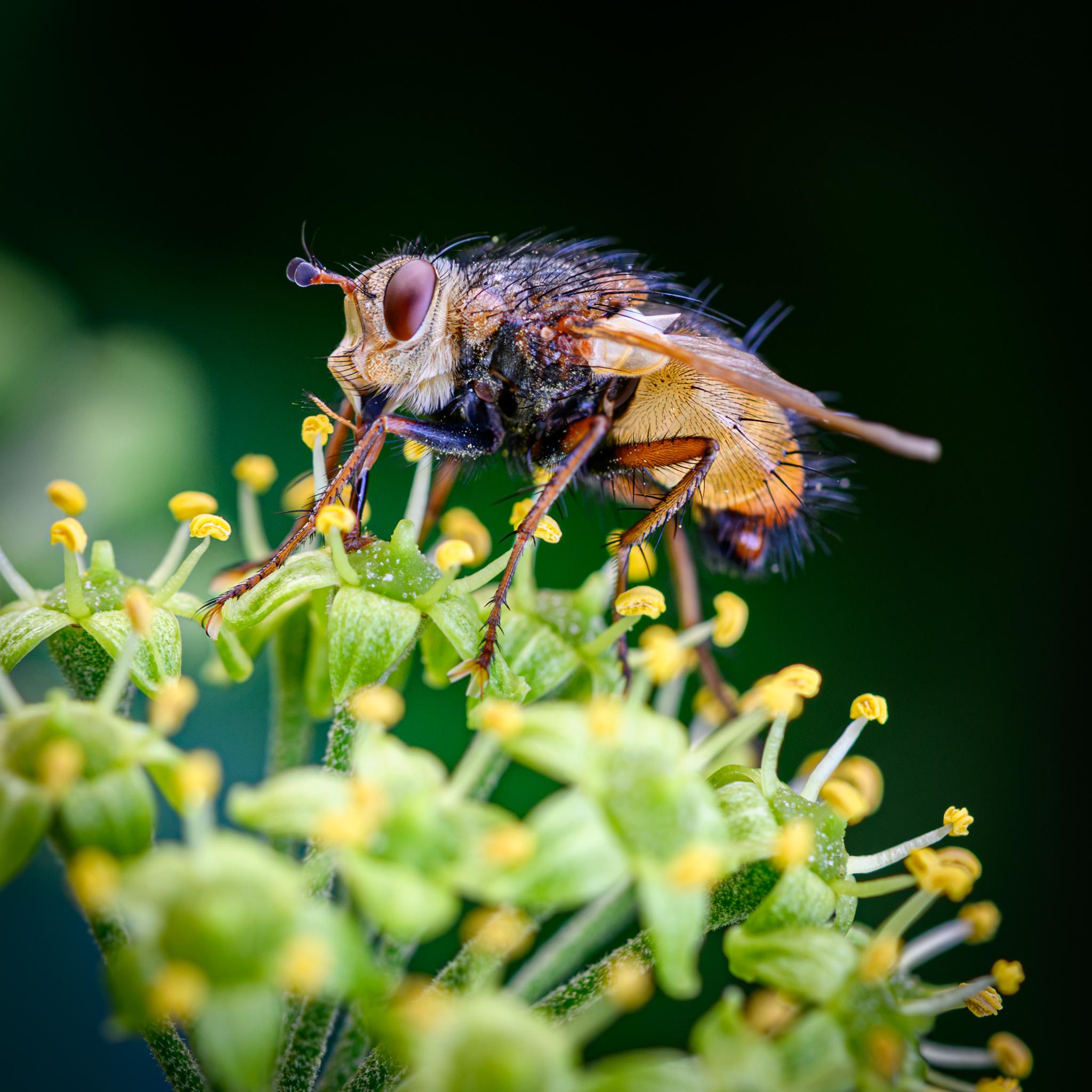
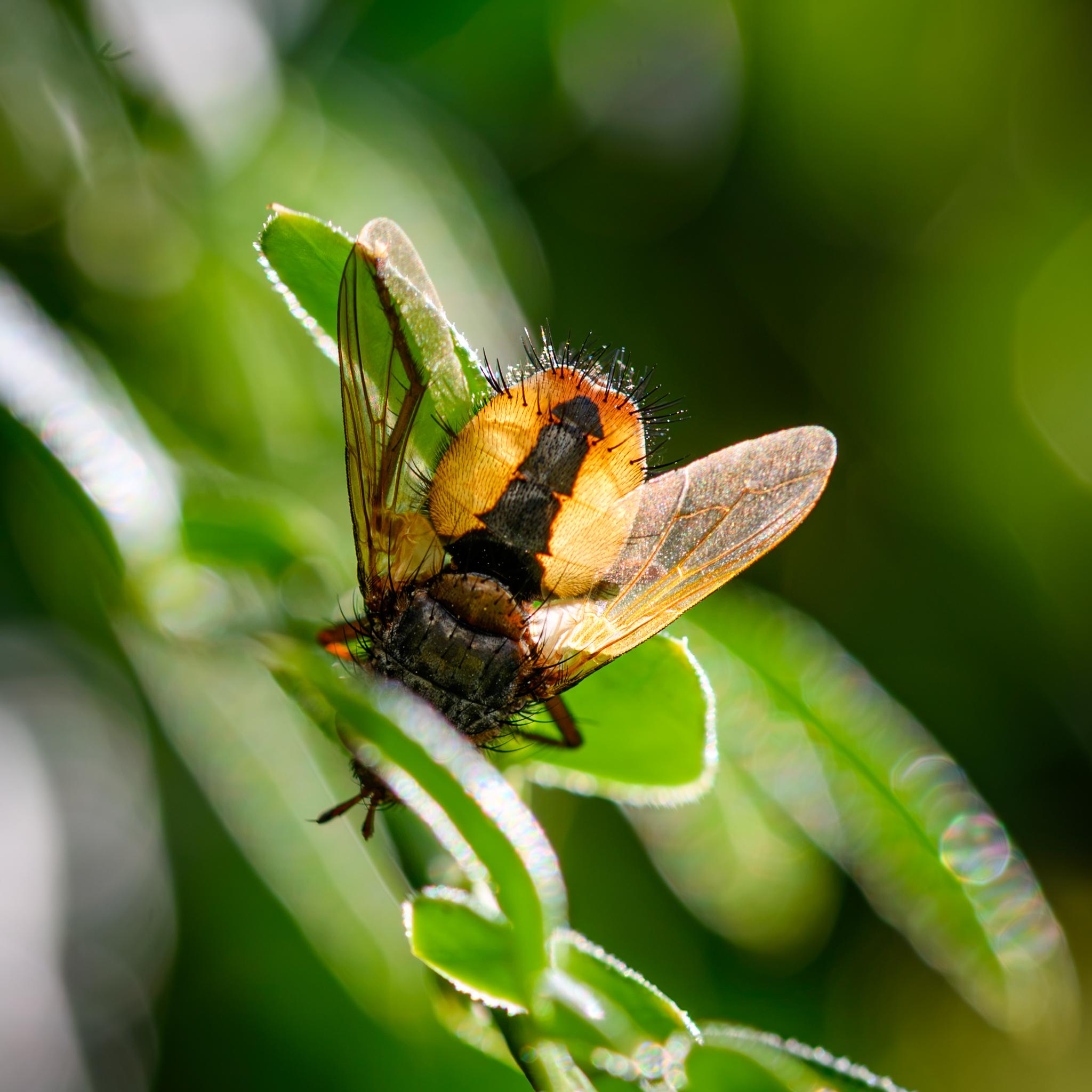
Still, managed a tour of the garden this afternoon – didn't spot anything new, but at least this common tachnid (Tachina fera; 🇩🇪 Igelfliege) posed nicely for me.

🏰
📷️️️️️️️️️️️️️️️️️️️️️️️️️️️️️️️️️️️️️️️️️️️️️️️️️️️️️️️️️️️️️️️️️️️️️️️️️️️️️️️️️️️️️️️️️️️️️️️️️️️️️️️️️️️️️️️️️️️️️️️️️️️️️️️️️️️️️️️️️️️️️️️️️️️️️️️️️️️️️️️️️️️
🐞
🔬
🪰
🪲

A large fly seen side on, feeding from the individual yellow stamens on a green ivy flower. The fly has a broad, white-ish face, scooped out at the front. It is covered in white hairs and some black bristles. It has red and black antennae, and oval brick red compound eyes. The thorax is a mix of black-grey on the top and bottom, with red parts on the sides, and many black bristles. The scutellum is amber. The abdomen is large and yellow, with a mix of large and small black bristles. The legs are black towards the top, then mahogany lower down, again with black bristles. The same fly seen from above. Its head is partly hidden behind an ivy leaf, but it's black-grey thorax and amber scutellum are visible. As is the bulbous abdomen, which is orange, backlit by the sun. There is a broad black stripe along the top of the abdomen, tapering before disappearing in the final tergite. The end of the abdomen is ringed by many large black bristles, while the whole abdomen is covered in finer black hairs. The wings are also back illuminated, seen as clear amber.

#photography #macrophotography #bugoftheday #heidelberg #insectsofmastodon #backgardenentomology

17

Caricamento...

0
8

Caricamento...

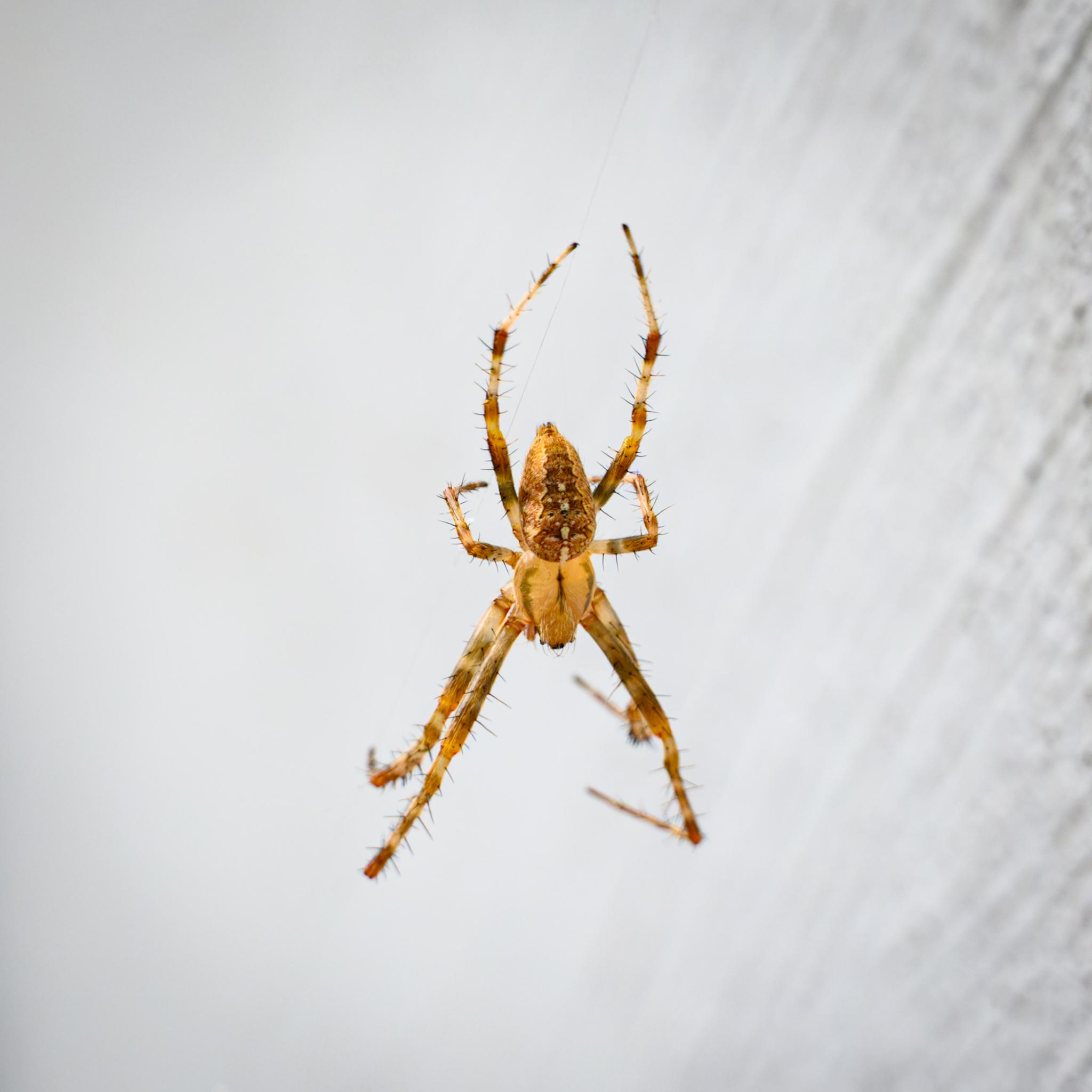
'Tis the season for big spiders – a cross orbweaver (Araneus diadematus; 🇩🇪 Gartenkreuzspinne), one of many currently making webs around @mpi_astro@wi

Altro...

'Tis the season for big spiders – a cross orbweaver (Araneus diadematus; 🇩🇪 Gartenkreuzspinne), one of many currently making webs around @mpi_astro@wisskomm.social atop the Königstuhl.

These come in many shapes & colour forms, but the white cross on the dorsal side of the opisthosoma is characteristic.

🏰
📷️️️️️️️️️️️️️️️️️️️️️️️️️️️️️️️️️️️️️️️️️️️️️️️️️️️️️️️️️️️️️️️️️️️️️️️️️️️️️️️️️️️️️️️️️️️️️️️️️️️️️️️️️️️️️️️️️️️️️️️️️️️️️️️️️️️️️️️️️️️️️️️️️️️️️️️️️️️️️️️️️️
🐞
🔬
🕷️
🪲

A large spider seen from above in its web against an out of focus background. The spider is patterned with red-brown and yellow, with white markings on its back. The legs are banded white and red, with many black bristles.

#photography #macrophotography #bugoftheday #heidelberg #backgardenentomology #arachnidsofmastodon
23

Caricamento...

0
5

Caricamento...