Vai al contenuto principale

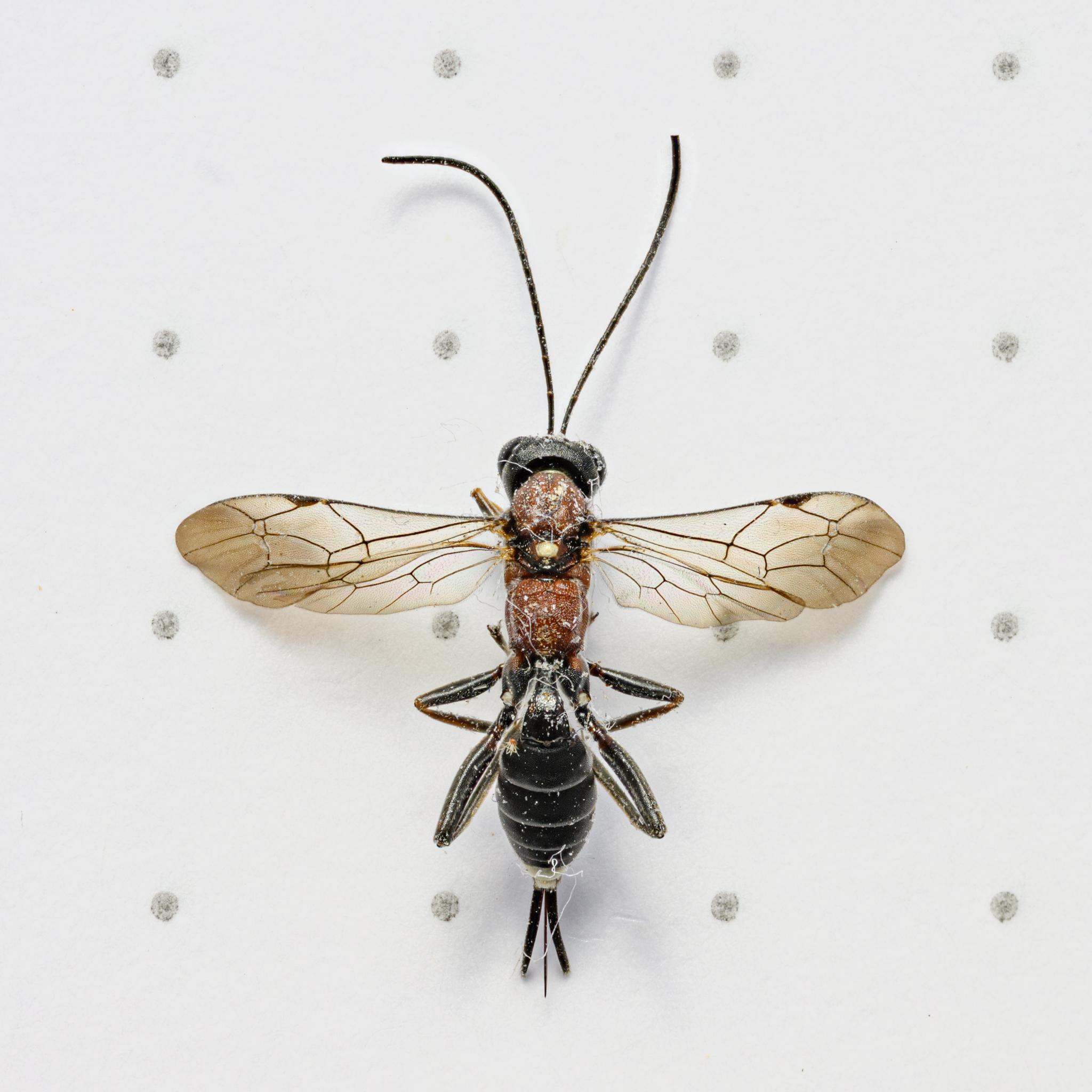
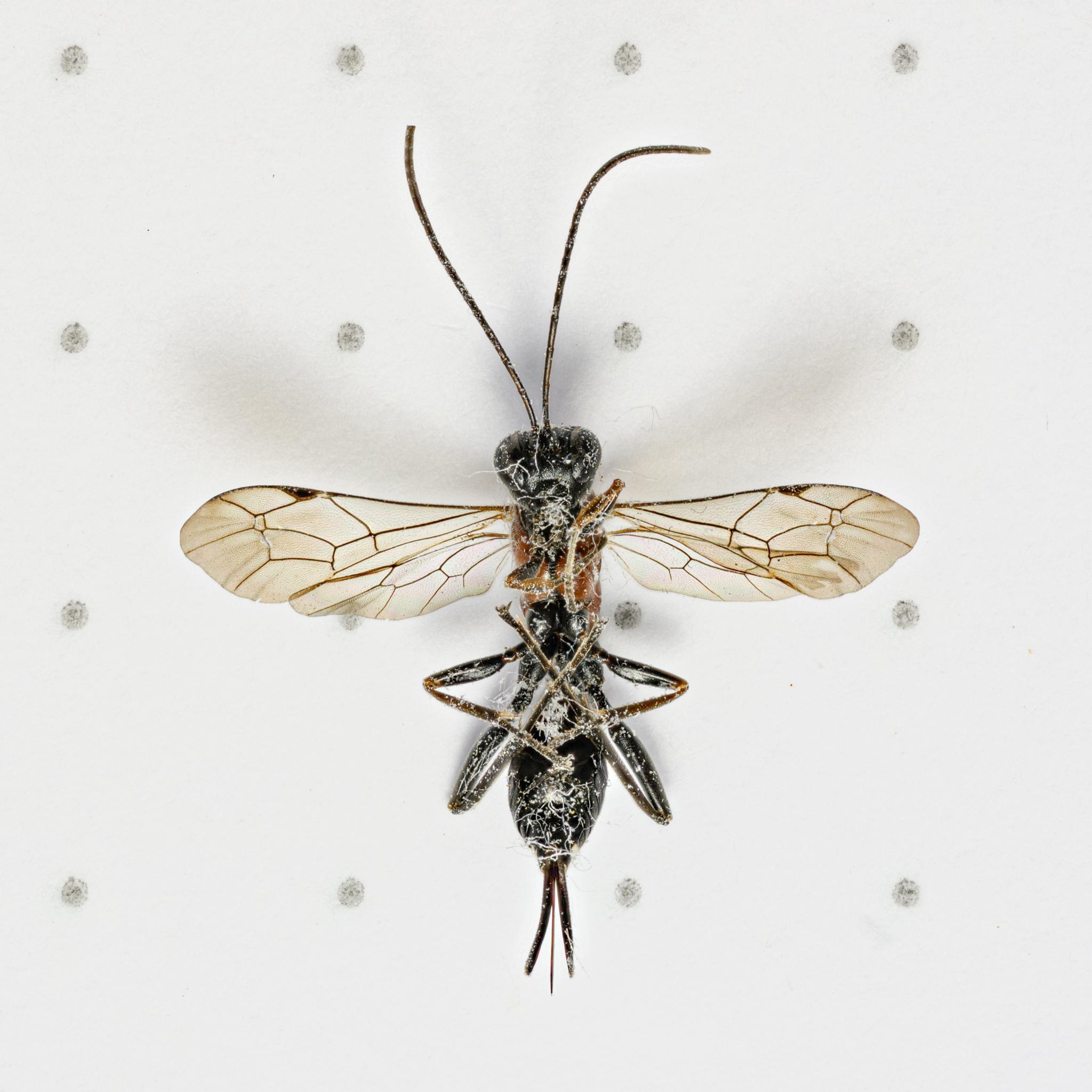
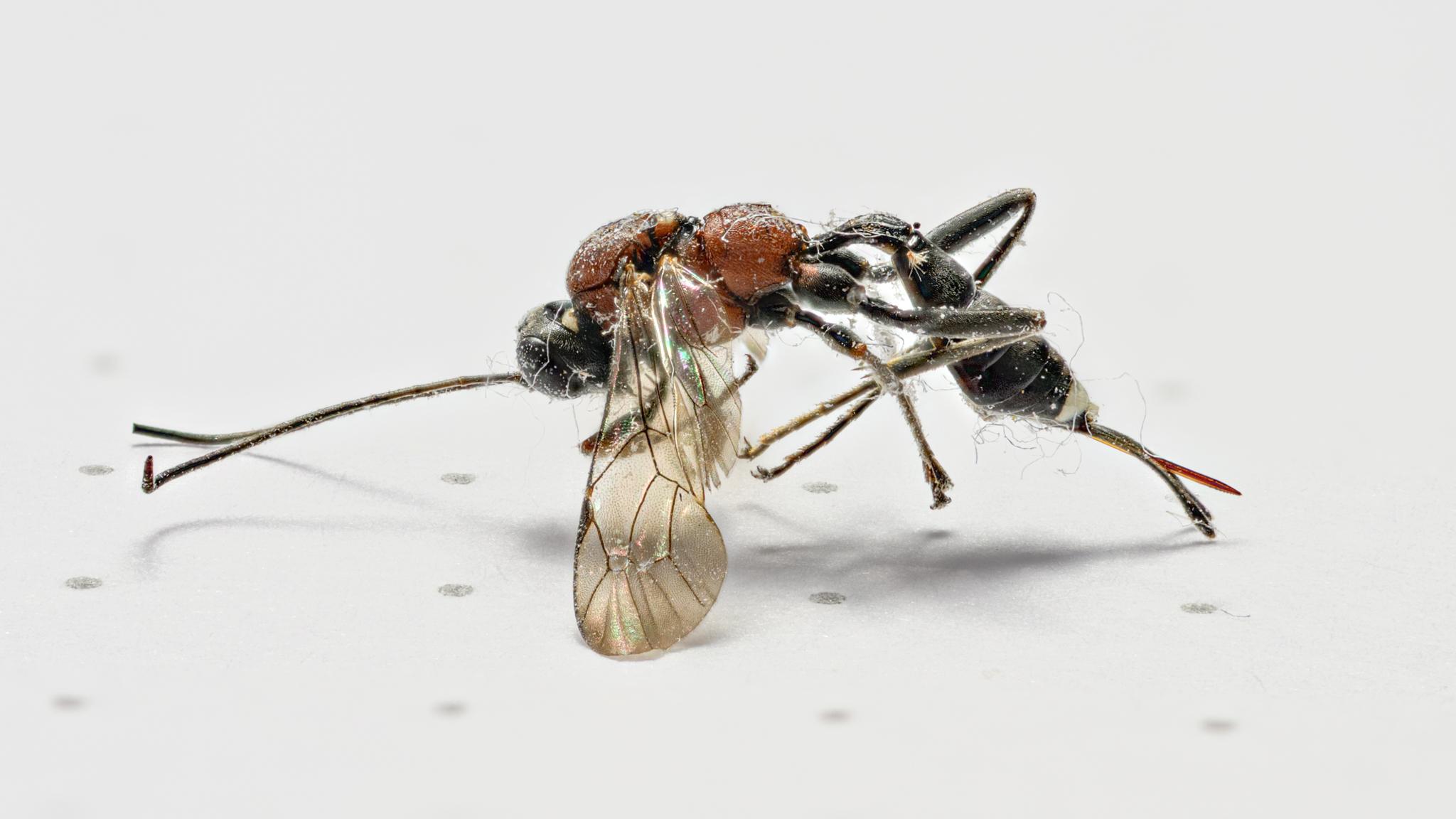
Two mysteries, one photographed briefly & badly, the other in exquisite detail.

First the latter – the wing venation & ovipositor on this dead wasp mark it as a female ichneumonid.

But there are vast numbers of species of them, & I can't even get a genus ID 😱

Hopefully the experts can help 🤞🙇‍♂️

🏰
📷️️️️️️️️️️️️️️️️️️️️️️️️️️️️️️️️️️️️️️️️️️️️️️️️️️️️️️️️️️️️️️️️️️️️️️️️️️️️️️️️️️️️️️️️️️️️️️️️️️️️️️️️️️️️️️️️️️️️️️️️️️️️️️️️️️️️️️️️️️️️️️️️️️️️️️️️️️️️️️️️️️️️️️️️️️️️️️️️
🐞
🔬
🪰
🪲

A dead wasp photographed on a sheet of white paper from above, dorsal side up. There is a grid of black dots on the paper which are separated by 5 millimetres: the wasp body, from head to end of abdomen is about 7.5mm. The wasp has a black head and long black antennae. The thorax is a brown-red colour, with a small yellow-white pentagon in the middle, between the wing roots. The thin waist is not seen from this perspective, and the abdomen is black, with thin grey lines at each tergite boundary, and a small white patch right at the tip. The wasp has a short ovipositor, with the two outer parts black and stocky, and the inner part much thinner and also black from this angle. The wings are clear brown with lots of small hairs, and the classic venation of an ichneumonid – two recurrent veins and an enclosed areolet cell below the marginal, and a small black stigma. The legs are folded up, but are mostly black with hints of dark brown from this angle. There are also some white threads on t The same wasp now seen from the ventral side, showing that the head is completely black, and that the brown-red colouration of the thorax extends to the underside. The legs are folded up, with the front pair seemingly black and dark brown, while the mid legs have black femora and brown tibia. The hind legs seem mostly black from this angle. The ovipositor outer casing remains black, but the inner part shows brown colour. Again, there is a lot of thread-like fluff on the underside. A side-on view with the wasp supported on its wings and antennae at the front, and the outer parts of the ovipositor at the rear – the folded legs are not touching the paper. The brown-red thorax is seen well, also on the sides, while the thin waist (petiole) joining the chunky thorax to the abdomen is also black. The white patch at the base of the abdomen is seen well and doesn't extend fully underneath. The shaper inner part of the ovipositor is clearly red from this angle and with this lighting. There is also a small white patch visible at the base of the head on the dorsal side.

#photography #macrophotography #bugoftheday #heidelberg #insectsofmastodon #backgardenentomology

20

Caricamento...

1
7

Caricamento...

Commenti (1)

FWIW, these are all macro stacks with my Nikon Z6iii & Sigma 105mm lens, involving 20-40 images taken with the camera’s in-built Focus Shift mode, to capture as much detail as possible.

The white paper under the wasp is a page from a Clairefontaine Dot College Block, my favourite paper for fountain pens and technical notes.

The spacing between the dots is 5mm, showing that the wasp is small, its main body from head to abdomen tip just 7.5mm.

0