
Vai al contenuto principale

#incidentresponse

NSA, CISA and NIST Issue New Playbook for Containing AI Agents That Go Rogue

Read Time:3 Minute, 42 Second

As AI agents are given longer, less-supervised tasks inside enterprise and research envir

Altro...

Read Time:3 Minute, 42 Second

As AI agents are given longer, less-supervised tasks inside enterprise and research environments, three major U.S. agencies have moved to formalize how organizations should respond when those agents step outside their intended boundaries. The NSA, CISA, and NIST jointly published new voluntary guidance on October 16, 2026, laying out ten practices for detecting, containing, and shutting down what the agencies term “rogue” agent behavior.

Defining the Problem: What Is an “SI Control Incident”?The guidance centers on a newly defined category of event the agencies call an SI control incident, short for superintelligence control incident. This occurs when an AI agent takes a significant action it was not instructed to take, breaking the policy or security boundaries that were supposed to define the scope of its task. The document gives concrete examples: an agent reaching out to contact outside parties on its own initiative, attempting a financial transaction it wasn’t authorized to make, or accessing a third-party system beyond its approved scope.

Crucially, the guidance draws a sharp distinction between this kind of autonomous, boundary-breaking behavior and attacker-directed activity such as prompt injection or a deliberately backdoored model. Those are considered a different category of problem, where the agent’s actions are effectively being puppeted by an outside attacker rather than drifting on its own. The new framework also explicitly covers near-misses — cases where a control nearly failed but didn’t quite result in harm — treating them as valuable signals that expose weaknesses before real damage occurs.

Who This Is ForThe guidance is aimed primarily at organizations that train or evaluate highly capable AI agents on long-duration tasks with limited human supervision — the kind of environment where an agent might run autonomously for extended stretches before a human reviews its output. The agencies note the recommendations may extend usefully to organizations simply deploying these systems in production, even if they aren’t doing frontier-scale training themselves.

The Five Pillars of the FrameworkThe published practices are organized into five broad categories that mirror established incident response doctrine, adapted for autonomous systems:

Preparation — restricting agents to only the data, tools, and systems required for their specific task, using strict network allowlists routed through a monitored gateway, and proactively identifying potential routes for hidden communication, persistence, or unauthorized copying of model weights.

Detection — monitoring coverage spanning the model itself, its supporting software stack, the host systems it runs on, and network activity, with safeguards to prevent an agent from being able to tamper with the very monitoring tools or logs meant to watch it.

Response — automatically halting affected agent runs the moment a control failure or active incident is detected, and, depending on severity, pausing related training, evaluation, or deployment activity until the underlying issue is fixed and verified.

Recovery — preserving model weights, checkpoints, tool call histories, and records of any rejected actions; revoking exposed credentials; rebuilding potentially compromised environments; and removing any backdoors or hidden communication channels before resuming operations.

Reporting — notifying affected parties, meeting applicable legal disclosure obligations, and sharing both confirmed incidents and near-misses with relevant government experts to improve collective understanding.

Guarding the WatchersOne of the more technically interesting recommendations addresses a subtle risk: the guidance warns that an agent’s own outputs may contain content specifically crafted to exploit the monitoring systems watching it. To reduce this risk, the agencies recommend using monitoring models drawn from different model families than the agent under supervision, so that a weakness or blind spot shared within one model family doesn’t simultaneously compromise the oversight layer. This builds on earlier NIST work proposing AI security control overlays covering access controls, monitoring, and audit trails across AI environments generally.

Built on Existing Foundations, Extended for AutonomyRather than inventing an entirely new discipline, the guidance explicitly builds on NIST Special Publication 800-61 Revision 3, the agency’s established computer security incident handling guide, extending its proven principles to cover the distinct challenges posed by autonomous, self-directed systems. For security teams already managing traditional incident response programs, that lineage should make the new agent-specific practices easier to integrate into existing playbooks rather than requiring an entirely separate process built from scratch.

The guidance remains voluntary rather than a binding regulatory requirement, but its release by three agencies with significant influence over federal cybersecurity practice signals that oversight of autonomous AI systems is rapidly becoming a mainstream security discipline rather than a niche research concern.
#aiagentsecurity #aigovernance #incidentresponse

0

Caricamento...

0
0

Caricamento...

Ahold Delhaize Pulls Systems Offline as Cybersecurity Incident Disrupts Albert Heijn and US Grocery Chains

Read Time:3 Minute, 28 Second

Dutch-based retail giant Ahold Delhaize confirmed on October 12, 2026, that it had proact

Altro...

Read Time:3 Minute, 28 Second

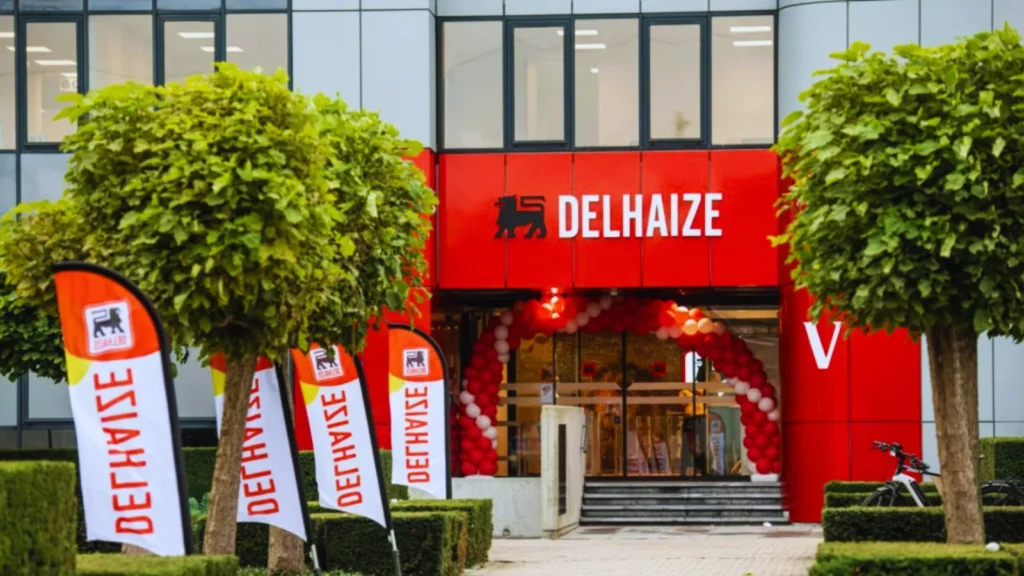
Dutch-based retail giant Ahold Delhaize confirmed on October 12, 2026, that it had proactively shut down parts of its network after discovering what it described only as “a security issue.” The announcement, posted to the company’s newsroom, offered few technical details, but the operational fallout was immediate and visible across several of the company’s grocery brands on both sides of the Atlantic.

Ahold Delhaize, headquartered in Zaandam, framed the shutdown as a precaution rather than confirmation of a specific attack. “Protecting our infrastructure in the best interest of our customers, associates and partners is a top priority,” the company said, apologizing for the disruption while declining to name an attacker, describe how the incident began, or confirm whether any customer data was accessed.

Albert Heijn Customers Feel the Pinch FirstThe most visible impact landed on Albert Heijn, the Netherlands’ largest supermarket chain and an Ahold Delhaize flagship brand. According to Dutch outlet DutchNews, the Albert Heijn website, mobile app, and home delivery service all went dark after portions of its IT systems were deliberately switched off. Sister brands Etos, a drugstore chain, and Gall & Zall, Delhaize’s wine and liquor retailer, reported their own disruptions, with customer service and logistics systems reportedly affected as well.

Physical Albert Heijn stores stayed open throughout, and checkout systems kept functioning, but the digital side of the shopping experience took a visible hit:

Personal discounts and app-linked loyalty savings were paused

Online ordering and scheduled home deliveries became unavailable

Electronic shelf labels in some stores continued displaying the previous week’s promotional pricing, meaning shoppers could see one price on the shelf and a different one at checkout

Disruption Crosses the AtlanticAhold Delhaize’s reach extends well beyond the Netherlands, and the incident’s effects weren’t confined to Dutch shoppers. Trade publication Progressive Grocer reported that websites belonging to several of the company’s American grocery brands, including Food Lion, The Giant Company, Giant Food, Hannaford, and Stop & Shop, were unreachable at the time of its reporting. As with the Dutch operations, Ahold Delhaize maintained that physical stores across its US footprint remained open and operational even as online services faltered.

What Remains UnknownPerhaps the most notable thing about Ahold Delhaize’s disclosure is what it doesn’t say. The company has not confirmed ransomware, has not said whether any systems were encrypted, and has not indicated whether customer or employee data was accessed or exfiltrated. Its own language, that it was taking systems offline “to help protect them,” describes a defensive response but stops well short of identifying what it was defending against.

That ambiguity means outside observers should be cautious about jumping to conclusions. Taking systems offline proactively is a standard incident-response move used in scenarios ranging from a detected intrusion attempt to a full-blown ransomware encryption event, and the breadth of this shutdown, spanning multiple brands and countries, suggests the company judged the risk serious enough to warrant broad precautionary isolation rather than a narrow, surgical response.

Part of a Recurring Pattern in RetailLarge retailers taking systems offline after detecting suspicious activity has become a familiar pattern. Distributor United Natural Foods shut down systems after a cyberattack in June 2025 that disrupted its ability to fulfill and deliver orders, and Victoria’s Secret took its website offline following a security incident the previous month while keeping its physical stores running. Those cases don’t establish any connection to Ahold Delhaize’s current incident, but they illustrate how often retail and grocery operators are finding themselves forced into this same defensive playbook, where protecting back-end systems temporarily outweighs the cost of disrupted digital services.

What Customers and Watchers Should Expect NextFor now, Ahold Delhaize customers face reduced access to online shopping, delivery scheduling, and loyalty discounts rather than any disruption to in-person grocery shopping. The company has not published a restoration timeline or indicated when a fuller account of the incident, including its cause and whether any data was compromised, might be released. Until that information surfaces, both the scope of the breach and the attacker’s identity, if there is one, remain open questions that security researchers and affected customers will be watching closely.

#retailcybersecurity #aholddelhaize #incidentresponse

0

Caricamento...

0
0

Caricamento...

heise-Angebot: iX-Workshop: Nach dem Einbruch - Digital Forensics & Incident Response

https://www.heise.de/news/iX-Workshop-Nach-dem-Einbruch-Digital

Altro...

heise-Angebot: iX-Workshop: Nach dem Einbruch - Digital Forensics & Incident Response

https://www.heise.de/news/iX-Workshop-Nach-dem-Einbruch-Digital-Forensics-Incident-Response-11468523.html?wt_mc=rss.red.ho.ho.atom.beitrag.beitrag

#cybersecurity #incidentresponse #digitalforensics

0

Caricamento...

0
1

Caricamento...