Vai al contenuto principale

← Torna al post

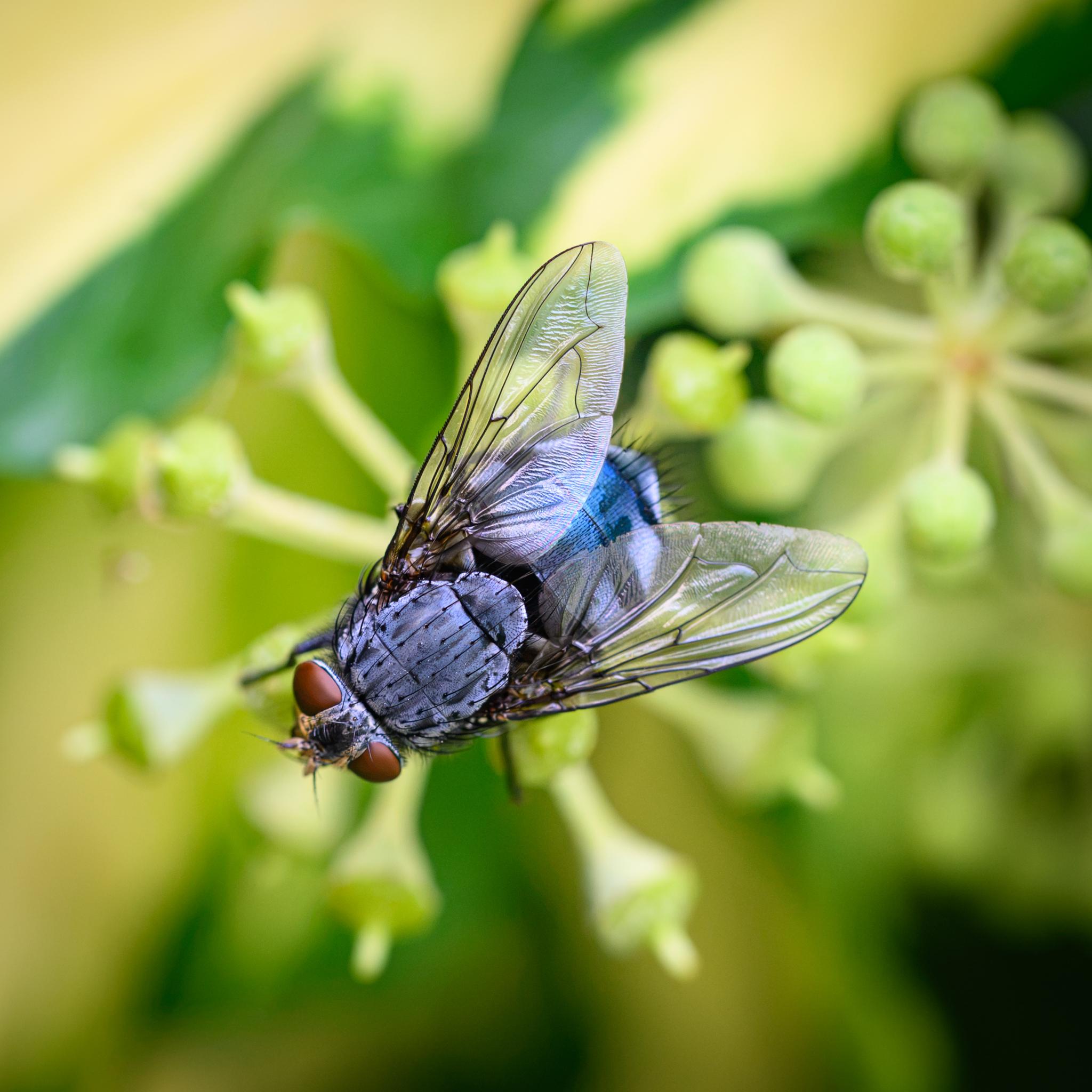
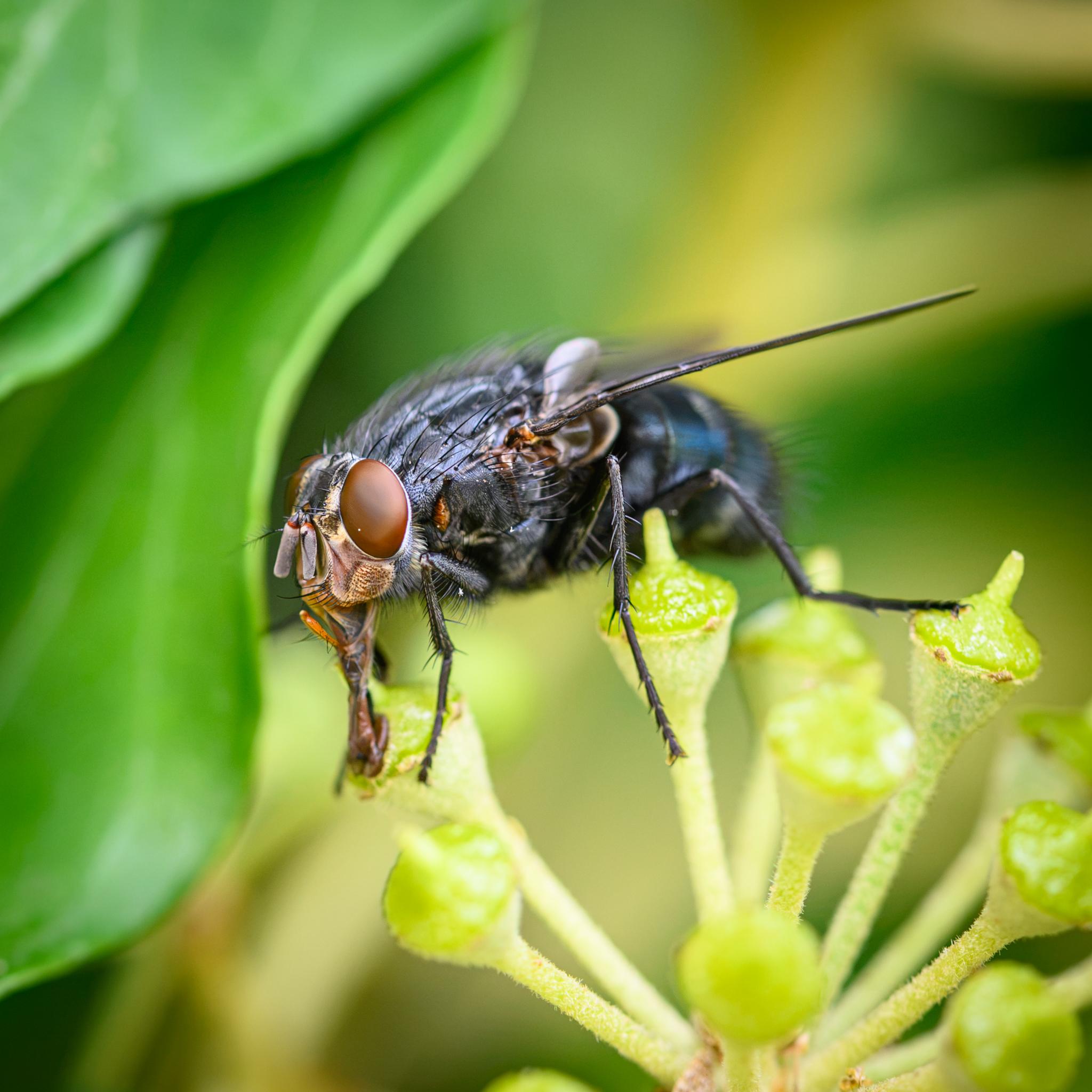
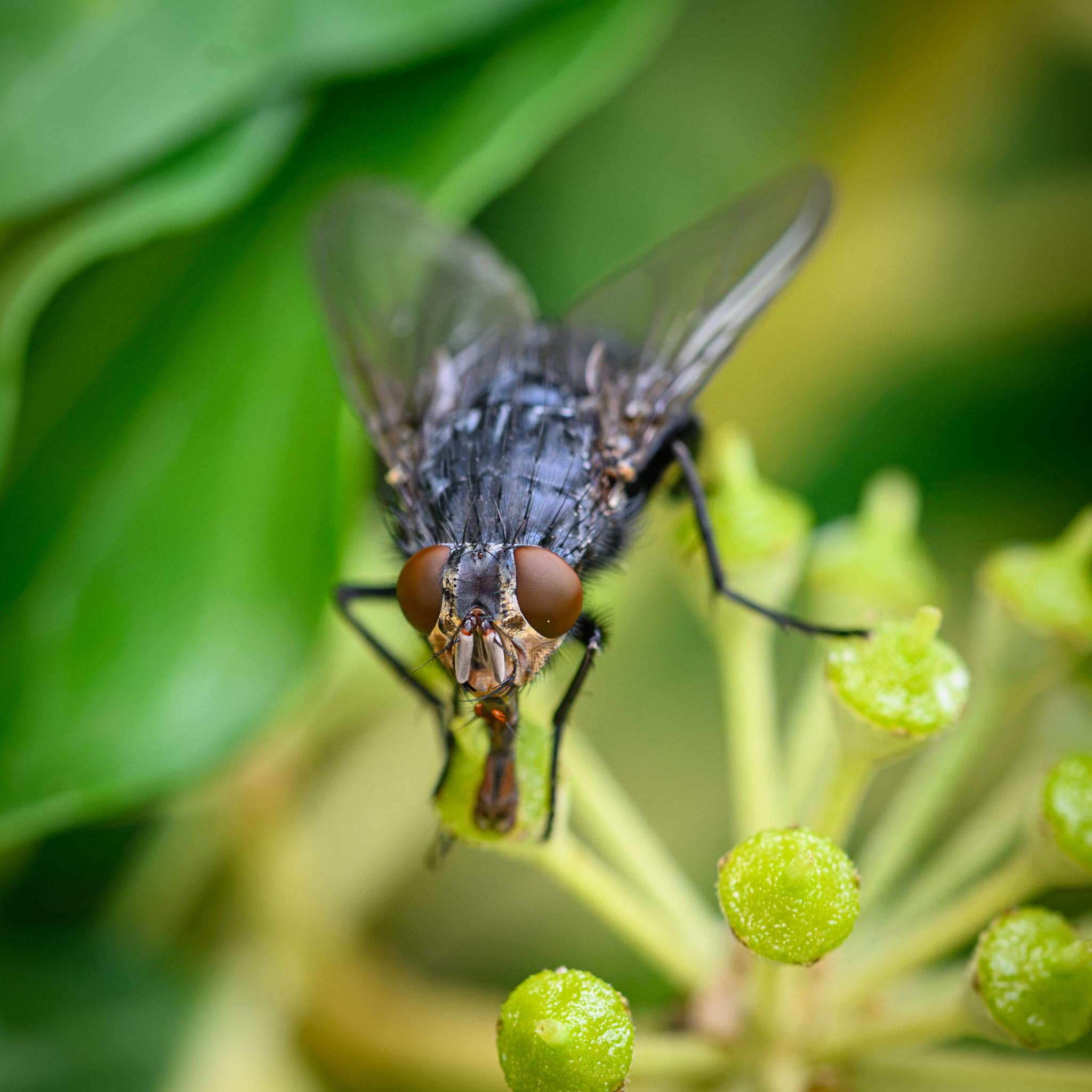
Since this female blue blowfly (Calliphora vicina; 🇩🇪 Blaue Schmeißfliege) was good enough to pose for me on the ivy for a while, I thought I'd share a bunch of pictures to show her off 🤷‍♂️🙂

Four here & another three in the next toot.

🏰
📷️️️️️️️️️️️️️️️️️️️️️️️️️️️️️️️️️️️️️️️️️️️️️️️️️️️️️️️️️️️️️️️️️️️️️️️️️️️️️️️️️️️️️️️️️️️️️️️️️️️️️️️️️️️️️️️️️️️️️️️️️️️️️️️️️️️️️️️️️️️️️️️️️️️️️️️️️️️️️️️️️️️️️️️️️️️️️️️️
🐞
🔬
🪰
🪲

A large blowfly seen from above feeding on a yellow-green ivy flower head. The fly has brick red compound eyes widely set in a grey and black head, marking it as a female. The three small ocelli can be seen in the gap. The thorax is a dusty blue grey with darker longitudinal partial stripes, many fine black hairs, and lots of long black bristles. The abdomen isn't well see from this angle, but is a metallic blue with dark grey patches and many black bristles near the end. The wings are clear, with dark veins, darkening to a light brown right at the roots. The same fly seen side-on, hanging half upside down from the ivy flower. The beige lower parts of the face can be seen, along with the long, wide proboscis and mouthparts feeding from the flower. The mostly grey thorax has some small brown parts, while the shiny metallic blue abdomen is seen more clearly, with many short and long dark bristles. The underside of the abdomen appears light grey from this angle. The legs are grey-black with many black spines and bristles. The same fly seen in half profile, this time right-side up showing the grey upper part of the face between the eyes with a central black stripe, turning beige / light brown lower down, with many short dark hairs. The antennae are grey with a spot of red at the root. The proboscis and mouthparts are protruding downwards, mostly out of focus. One of the maxillary palps (I think) is seen in orange, pointing up just below the head, with black hairs on it. A head-on view of the fly slightly from above, showing the head, eyes, and antennae in more detail. The proboscis and mouth are again extended down to the flower, but mostly out of focus apart from the orange tips of the upwards protruding maxillary palps. The front of the thorax is in focus, but the rest of the fly is out of focus in the background.

#photography #macrophotography #bugoftheday #heidelberg #insectsofmastodon #backgardenentomology

31

Caricamento...

2
15

Caricamento...

The first pictures here show the end of the same fly's abdomen, with many dark bristles, long & short on the tergites, & a ring of them around the genitals.

Female blowflies have telescopic ovipositors, fully withdrawn in the body in this case.

Note also that that blue & grey colours & patterns on the abdomen are not pigments, but are due to interference in multi-layer nanostructures & thin films on the surface – they change as a function of viewing angle.

Same goes for greenbottles etc.

A view of the fly from the rear end, showing the many short and long dark hairs on the various tergites of the abdomen. From this angle, viewing slightly from the right, the left side of the abdomen is predominantly light grey with some black patches, while the right side is partly shiny light to dark blue with a grey patch, and also grey on the side. Conversely, now the fly is viewed from the left side, and it is the left side of the abdomen that is mostly metallic blue with darker patches, while the right side is light grey. Another view of the fly from above, from behind, showing that the thorax colouration is also viewing angle dependent, in this case showing less dusting and more dark black-blue, with lighter blue-grey patches. The wings also show some classic rainbow iridescence.
0