
Since this female blue blowfly (Calliphora vicina; 🇩🇪 Blaue Schmeißfliege) was good enough to pose for me on the ivy for a while, I thought I'd share a bunch of pictures to show her off 🤷♂️🙂
Four here & another three in the next toot.
#Heidelberg 🏰
#Photography 📷️️️️️️️️️️️️️️️️️️️️️️️️️️️️️️️️️️️️️️️️️️️️️️️️️️️️️️️️️️️️️️️️️️️️️️️️️️️️️️️️️️️️️️️️️️️️️️️️️️️️️️️️️️️️️️️️️️️️️️️️️️️️️️️️️️️️️️️️️️️️️️️️️️️️️️️️️️️️️️️️️️️️️️️️️️️️️️️️
#BugOfTheDay 🐞
#MacroPhotography 🔬
#InsectsOfMastodon 🪰
#BackGardenEntomology 🪲
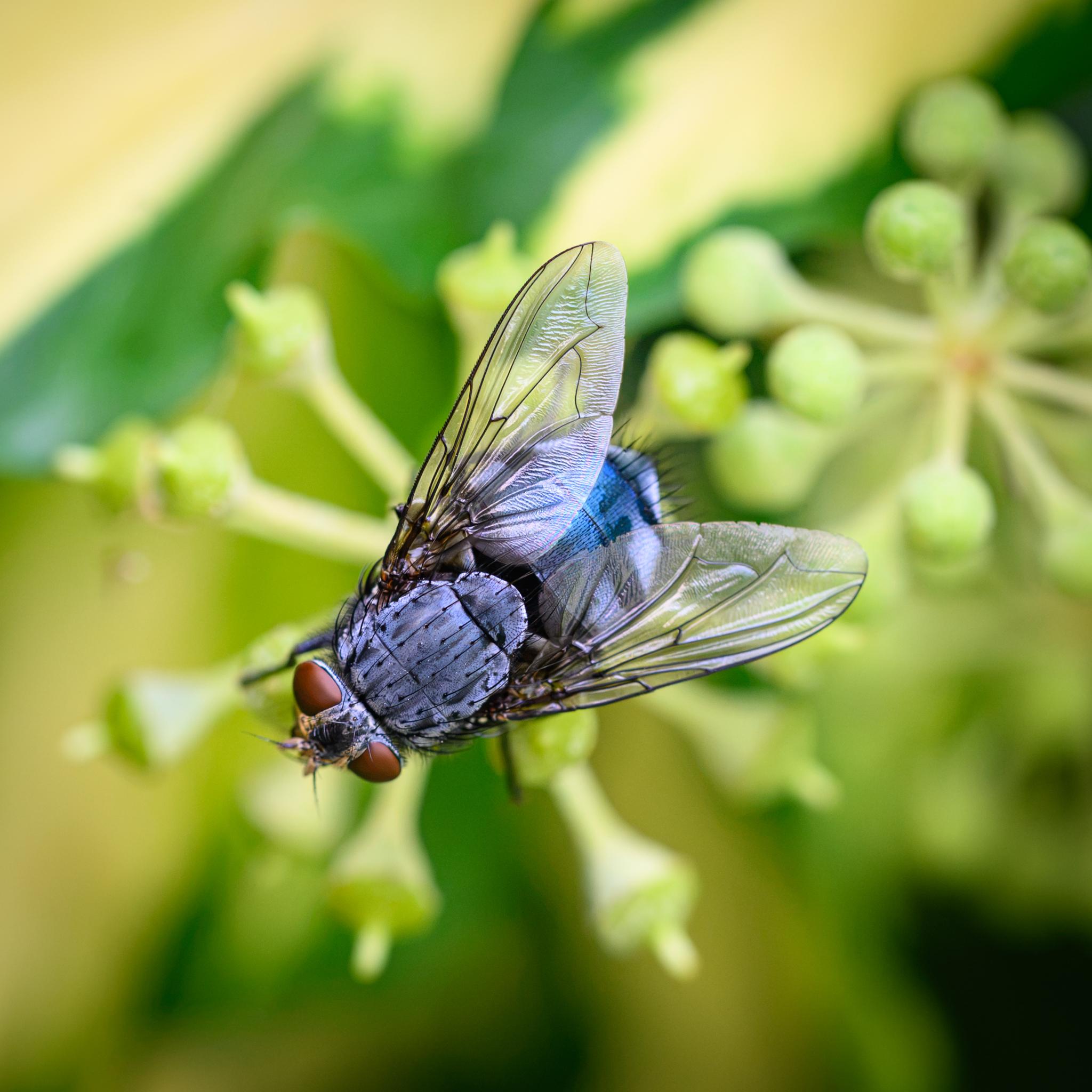

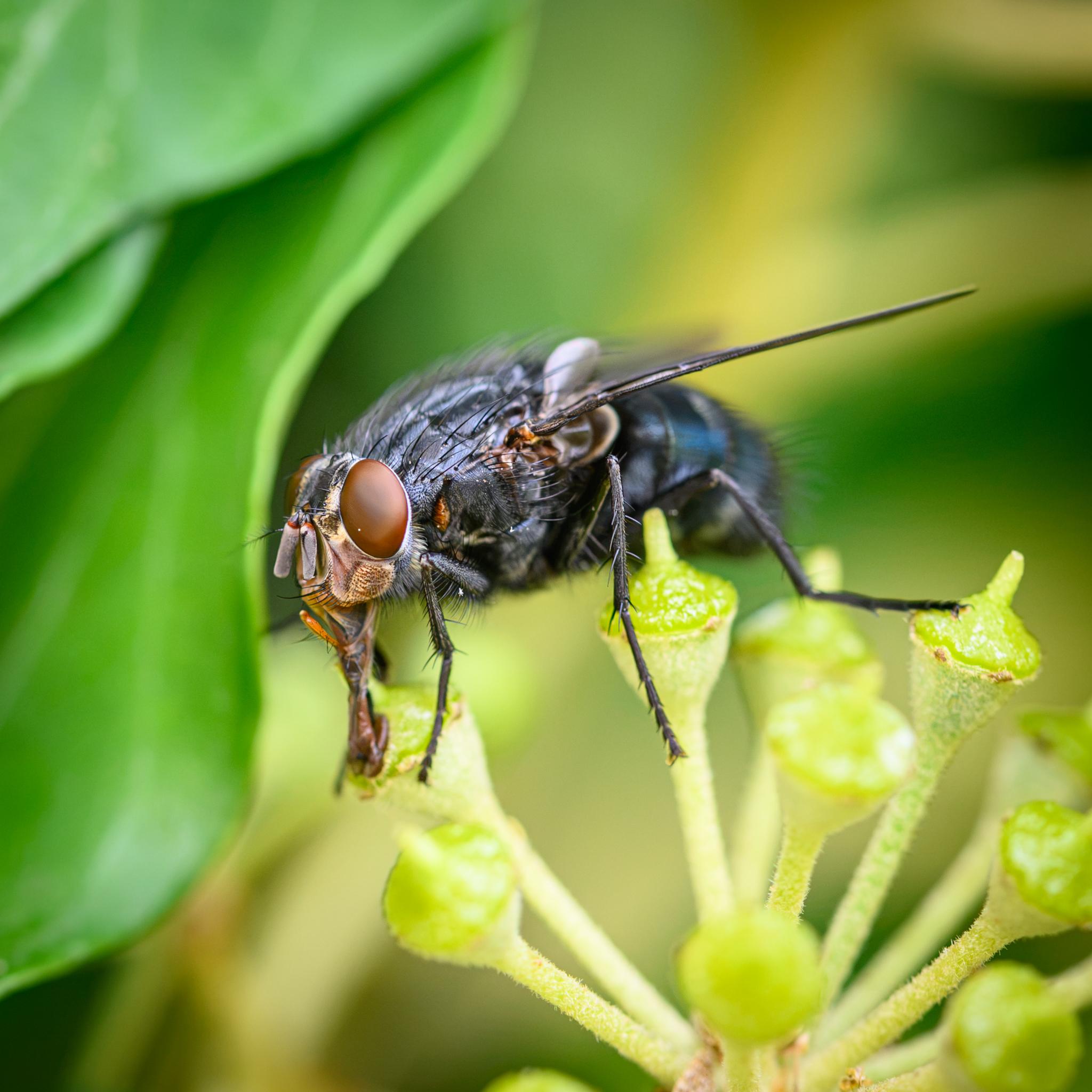
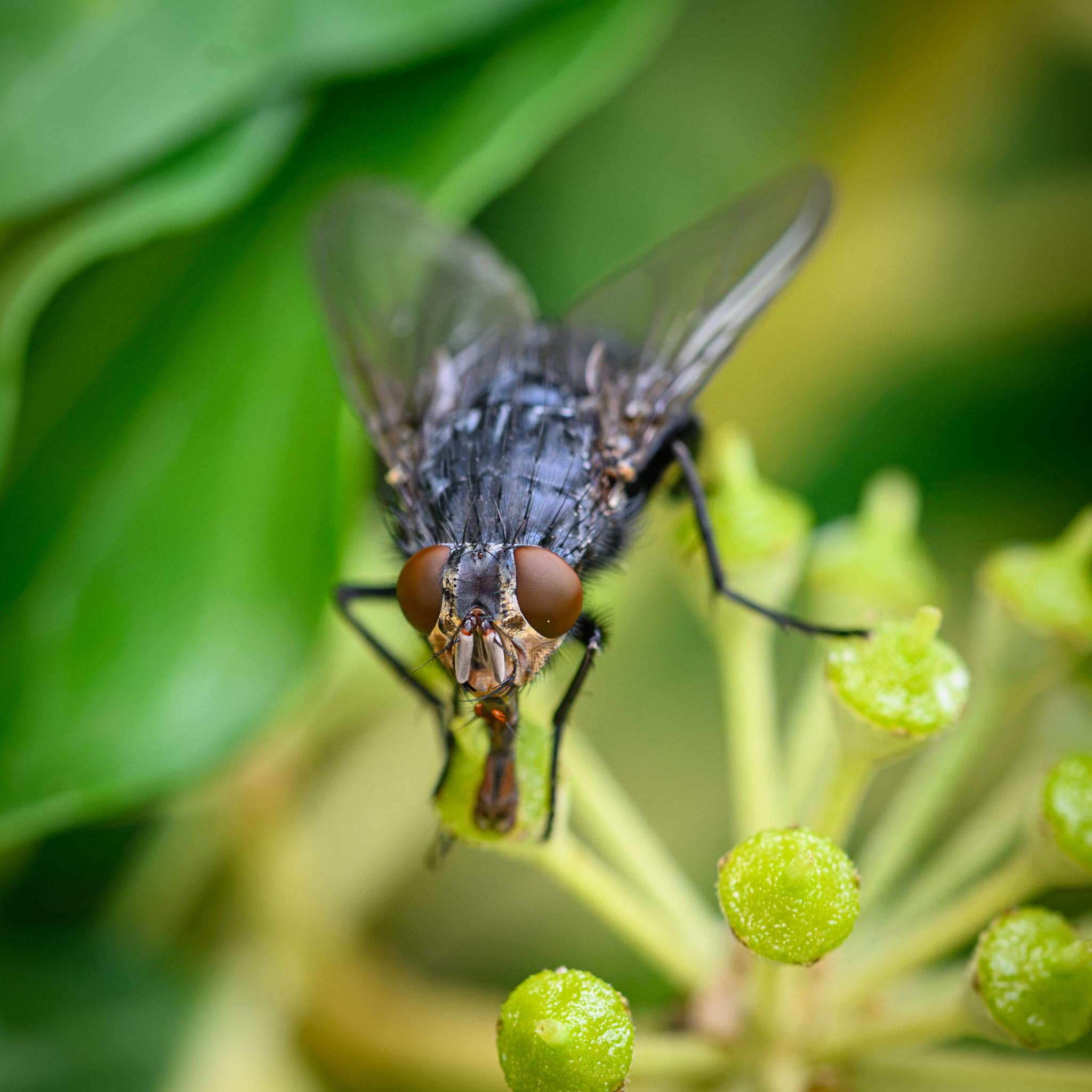

The first pictures here show the end of the same fly's abdomen, with many dark bristles, long & short on the tergites, & a ring of them around the genitals.
Female blowflies have telescopic ovipositors, fully withdrawn in the body in this case.
Note also that that blue & grey colours & patterns on the abdomen are not pigments, but are due to interference in multi-layer nanostructures & thin films on the surface – they change as a function of viewing angle.
Same goes for greenbottles etc.