Vai al contenuto principale

#danfoss

Nearly 5,000 Danfoss-Linked Systems Found Exposed Online After Supermarket Refrigeration Attacks

Read Time:3 Minute, 42 Second

A Fresh Look at the ExposureResearchers have identified 4,980 internet-facing hosts refer

Altro...

Read Time:3 Minute, 42 Second

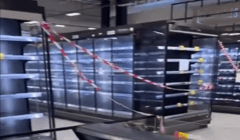
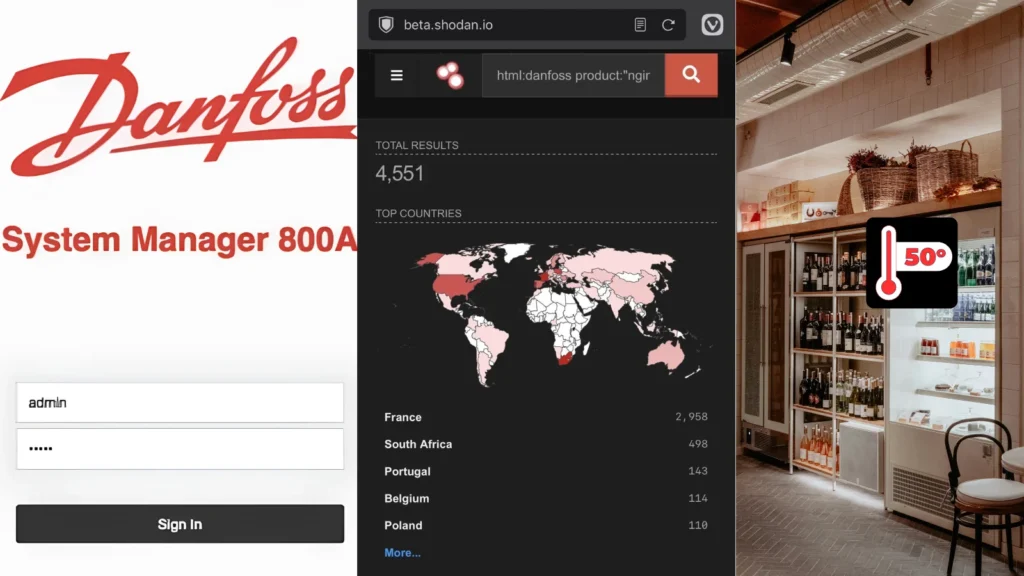
A Fresh Look at the ExposureResearchers have identified 4,980 internet-facing hosts referencing Danfoss in their web content, according to an October 13 update from the open-source intelligence account International Cyber Digest, based on a Shodan search. The finding comes just days after attackers remotely triggered defrost functions on refrigeration systems at French supermarkets overnight between October 11 and 12, spoiling chilled and frozen stock in the process. Earlier reporting indicated affected stores saw internal temperatures climb as high as 50°C during the incident.

France accounts for the largest share of exposed hosts by a wide margin, with 2,911 results, or roughly 58% of the global total. South Africa follows with 517, then Germany with 171, Portugal with 158, and the United States with 141. Smaller numbers appear in Poland, Belgium, Sweden, Spain, and the Netherlands. International Cyber Digest estimates that around eight in ten of the identified hosts are located in Europe.

What the Numbers Don’t ProveIt is worth being precise about what a Shodan search like this actually shows. The scan looks for pages that reference Danfoss in their web content, not confirmation that every listed host is a vulnerable refrigeration controller, or that any individual system has already been compromised. A separate, more filtered search returned a slightly lower figure of 4,551 results. Neither search reveals firmware versions, confirms successful attacks against specific hosts, or indicates how many individual stores each exposed controller manages.

France Confirms Widespread CompromiseFrance’s national cybersecurity agency, CERT-FR, issued an alert on October 12 confirming numerous compromises involving Danfoss AK-SM and AK-SC refrigeration management devices, and instructed operators to immediately disconnect affected systems from the internet or restrict access through other means.

Danfoss has acknowledged that the affected refrigeration management systems were running outdated firmware, and has repeated its standing advice for customers to update supported equipment and retire legacy systems that no longer receive security patches.

A Date-Based Authentication BypassIndependent research from industrial security firm Claroty’s Team82 points to a specific weakness that may help explain how attackers gained access. The team found that the AK-SM 800A platform generates a daily administrative authentication code based on the device’s current date, meaning anyone who can reproduce the underlying algorithm could calculate a valid code and obtain an administrative session, effectively bypassing the system’s configured password entirely.

That flaw is now tracked as CVE-2025-41450, affecting AK-SM 8xxA firmware versions earlier than R4.2, which Danfoss has since patched. The U.S. Cybersecurity and Infrastructure Security Agency’s advisory also lists two related flaws in versions prior to R4.3.1: CVE-2025-41451, a command injection vulnerability in the device’s email alert settings that Team82 says could allow code execution once an attacker is authenticated, and CVE-2025-41452, a web server configuration weakness that could let an authenticated attacker manipulate how web traffic is handled or disrupt the management interface.

Investigators have not publicly confirmed that this specific vulnerability chain was what enabled the French supermarket incidents. A separate, unverified claim circulating online suggests some affected systems used a default “admin” username paired with a password that simply changes to the current date, a detail that, if accurate, would make the authentication weakness especially easy to exploit without any technical skill.

Why Centralized Refrigeration Controls Are High-RiskThe AK-SM 800A is designed to manage multiple refrigeration units through a single web interface, giving operators centralized control over temperature limits, schedules, alarms, and user accounts. That convenience is also what makes exposed management interfaces so dangerous: unlike a typical IT breach, a compromise here can directly affect physical operations, in this case the cooling systems that keep food safe for consumption.

Recommended Next StepsCERT-FR’s guidance for operators who suspect compromise includes immediately restricting network access to trusted service providers, performing a factory reset, applying all available firmware updates, rotating passwords and other credentials, auditing user accounts, and fully reconfiguring the system before reconnecting it.

Remove direct internet exposure for refrigeration and building-management controllers.

Segment operational control networks away from general business networks.

Use properly secured, authenticated remote access methods rather than open internet-facing interfaces.

Verify firmware is updated past R4.2 (AK-SM) and R4.3.1 for the related flaws before reconnecting equipment.

For retailers running similar equipment, the message is clear: patching alone is not enough if the management interface remains reachable from the open internet.
#criticalinfrastructure #iotsecurity #danfoss #icssecurity

0

Caricamento...

0
0

Caricamento...

Avviso sul contenuto: This article discusses cybercrime, food spoilage, financial losses and reported fire incidents. It contains no graphic imagery or detailed instructions for carrying out cyberattacks.

Hackers Turn French Supermarkets’ Fridges Into Ovens, Triggering Millions in Losses

https://www.youtube.com/@thisclaimer?sub_confirmation=1Click to w

Altro...

Hackers Turn French Supermarkets’ Fridges Into Ovens, Triggering Millions in Losses

https://www.youtube.com/@thisclaimer?sub_confirmation=1Click to watch: Refrigeration units stand switched off amid a reported cyberattack affecting French supermarkets, raising concerns over food spoilage and millions of euros in potential lossesDear Cherubs, France has discovered that the next big supermarket disaster might not involve empty shelves, striking workers or someone abandoning a trolley sideways across the car park. Instead, a cyberattack has reportedly hijacked refrigeration systems across hundreds of supermarkets, turning essential cooling equipment into a very expensive food-warming experiment.

The attack, reported on October 12, 2026, affected major French supermarket groups, including Intermarché, Coopérative U, Carrefour and Monoprix. And no, this was not a case of someone accidentally leaving the freezer door open. The incident involved computer systems controlling the equipment responsible for keeping food safely chilled.

According to Reuters and the Associated Press, the attack caused refrigeration temperatures to rise dramatically, resulting in spoiled food, financial losses and, in some locations, fires. Industry-wide losses were estimated at tens of millions of euros, according to statements reported by Australian Broadcasting Corporation (ABC News).

Apparently, the phrase “keep your cool” now applies to cybersecurity as much as customer service.

The Great French Fridge Disaster

Reports indicate that attackers remotely manipulated refrigeration controls, triggering defrosting processes that allowed temperatures inside affected units to climb as high as 50°C (122°F).

For supermarkets, that is less a minor technical inconvenience and more a logistical nightmare involving meat, dairy products, frozen meals and other perishables that cannot simply be put back on the shelf and given another chance.

Intermarché reported that approximately 150 of its stores were affected, while other reports put the total across several supermarket groups at hundreds of locations. Coopérative U also confirmed that its stores had been targeted.

Staff arriving to discover that refrigeration equipment had malfunctioned faced a grim task: identifying compromised stock and discarding food that could no longer be considered safe.

According to ABC News, Intermarché’s chief executive estimated that the attack could cause tens of millions of euros in losses nationwide in a single day. The final financial impact remained uncertain as investigations continued.

And unlike a broken checkout, which might inconvenience shoppers for a few minutes, compromised refrigeration can wipe out valuable inventory while creating additional cleanup, repair and operational costs.

When Smart Equipment Gets Too Clever

The incident also highlights an uncomfortable reality about modern businesses: equipment that connects to the internet can introduce cybersecurity risks far beyond computers and customer databases.

Reuters reported that the refrigeration systems involved were associated with Danish manufacturer Danfoss, with outdated software or firmware identified as a potential security concern. However, investigators were still examining the precise circumstances, and the identity and motives of the attackers had not been established in the reports available at publication.

France’s cybersecurity authorities and prosecutors have been investigating the incident. Security recommendations include restricting internet access to affected equipment and ensuring that relevant software is updated.

For businesses, the lesson is straightforward. Digital security is not just about protecting payment details or preventing someone from stealing customer information. It also means protecting the physical systems that keep essential operations running.

A hacked refrigerator might sound like an obscure technological prank, but the consequences are decidedly real: wasted food, damaged equipment, potential fire hazards and substantial financial losses.

For more accessible explainers on technology mishaps and unexpected real-world failures, readers can also explore thisclaimer.com.

The bigger takeaway? As businesses connect more everyday equipment to the internet, cybersecurity can no longer be treated as an optional extra. Because when your supermarket’s fridges become the target, the bill does not stay in the server room. It ends up in the bin.

Sources

Reuters — French supermarket refrigeration cyberattack report, October 12, 2026: https://www.reuters.com/business/retail-consumer/french-supermarket-chain-intermarche-hit-by-cyberattack-150-stories-targeted-2026-10-12/

Associated Press — Cyberattack targeting refrigeration systems hits 700 supermarkets, French government says: https://apnews.com/article/78a813a8efd466b360655339f96083dc

ABC News — Hackers raise fridge temperatures at hundreds of French supermarkets to spoil food: https://www.abc.net.au/news/2026-10-13/french-supermarkets-hacked-causing-fires-and-food-loss/107258724

Euronews — Hundreds of French supermarkets hit by cyberattack on refrigeration systems: https://www.euronews.com/2026/10/12/hundreds-of-french-supermarkets-hit-by-cyberattack-on-refrigeration-systems

Unsplash — Supermarket refrigerator photograph by nrd: https://unsplash.com/photos/a-refrigerator-filled-with-lots-of-dairy-products-M7jpkJvXGOI

Thisclaimer — Further reading and accessible explainers: https://thisclaimer.com/

Thisclaimer on YouTube — https://www.youtube.com/@thisclaimer?sub_confirmation=1

https://www.instagram.com/thisclaimer_/The Thisclaimer logo blends a classic warning symbol with a brain icon to represent critical thinking, curiosity, and thoughtful disclaimers

Refrigerated display cabinets shut down in a French supermarket following a reported cyberattack targeting refrigeration systems. 3D logo of Thisclaimer featuring a red warning triangle with an exclamation mark and a brain icon, symbolising thoughtful disclaimers and critical thinking

#cybersecurity #cyberattack #danfoss #digitalsecurity #foodwaste #francenews #frenchsupermarkets #refrigerationsystems #supermarketfails #technologyrisks

0

Caricamento...

0
1

Caricamento...